
Meet the Humpback Whale
Imagine looking out across the vast ocean and suddenly seeing an enormous, school-bus-sized whale launch its entire body gracefully into the air! The humpback whale is one of the most majestic and recognizable creatures on our planet. Known for their immense size, exceptionally long pectoral fins, powerful tail flukes, and hauntingly beautiful songs, these gentle marine giants capture the imaginations of people all around the world. Let us dive beneath the waves to explore the fascinating lives, incredible migrations, and unique behaviors of these ocean superstars.
Species of Humpback Whales
Humpback whales belong to the scientific species Megaptera novaeangliae, which is the only member of its genus. While there is just one official species of humpback whale, scientists recognize several distinct, geographically isolated populations across the globe. These populations are generally divided into the Northern Hemisphere and Southern Hemisphere groups, with further subdivisions such as the North Pacific, North Atlantic, and Southern Ocean populations. While they look nearly identical, these distinct groups rarely mix due to their opposite breeding and feeding seasons.
Habitat
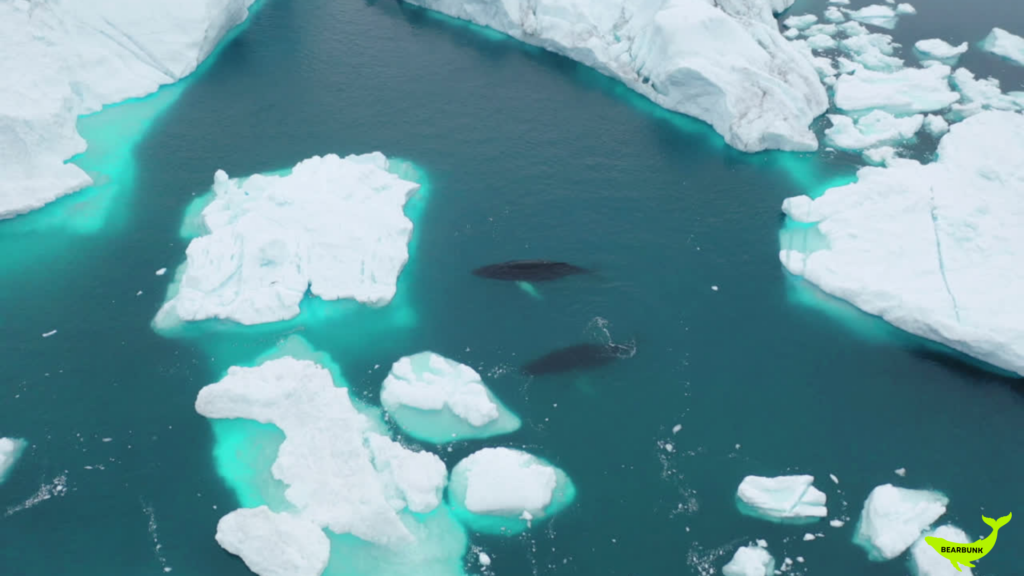
Humpback whales are true global travelers, living in all of the world’s major oceans. They can be found in both the Northern and Southern Hemispheres, dividing their time between cold polar feeding grounds and warm tropical breeding waters. During the chilly summer months, they congregate in nutrient-rich polar seas where food is incredibly abundant. As winter approaches, they embark on one of the longest migrations of any mammal on Earth, traveling thousands of miles to reach the safety of shallow, warm tropical and subtropical waters. Amazingly, humpback whales show great loyalty to their favorite spots, returning to the exact same feeding and breeding grounds year after year.
Diet
Despite their massive size, humpback whales eat surprisingly small prey, focusing their diet on tiny shrimp-like krill and small schooling fish such as herring, sand lance, capelin, and anchovies. Instead of teeth, these whales have hundreds of fibrous baleen plates hanging from their upper jaws that act as a giant filtration system. To feed, a whale gulps huge mouthfuls of water filled with fish or krill, then uses its powerful tongue to push the water out through the baleen plates, trapping the food inside. Sometimes, humpbacks work together in a spectacular display of teamwork called bubble-net feeding, where they blow a ring of bubbles to corral fish into a tight school before swimming upward through the center with their mouths wide open.
Share On Social:
Mating, Babies & Family Life
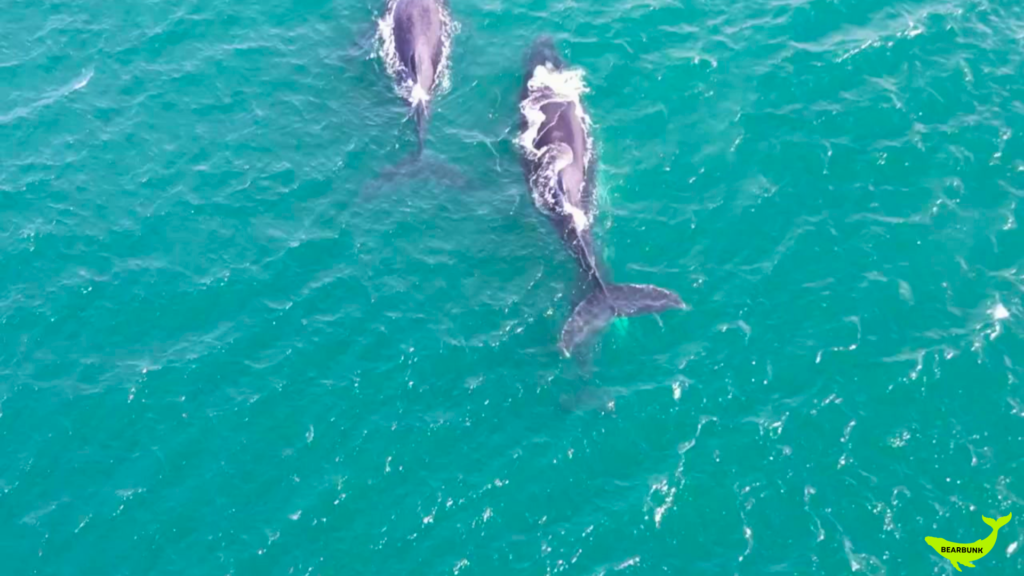
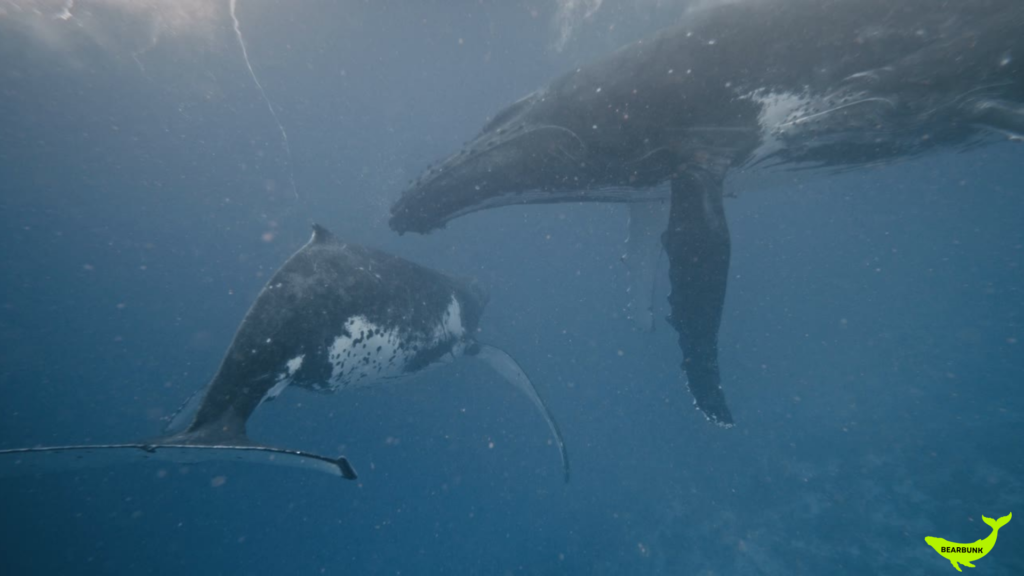
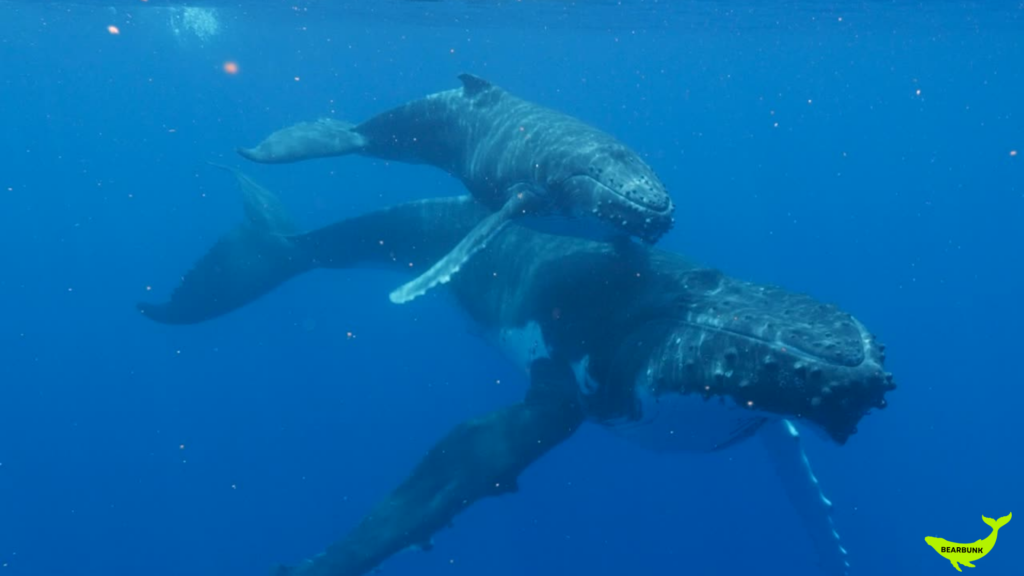
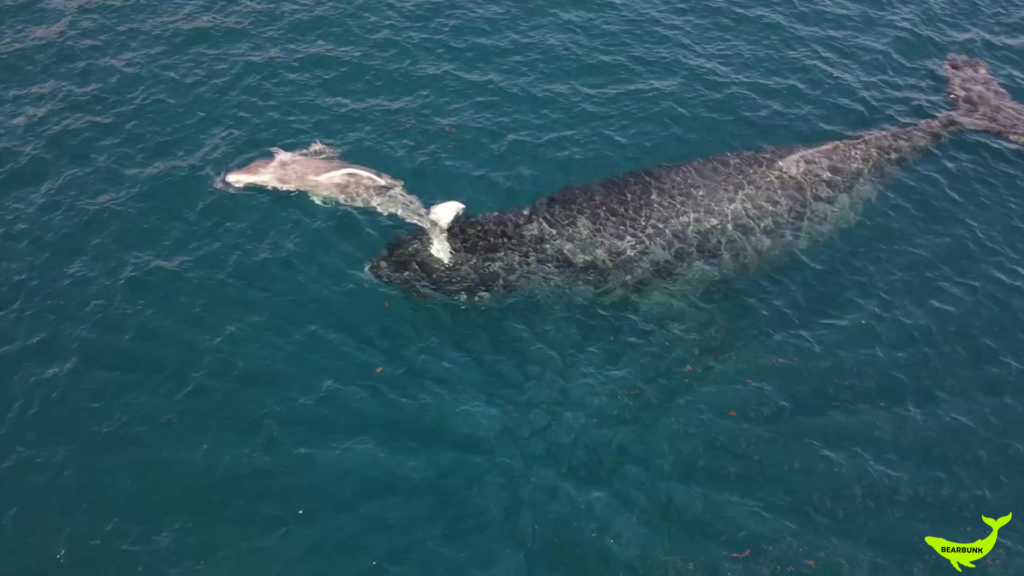
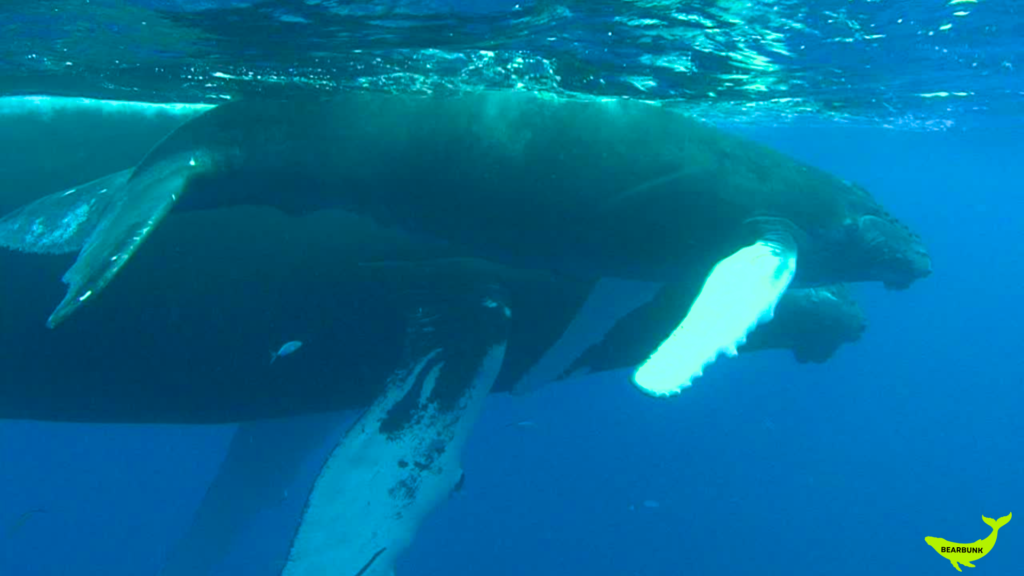
The life of a young humpback whale begins in the warm, protected waters of tropical regions. Female humpbacks go through a gestation period of about eleven months before giving birth to a single calf. These newborns are already giants themselves, measuring between 13 and 16 feet long and weighing nearly a ton! The young calf shares an incredibly close bond with its mother, remaining by her side for protection, guidance, and nourishment. The calf drinks its mother’s rich, high-fat milk, which allows it to grow at a rapid rate. Over the course of about a year, the mother teaches her calf how to navigate, breathe, and eventually feed on its own before the young whale begins its independent life in the ocean.
Behavior & Social Life
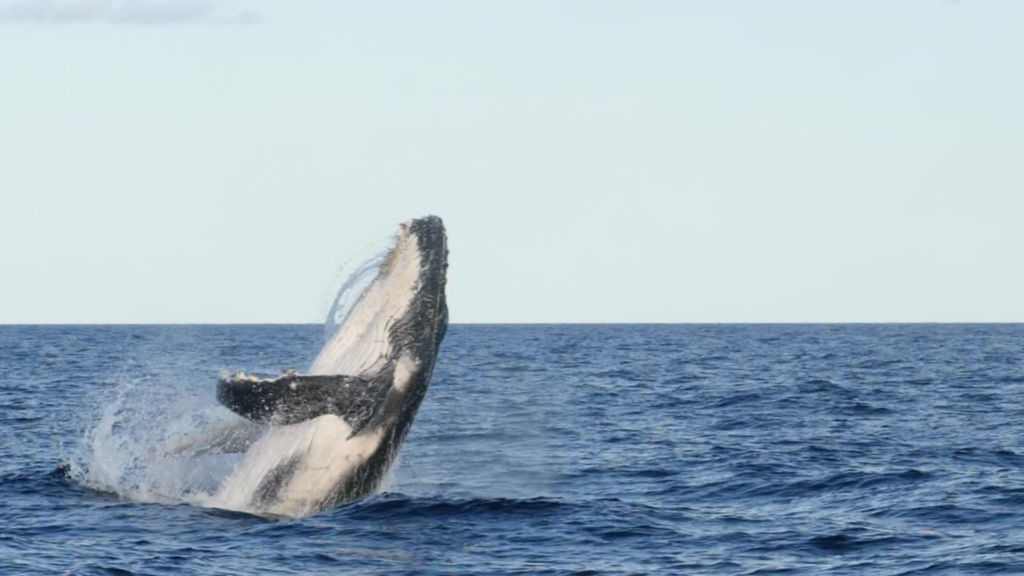
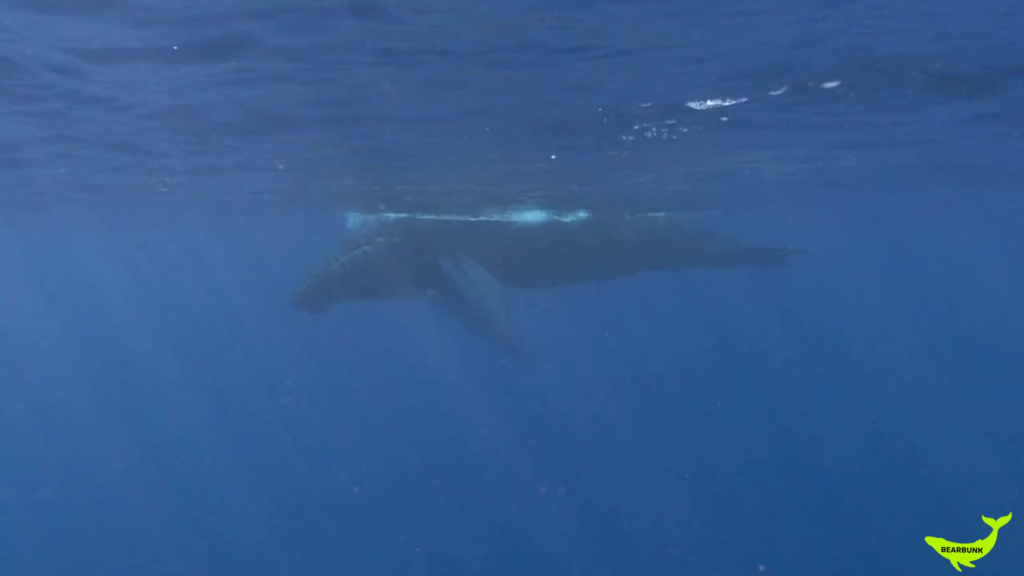
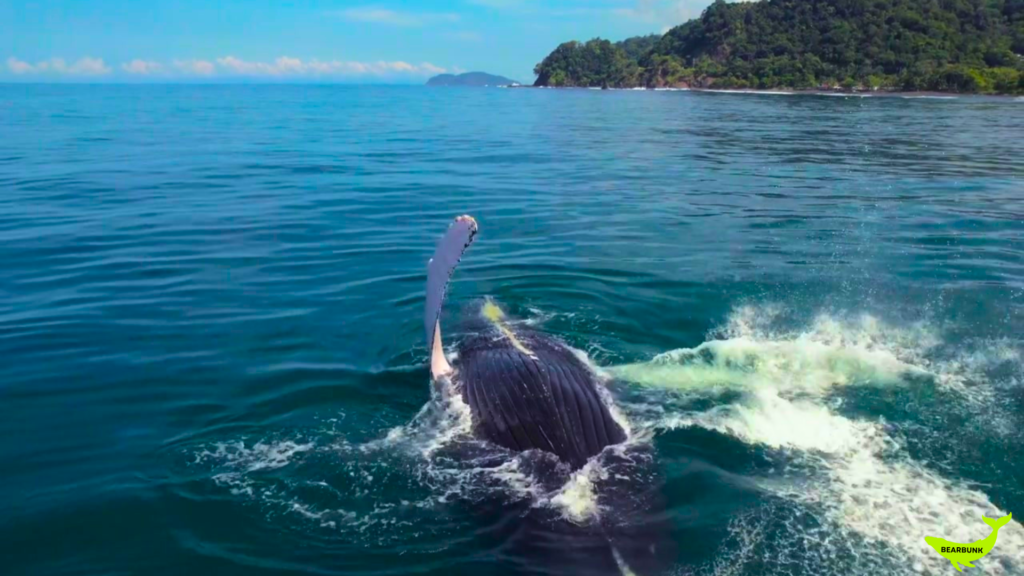
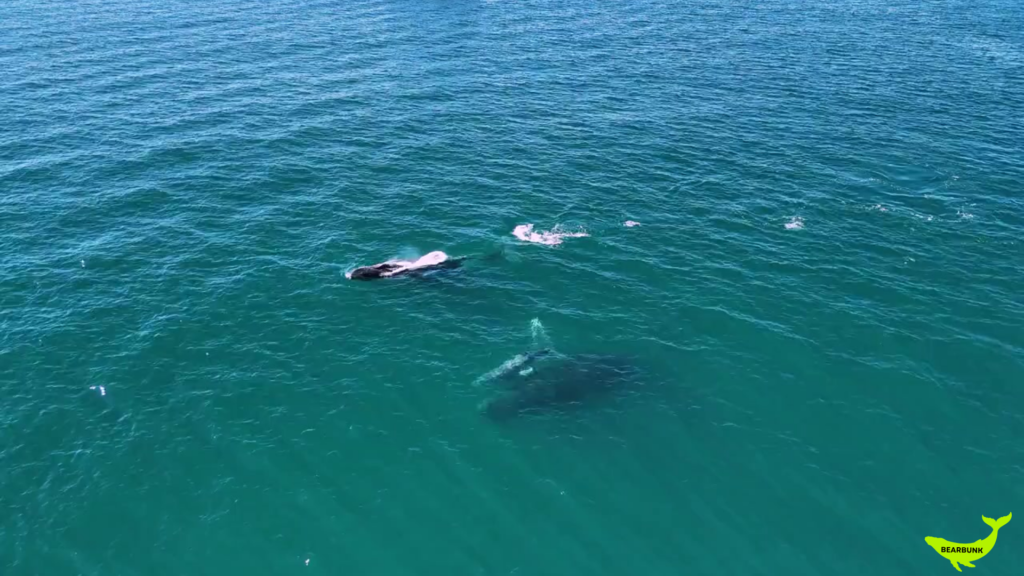
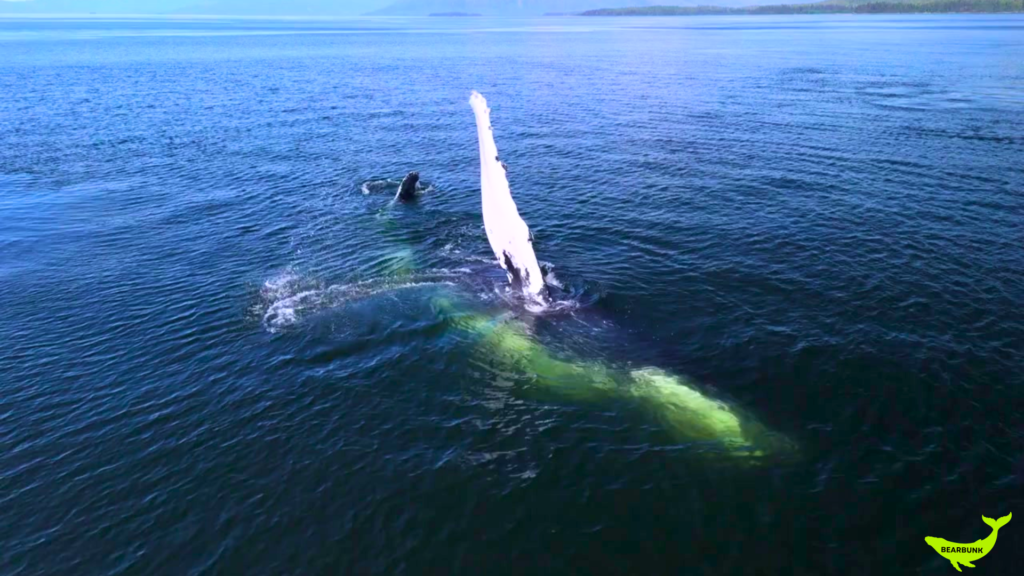
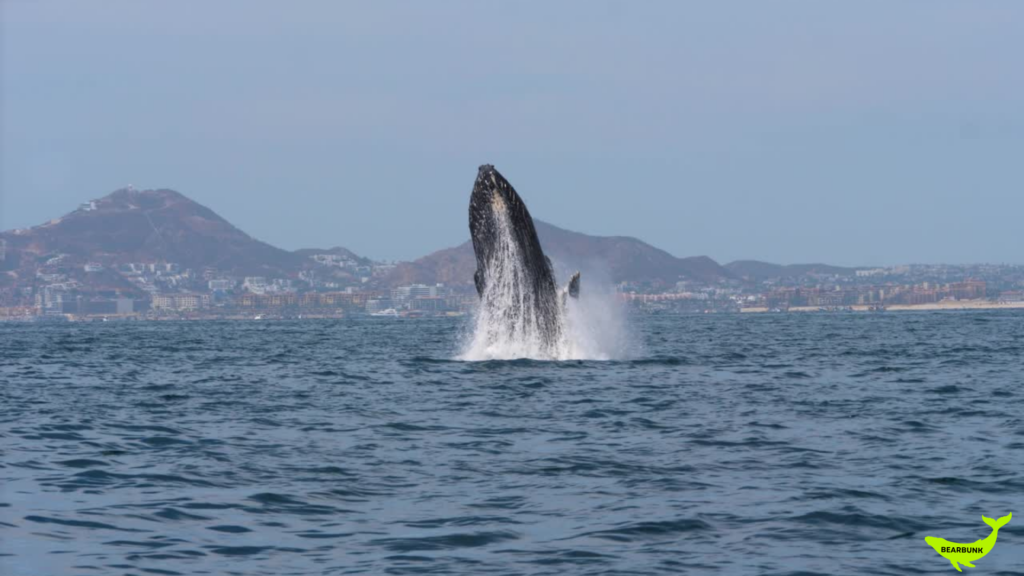
Humpback whales are highly active and social animals. They are famous for breaching, an action where they launch nearly their entire body out of the water before crashing back down with a spectacular splash. They also engage in tail-slapping and flipper-slapping on the ocean surface, which scientists believe may be used for communication or play. Speaking of communication, male humpbacks are renowned for composing incredibly complex, repeating songs made up of moans, cries, and grunts that can travel for miles through the deep ocean. These ever-changing musical arrangements are shared among whales in the same region, evolving over time like a collaborative aquatic symphony. When it comes to diving, humpback whales are powerful underwater travelers, typically diving for 10 to 15 minutes at a time, though they can stay submerged for over 30 minutes when necessary.
Physical Features & Adaptations
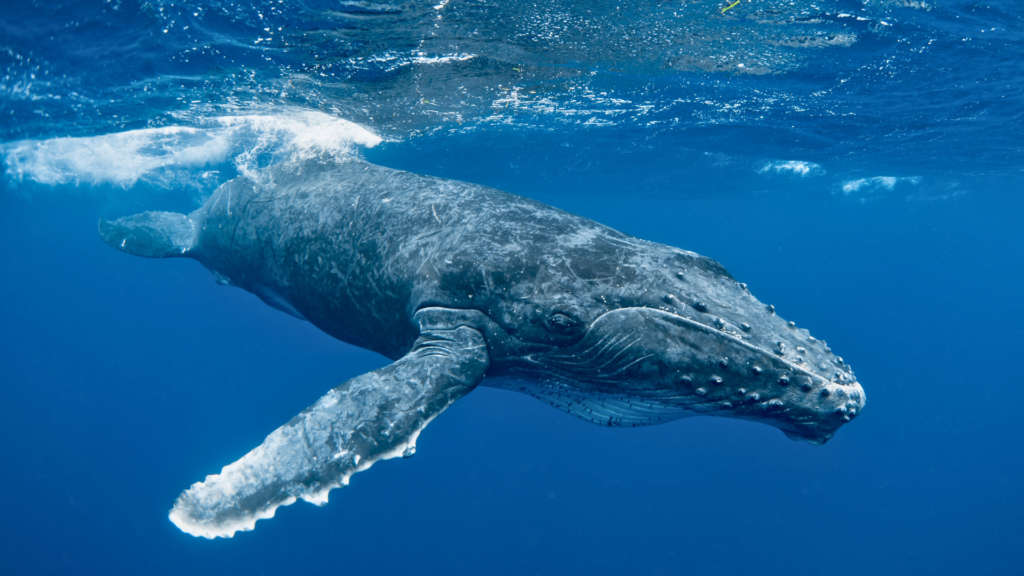
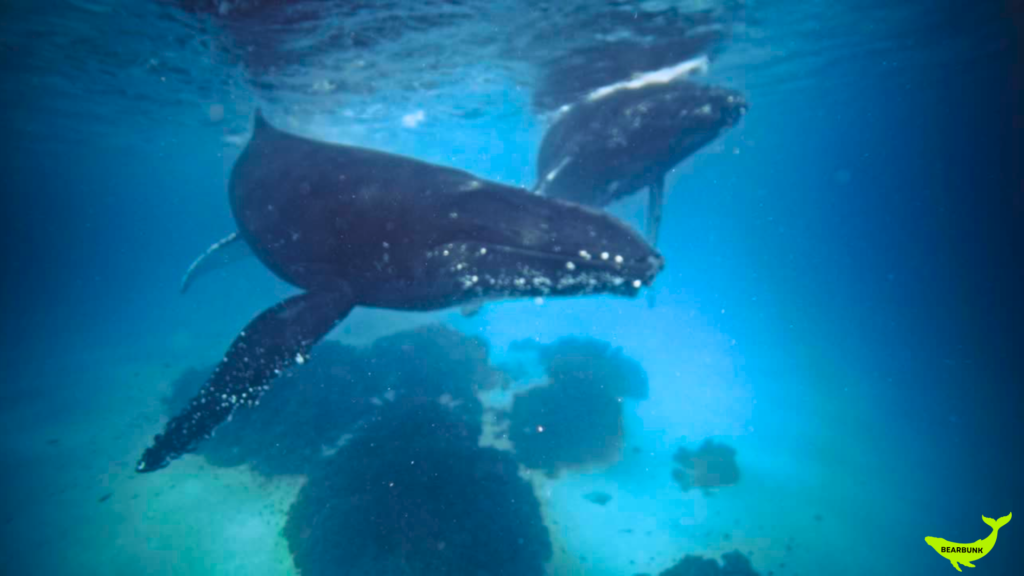
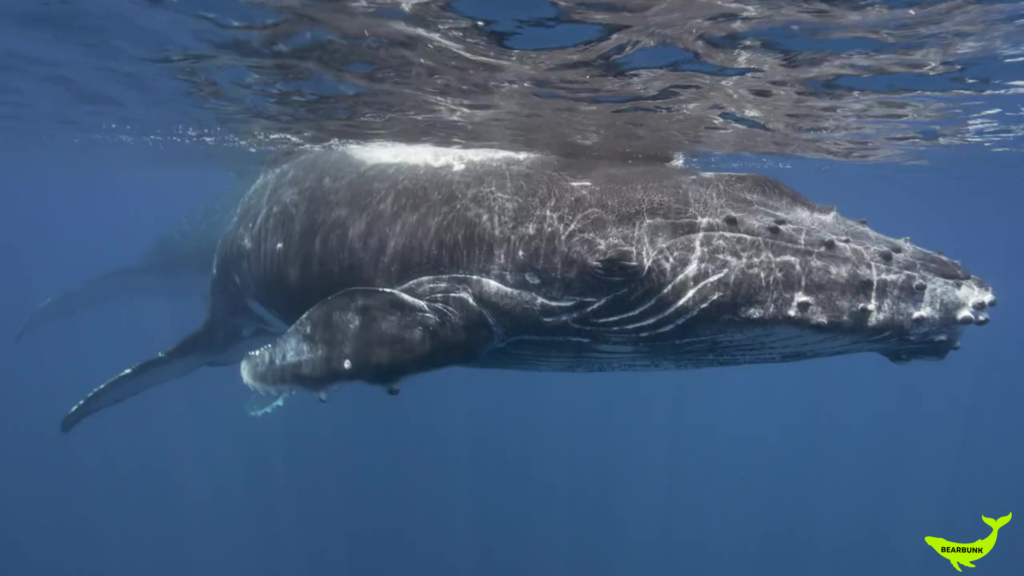
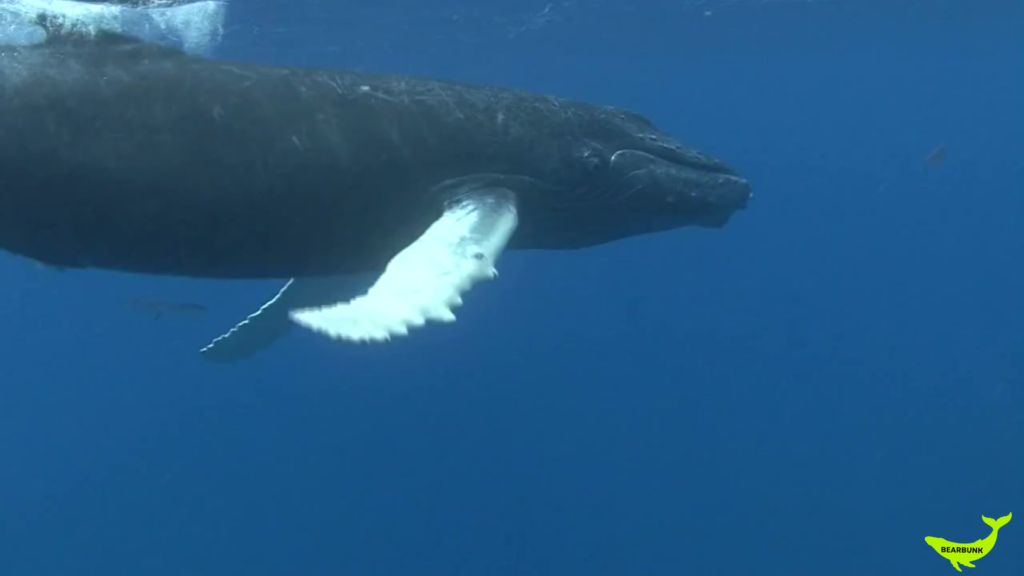
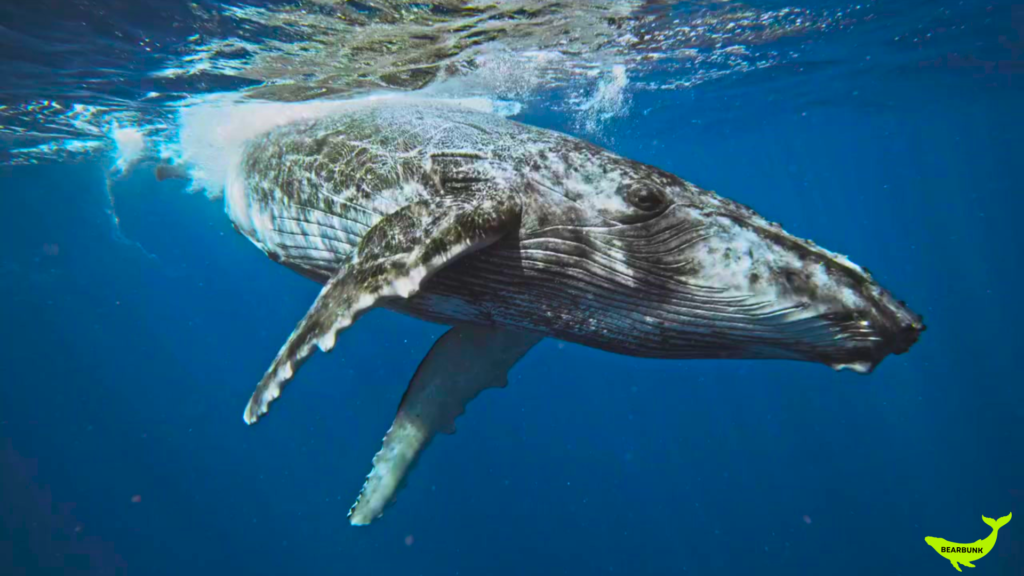
The humpback whale has several highly distinctive physical features. They are famous for having the longest flippers of any whale or dolphin species, which can reach up to one-third of their total body length and help them maneuver with astonishing agility. Another unique trait is the series of rounded bumps, called tubercles, lining their heads and the front edges of their flippers; each of these bumps contains a single hair follicle. Additionally, the underside of a humpback’s tail fluke features a unique pattern of black, white, and gray markings. These tail patterns act just like human fingerprints, allowing researchers to identify and track individual whales throughout their lifetimes. Interestingly, female humpback whales are generally larger than the males, which is rare among large mammals.
Interactions with Humans
Humans and humpback whales have a long history of interaction. In the past, commercial whaling severely threatened their populations, but international protection laws have helped these magnificent giants make an inspiring comeback. Today, humpbacks are the stars of the global whale-watching industry, delighting millions of travelers each year with their playful breaches and friendly curiosity. Marine biologists also work closely with these animals, using non-invasive techniques like photographing their unique tail flukes to track migrations, study population health, and ensure that ocean pathways remain safe for their long journeys.
Fun Facts
- Fingerprint Flukes: The unique black-and-white patterns on the underside of a humpback whale’s tail fluke are completely individual, allowing scientists to identify them just like human fingerprints.
- Giant Babies: A newborn humpback whale calf is already massive, measuring up to 16 feet long and weighing nearly a full ton at birth.
- Super Flippers: Humpback whales possess the longest pectoral flippers of any marine mammal, measuring up to 15 feet long, which gives them incredible agility underwater.
- Bubble-Net Cooperation: To catch schools of fish, humpback whales blow a synchronized wall of bubbles that acts like a net, showcasing a brilliant form of animal teamwork.
- Singing Sensations: Male humpback whales compose complex, underwater songs that can last for hours and gradually change over time within the whale community.
- Length: up to 60 ft /18 m
- Weight: up to 40 tons/36,287 kg
- Flippers: nearly ⅓ of their body length
- Tail: up to 18 ft/5.5 m wide
- Newborn calves: 13–16 ft/4–5 m, nearly 1 ton (2000 lbs/907 kg)
About Humpback Whales
Scientific Family: Balaenopteridae
Number of Species: 1 species (Megaptera novaeangliae)
Habitat: All major oceans, migrating between polar feeding seas and tropical breeding waters
Diet: Krill, herring, sand lance, capelin, and anchovies
Lifespan: 80 to 90 years in the wild
Unique Traits: Extremely long flippers, head tubercles, unique tail fluke patterns, baleen filter plates
Social Structure: Solitary or in loose, temporary groups; strong mother-calf pairs
Fun Fact: Male humpback whales in the same region sing the exact same complex song, which slowly evolves into a brand new tune over the breeding season.
Why We Love Them
We love humpback whales because they represent the true spirit of ocean adventure and natural wonder. From their breathtaking acrobatic breaches to the haunting beauty of their underwater songs, they remind us of the deep mysteries and incredible intelligence that thrive beneath the waves. Their gentle natures, cooperative spirit during bubble-net feeding, and dedicated mother-calf bonds make them one of the most beloved animals on the planet.
Conclusion
In conclusion, the humpback whale is a true marvel of the natural world. Their combination of massive size, surprising agility, complex social behaviors, and spectacular ocean migrations makes them one of the most remarkable mammals on Earth. By learning about and protecting these incredible ocean giants, we help ensure that future generations can look out across the waves and witness the magic of a breaching humpback whale.
Learn More:
Want to see a humpback whale launch its entire massive body out of the ocean water? Check out our full video to watch these acrobatic giants in action, listen to their mysterious songs, and learn more about their incredible life beneath the waves! Watch the full video here:
Humpback Whales Singing Giants of the Deep – YouTube
Read more about:





Leave a Reply