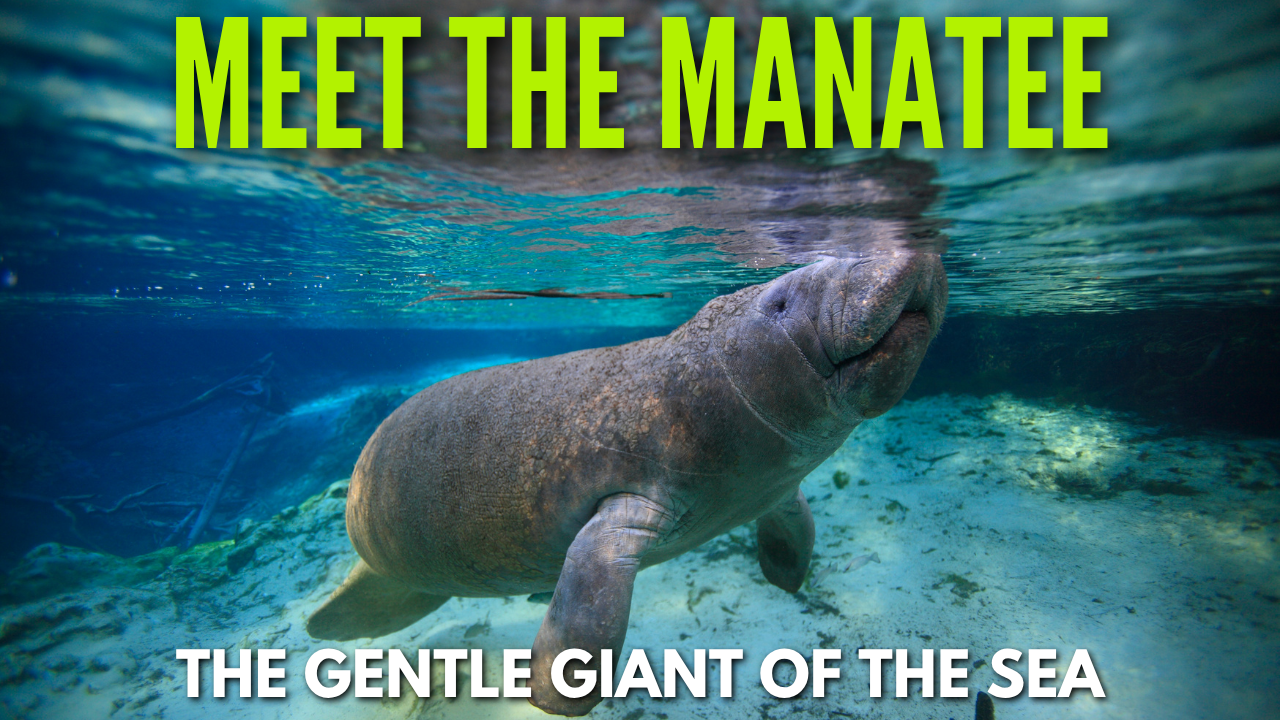
Meet the Manatee
They may look slow and sleepy, but manatees are actually some of the most fascinating animals found in local waters! These gentle giants can spend hours grazing on aquatic plants, use their powerful tails to glide through the water, and even communicate with sweet squeaks and chirps.
With their unique appearance and peaceful nature, manatees have captured the hearts of nature lovers all around the world.
Species of Manatees
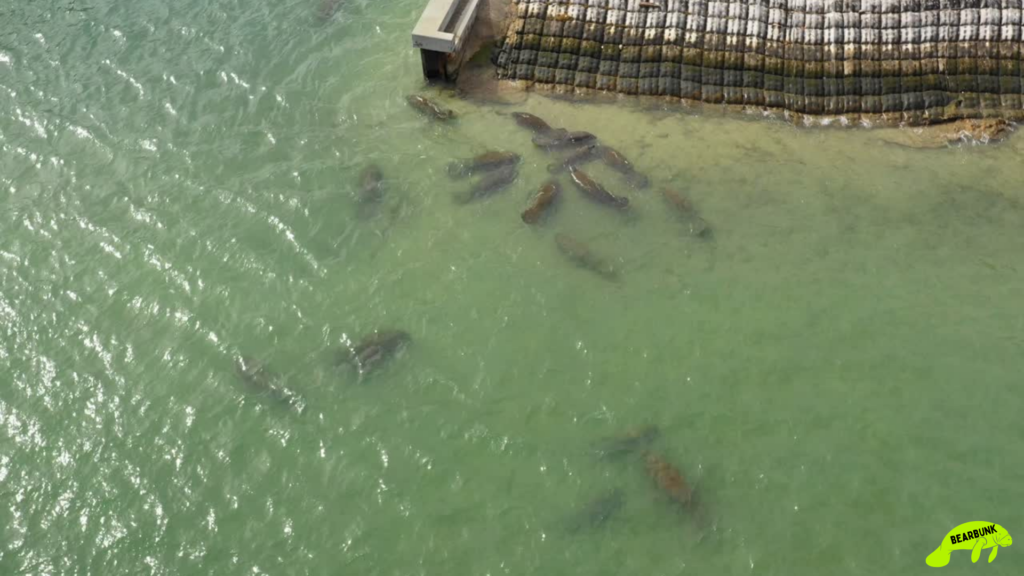
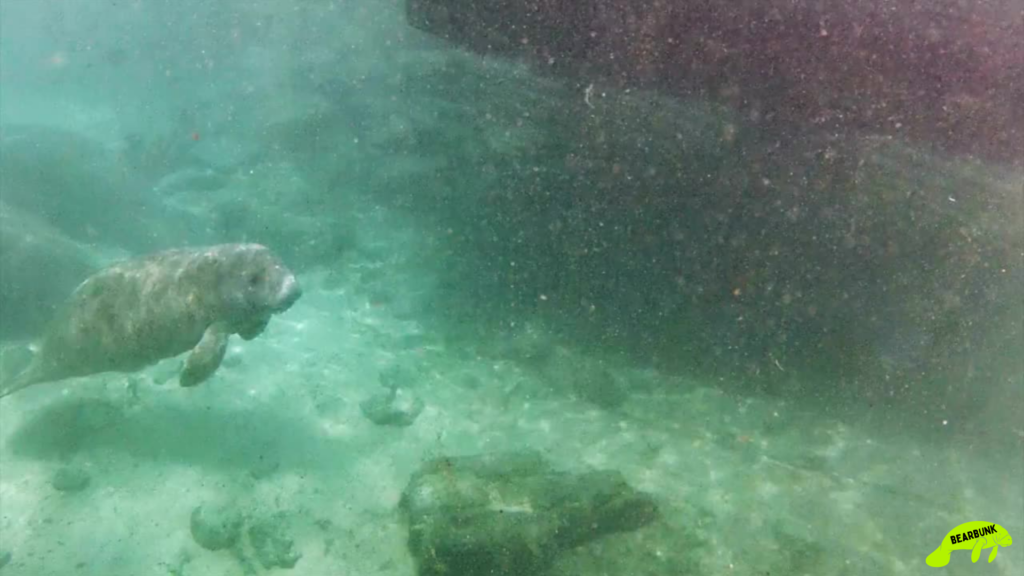
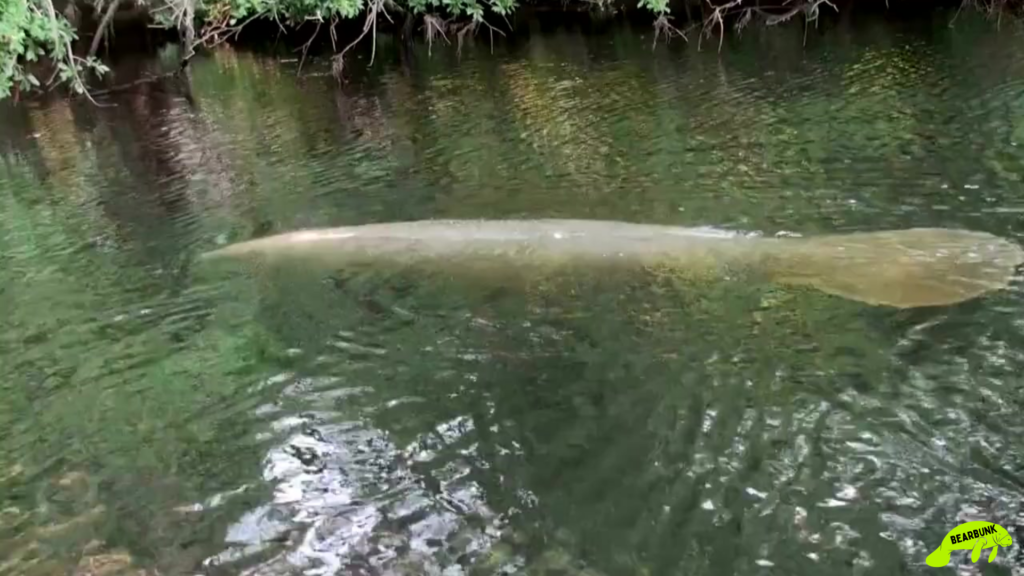
There are three living species of manatees in the world, each adapted to its own unique geographic region.
The West Indian manatee (Trichechus manatus) lives in the warm waters of the Caribbean, Central America, and the southeastern United States.
A well-known subspecies of the West Indian manatee is the Florida manatee (Trichechus manatus latirostris), which is frequently spotted in coastal waterways and springs.
The Amazonian manatee (Trichechus inunguis) resides exclusively in the freshwater rivers and lakes of the Amazon Basin and is the only species without nails on its flippers.
Lastly, the West African manatee (Trichechus senegalensis) inhabits the rivers, lakes, lagoons, and coastal waters of western Africa.
Habitat
Manatees are perfectly suited for aquatic life and can thrive in both fresh and salt water. They are typically found in shallow coastal areas, rivers, springs, canals, bays, and warm-water wetlands where aquatic vegetation is abundant.
Because they have a low metabolic rate and minimal fat insulation, manatees cannot survive in water temperatures below 68 degrees Fahrenheit for long periods. During the cooler winter months, they seek out warm-water refuges such as natural springs and warm-water discharge canals to stay comfortable and healthy.
Diet
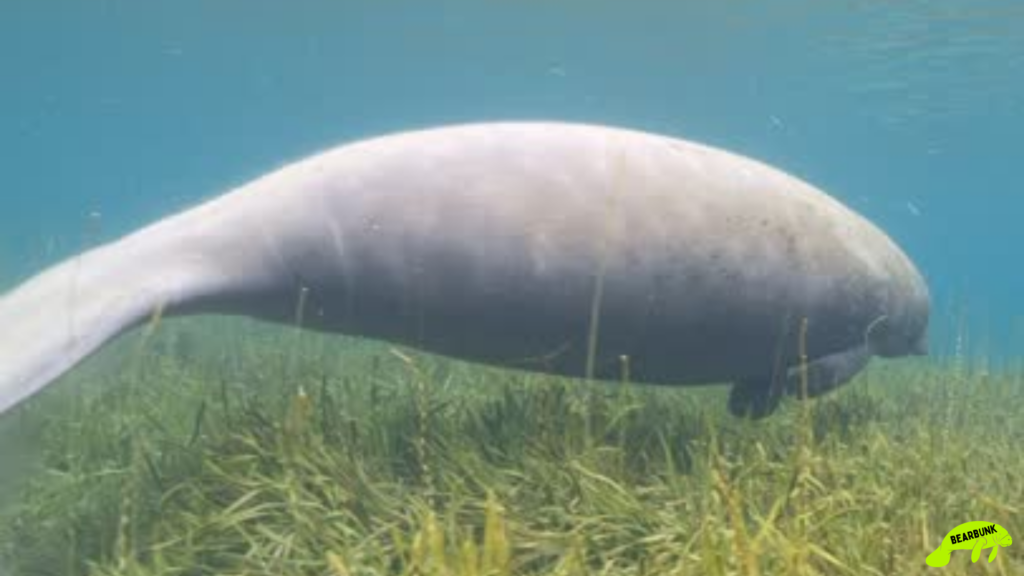
For an animal that can weigh more than a thousand pounds, you might expect manatees to have a huge appetite, and you would be right! Manatees are herbivores, meaning their diet consists almost entirely of aquatic plants.
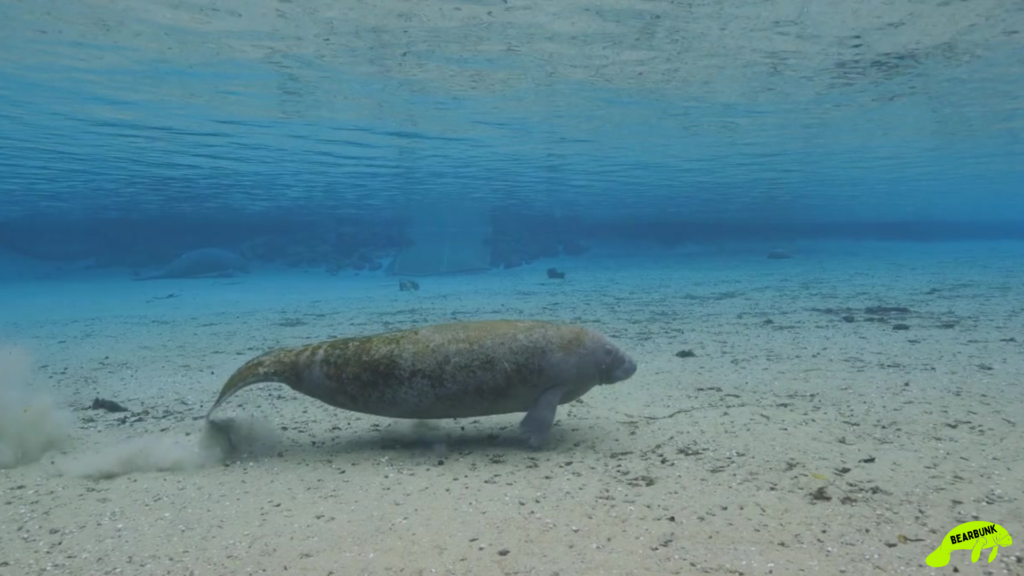
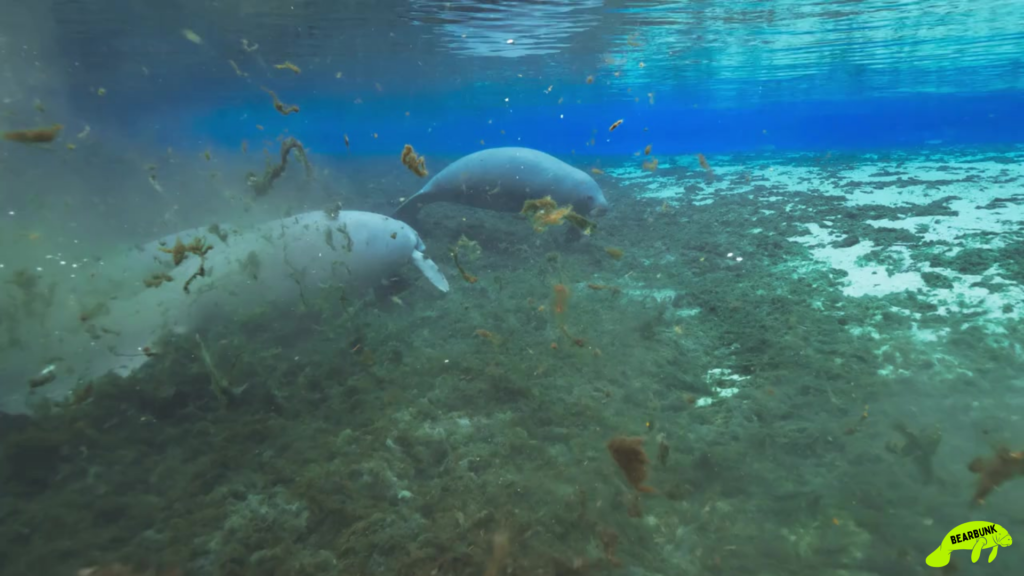
They spend up to eight hours a day grazing on vegetation like seagrasses, freshwater plants, water lettuce, and other soft plants. A large manatee can eat roughly ten percent of its body weight in plants in a single day, which can add up to dozens of pounds of vegetation! They use their flexible lips to grasp plants and pull them into their mouths.
Because of the sand and grit in their food, manatees have evolved a unique dental system where they constantly replace worn-out teeth with new ones that slide forward from the back of the jaw, often called marching molars.
Share On Social:
Mating, Babies & Family Life
Family life is gentle and highly protective, centered primarily around the bond between a mother and her calf. Female manatees usually give birth to a single calf after a gestation period of about thirteen months. Calves are born underwater and must quickly swim to the surface with their mother’s help to take their first breath.
A newborn calf stays very close to its mother, nursing for up to two years even after it begins eating plants. The mother-calf bond is incredibly strong; the pair swims together constantly, communicating through sweet squeaks and chirps. It takes several years for a young manatee to reach full maturity and independence.
Behavior & Social Life
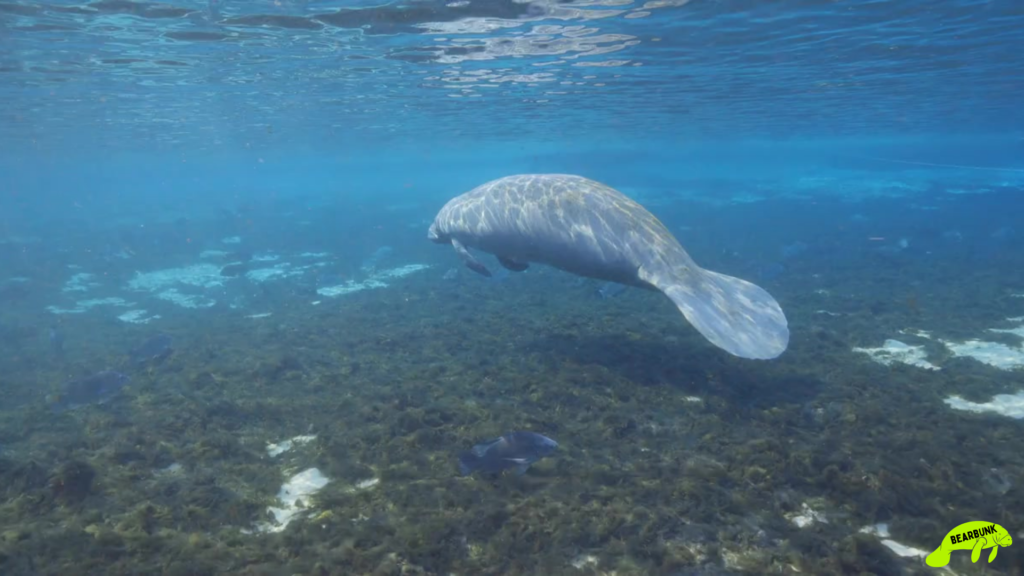
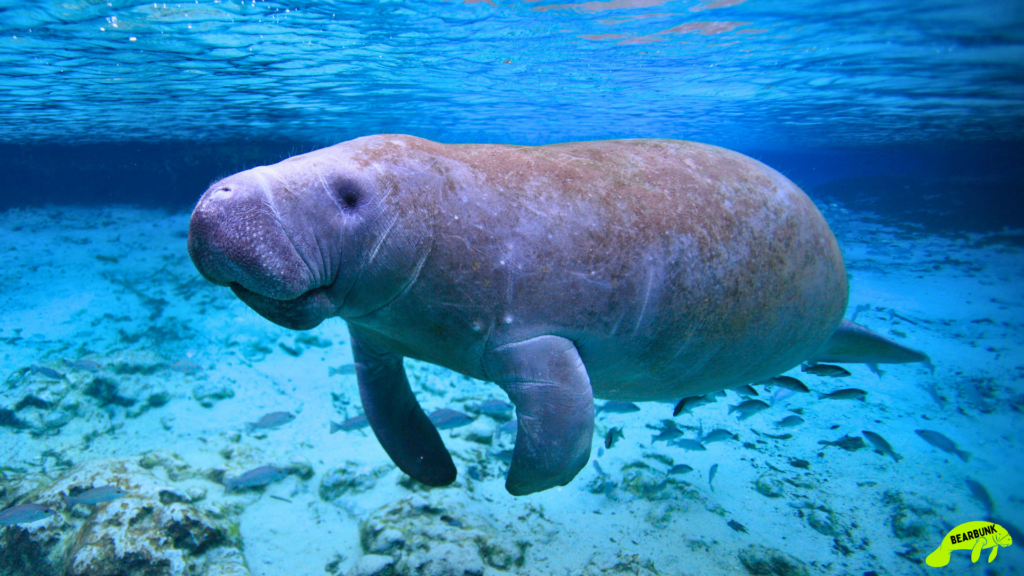
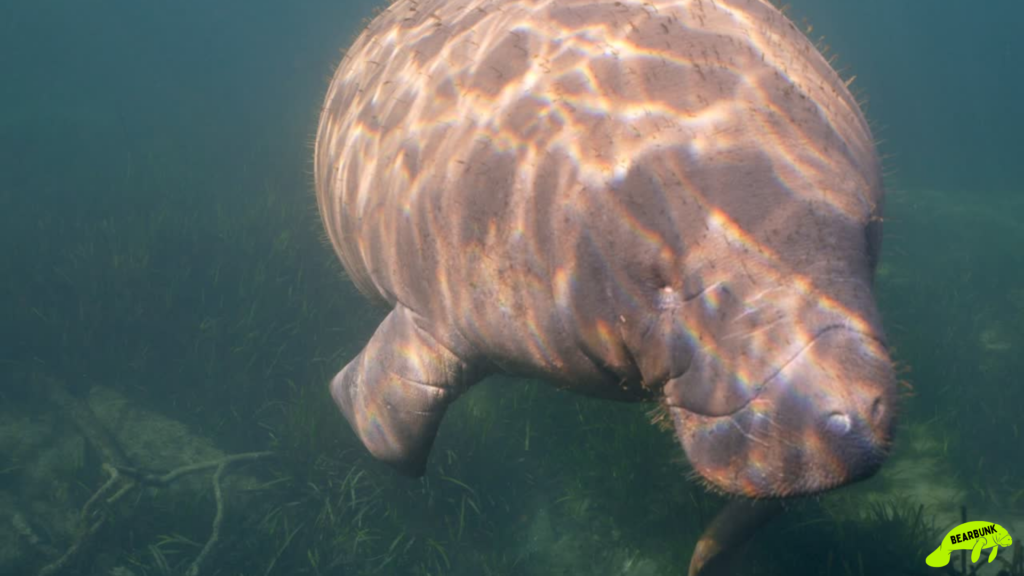
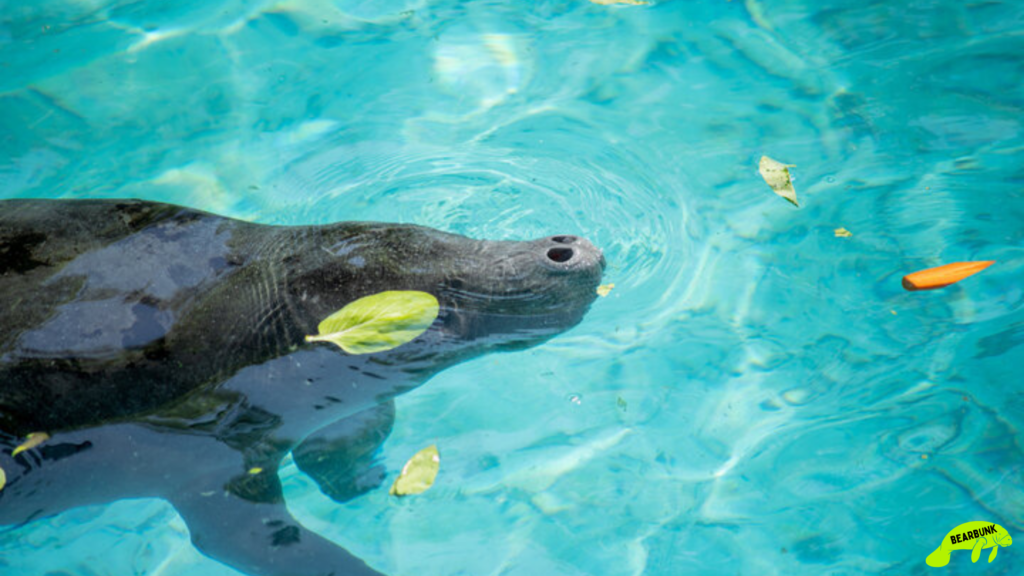
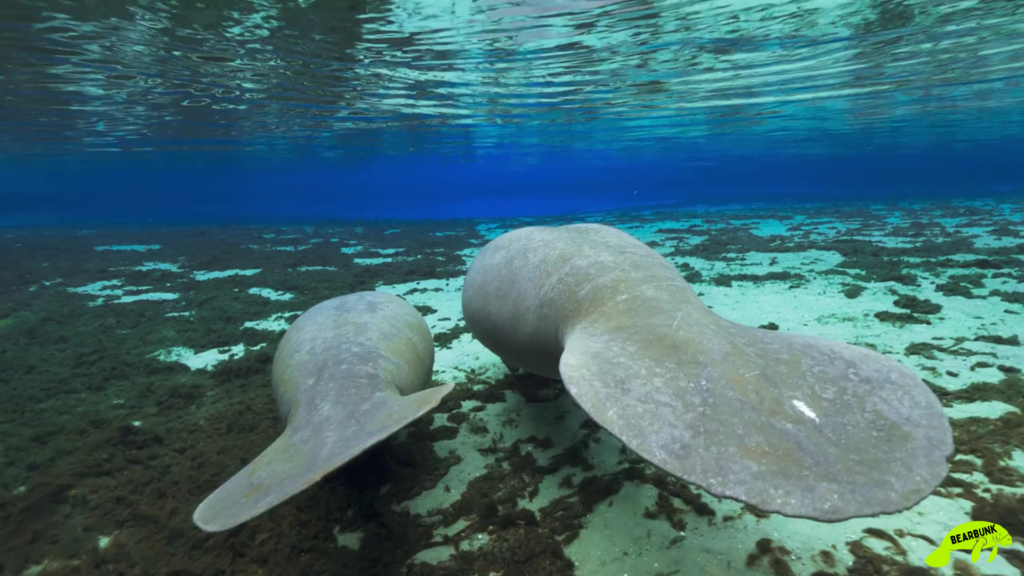
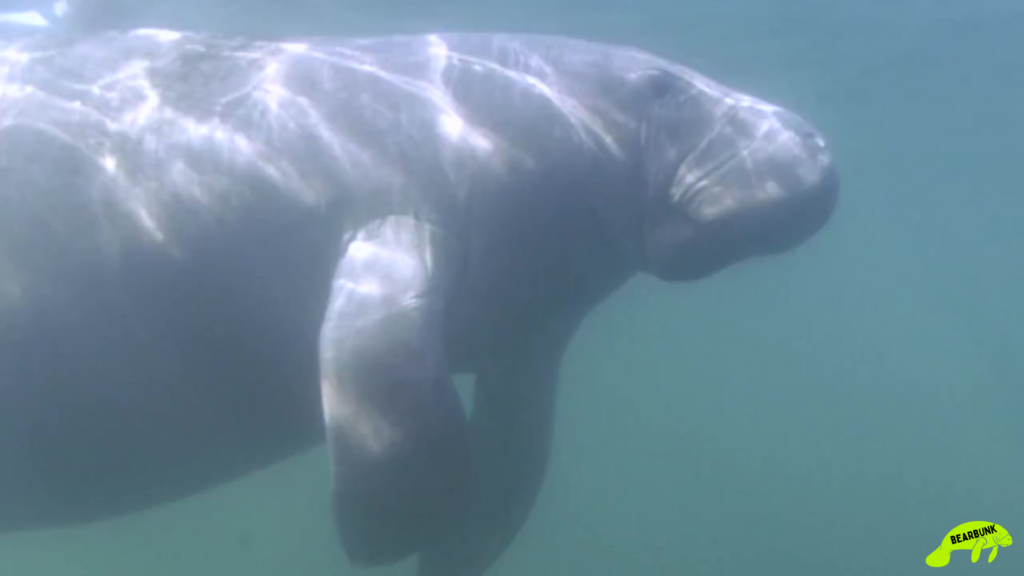
Manatees have several physical adaptations that help them live and move through aquatic environments. Their large, rounded bodies are streamlined for slow, steady swimming, while their broad, paddle-like tails provide propulsion. Their flexible flippers help them steer, move through shallow water, and even manipulate food. Manatees also have sensitive whiskers called vibrissae around their snouts, which help them sense and explore their surroundings. Their molars are another unusual feature: as older teeth wear down from feeding on vegetation, new teeth move forward to replace them.
Physical Features & Adaptations
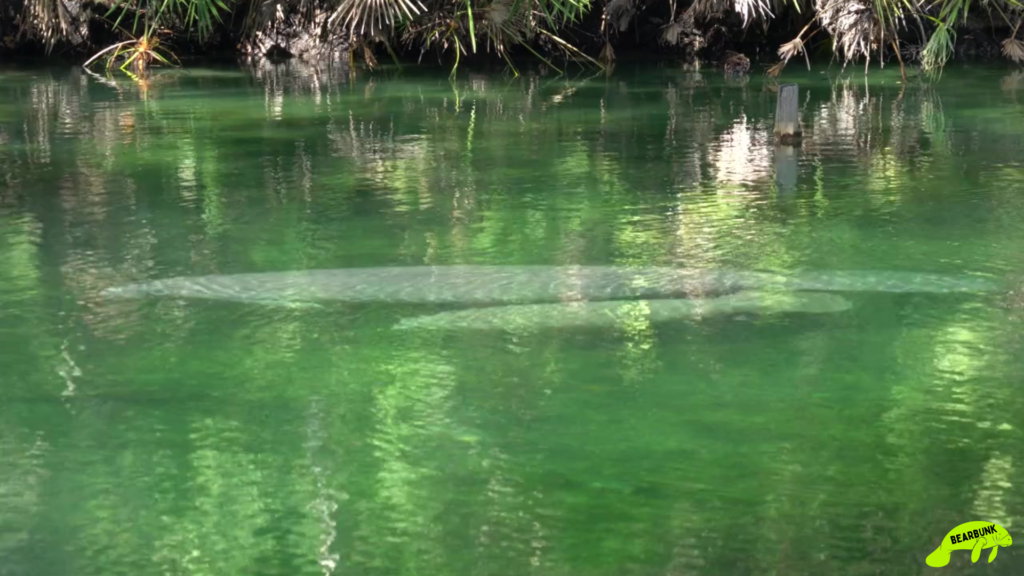
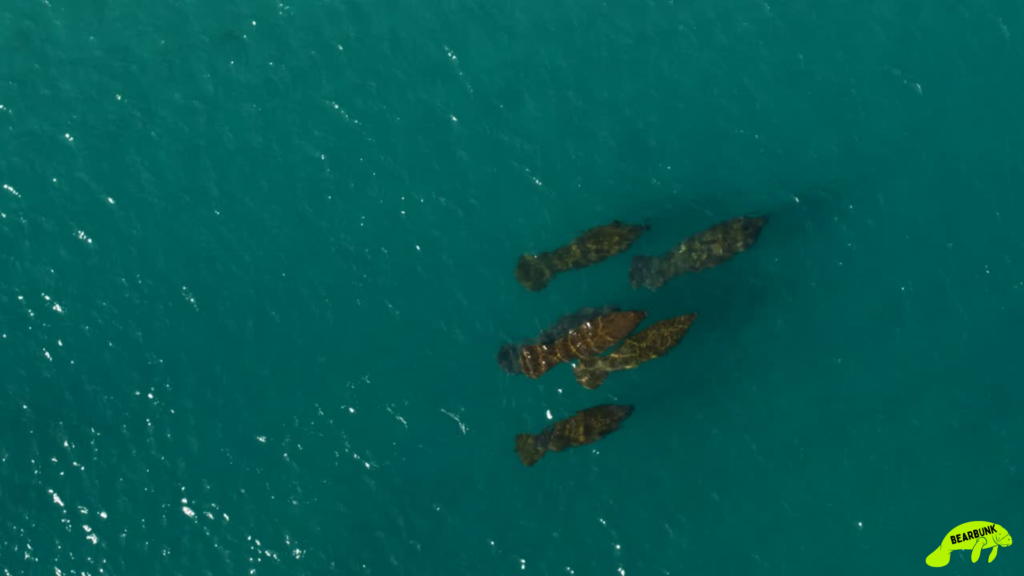
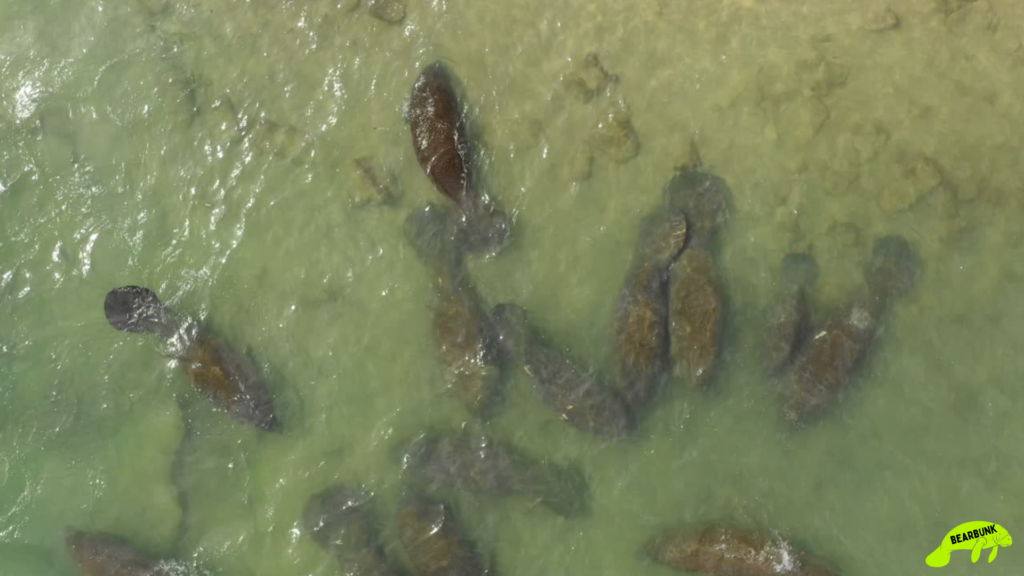
Manatees are generally peaceful and gentle animals that spend much of their time feeding, resting, and traveling through the water. They are not highly territorial and can often be found alone, in pairs, or in loose groups, especially where food or warm water is plentiful. Mothers and calves form especially strong bonds, with calves remaining close to their mothers while they learn how to navigate their environment and find food. Manatees communicate through a variety of vocalizations, including squeaks, chirps, and squeals, particularly when interacting with one another or when a mother and calf are separated.
Fun Facts
- Elephant Cousins: Despite living in the water, manatees are actually close relatives of the modern elephant, sharing a common ancestor.
- Marching Molars: Manatees have a continuous tooth replacement system where new teeth grow in the back and push older, worn teeth forward.
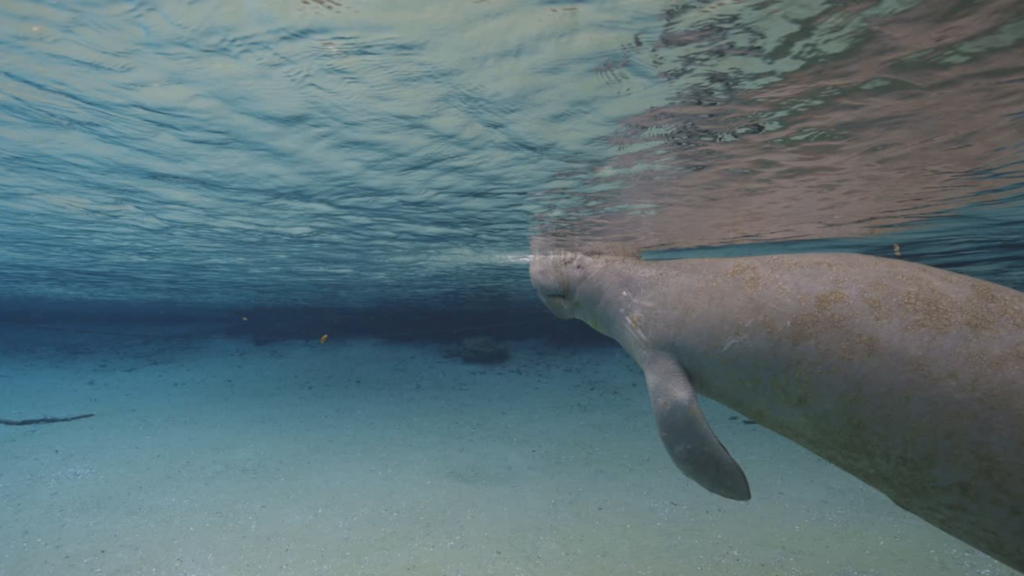
- Super Snorkelers: A manatee can hold its breath for up to 20 minutes while resting underwater before needing to surface for air.
- Giant Appetites: A single adult manatee can consume up to 100 to 150 pounds of aquatic plants in just one day.
- Natural Buoyancy: Their lungs stretch along much of their body cavity, allowing them to control their buoyancy and float effortlessly.
- Sensitive Whiskers: Manatees have hundreds of highly sensitive facial hairs called vibrissae that help them feel their way through murky waters.
About Manatees
Scientific Family: Trichechidae
Number of Species: Three distinct species (West Indian, Amazonian, West African)
Habitat: Warm coastal waters, rivers, springs, and estuaries
Diet: Herbivorous, focusing on seagrasses, water lettuce, and freshwater plants
Lifespan: Several decades in the wild, up to 60 years or more
Unique Traits: Paddle-shaped tail, flexible facial whiskers, no dorsal fin
Social Structure: Semi-social, forming temporary groups or strong mother-calf bonds
Fun Fact: Manatees can turn, roll, swim backward, and even do underwater somersaults!”
Why We Love Them
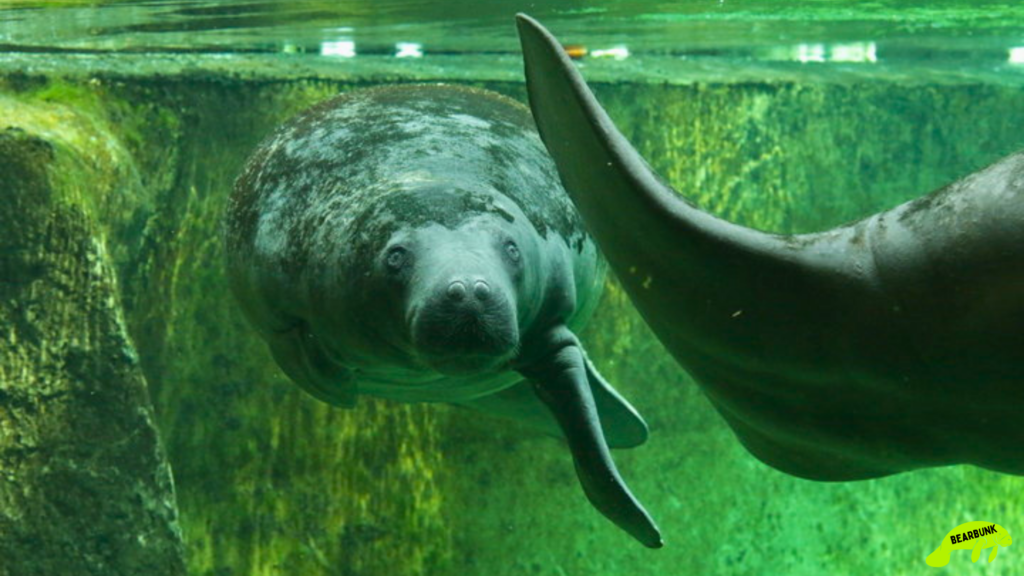
We love manatees for their gentle, slow-paced lifestyle and peaceful disposition. In a fast-moving world, they remind us of the beauty of slowing down, grazing on seagrass, and drifting gracefully through clear spring waters. Their sweet, expressive faces, curiosity, and the deep bond between mothers and calves make them truly unforgettable animals that inspire us to protect our natural waterways.
Conclusion
Manatees are truly remarkable treasures of the aquatic world. From their unique biological adaptations like marching molars and buoyancy-controlling lungs to their gentle spirits and family bonds, they are a vital part of our global freshwater and marine ecosystems. By learning about manatees and supporting conservation efforts, we can help ensure that these gentle giants continue to grace our rivers and coastal waters for generations to come.
Learn More:
Want to see these amazing animals in action? Watch our full video here:
The Secret World of Manatees Nature’s Underwater Grazers! – YouTube
Read more about:




Leave a Reply