
Meet the Wallaby
Wallabies are some of Australia’s most charming and energetic animals, known for their bright eyes, quick hops, and gentle personalities. These small marsupials may look like miniature kangaroos, but they have their own unique traits that set them apart. With more than 30 species across Australia and nearby islands, wallabies live in a surprising range of environments — from dense forests to rocky cliffs and coastal scrublands. Each species has its own habits, markings, and adaptations, making wallabies one of the most diverse and fascinating groups of marsupials in the world.
In this guide, we’ll explore the many species of wallabies, where they live, what they eat, how they raise their young, and the behaviors that help them survive in the wild. We’ll also share extra details not mentioned in the video, including wallaby communication, their relationship with other species, and how they’ve adapted to live near rural backyards in parts of Australia. Let’s hop into their world and learn what makes these little hoppers so special.



Species of Wallaby
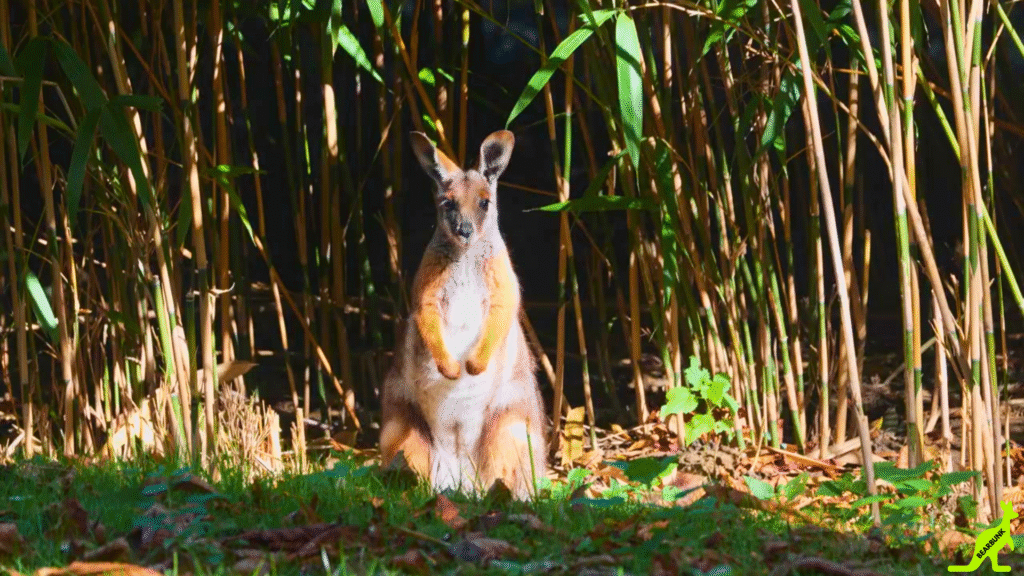
Wallabies belong to the family Macropodidae, which includes kangaroos, wallaroos, and several related species. Within the wallabies themselves, there are dozens of unique species, each adapted to a different niche within Australia’s ecosystem. Here’s a quick grid highlighting some well-known wallabies and their traits:
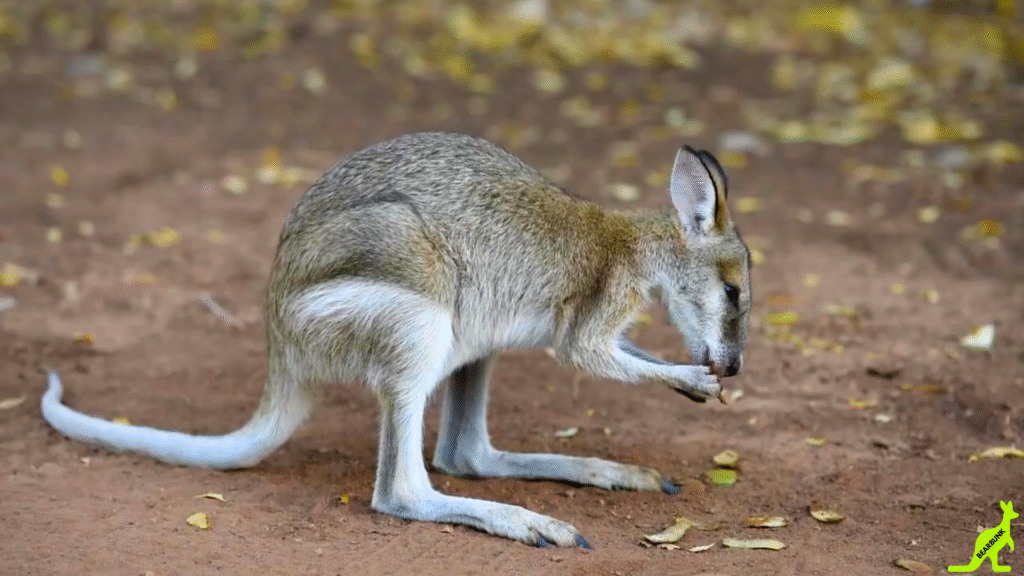
Agile Wallaby
Macropus agilis
A slender, lightly built wallaby found in northern Australia; known for quick movement and social grazing groups.
Tammar Wallaby
Notamacropus eugenii
Small, compact species native to southern and western Australia; one of the first wallabies scientifically described.
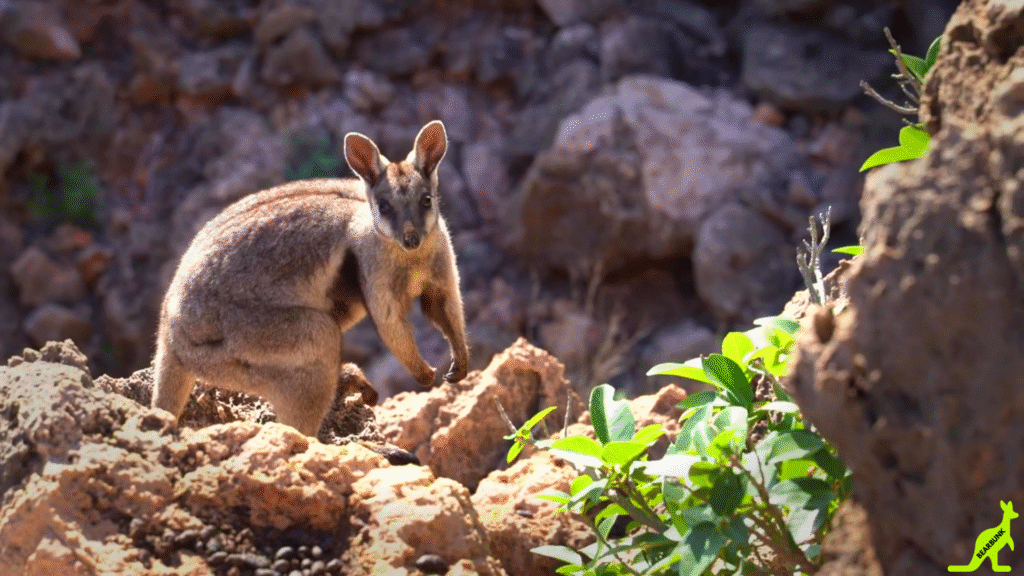
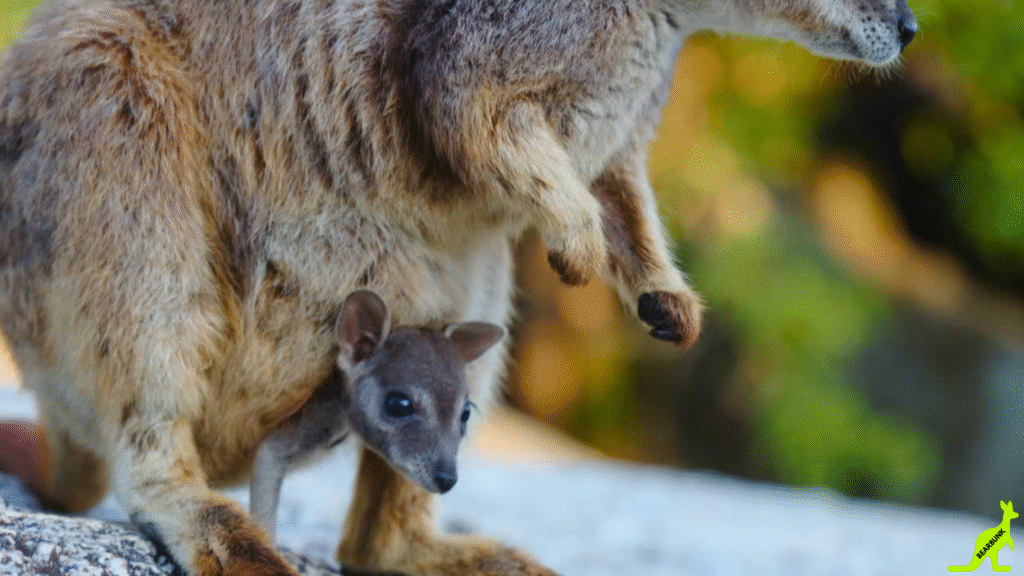
Yellow-Footed Rock Wallaby
Petrogale xanthopus
Strikingly colored species with bands and yellow limbs; lives in rugged rocky terrain and steep cliffs.
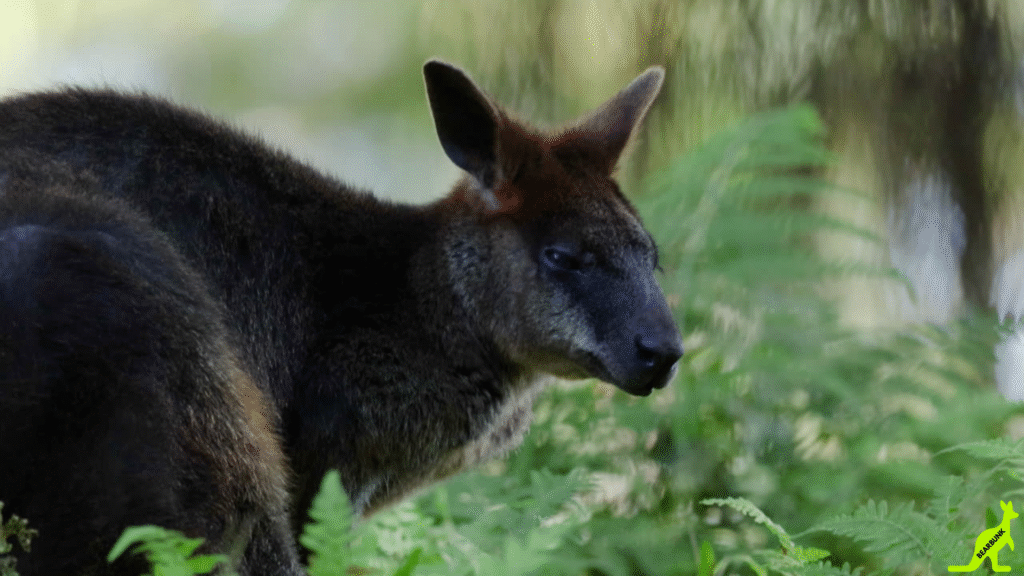
Swamp Wallaby
Wallabia bicolor
Dark-colored wallaby with reddish markings; prefers thick vegetation and wetlands.
Red-Necked Wallaby
Notamacropus rufogriseus
Recognizable by its reddish shoulders and gray coat; found in eastern and southeastern Australia.
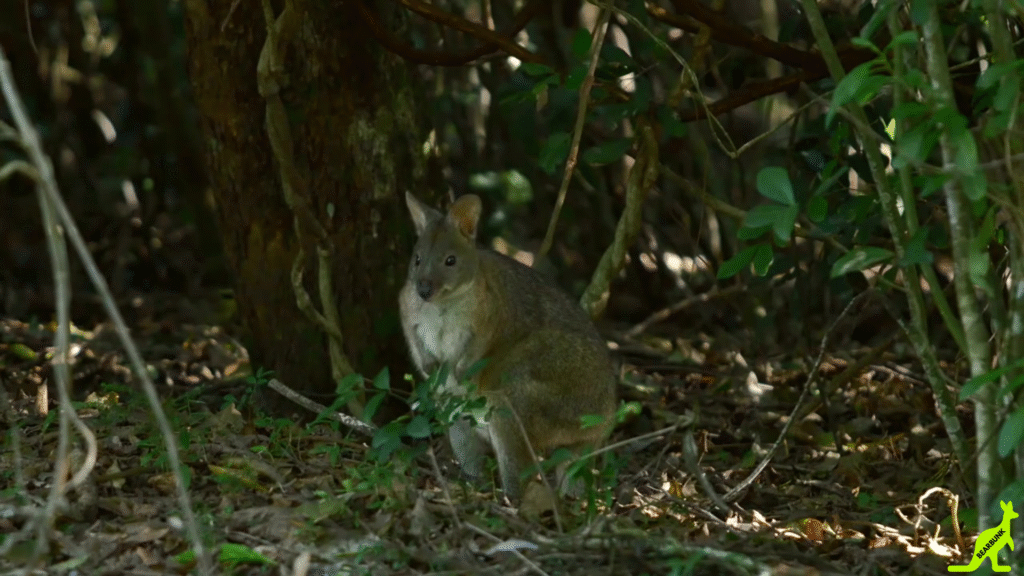
Brush Wallaby
Notamacropus irma
Lives in forests and woodland habitats; soft gray-brown fur blends well with vegetation.
Wallaby species vary greatly in size, coloration, and behavior. Some leap gracefully across open fields, while others cling to the edges of cliffs where most animals could never balance. This diversity makes exploring wallaby species a fascinating journey on its own.
With so many distinct species and adaptations, wallabies are a perfect example of how animals evolve to thrive in dramatically different environments. Whether bounding across grasslands or scaling steep rock faces, each species shows a unique piece of Australia’s ecological puzzle.
Habitat
allabies live in a surprisingly wide range of habitats across Australia and Tasmania. Their adaptability is one of their greatest strengths, allowing them to occupy ecosystems that differ in vegetation, climate, and terrain.
In forested areas, wallabies rely on dense plant cover for protection and feeding. Woodland habitats provide access to leaves, shoots, and open patches where they graze at dawn and dusk. Grasslands and savannas are home to species that prefer wide-open spaces, where their speed and awareness help them detect predators from afar.
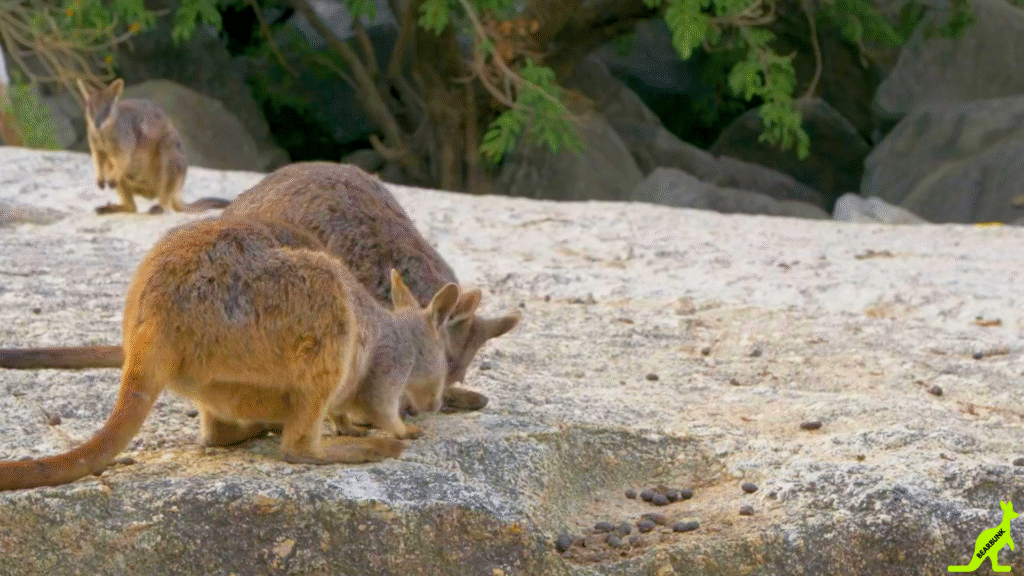
Rocky cliffs and escarpments — home to rock wallabies — present a completely different challenge. These habitats require incredible balance and strength, and wallabies here have evolved padded feet, powerful tails, and muscular legs to help them navigate steep, uneven terrain.
Some species also live near wetlands, marshes, or rainforest edges, where vegetation stays lush year-round. Coastal scrublands offer yet another habitat, with low shrubs and sandy soils that support small, resilient plant species.
In parts of rural Australia, wallabies may occasionally appear near backyards, farms, or orchards, especially where natural habitat borders human land. These sightings are more common in rural and semi-rural areas rather than dense cities. Their presence near people shows how well they can adapt as long as suitable food and shelter remain nearby.
Diet
Wallabies are primarily herbivores, feeding on grasses, leaves, herbs, and shoots depending on the species and season. Their diet often shifts throughout the year based on rainfall, plant growth cycles, and habitat. Swamp wallabies have one of the most varied diets among wallabies, browsing on shrubs, young tree leaves, and even some tougher vegetation that other wallabies avoid.
Their specialized stomach helps break down fibrous plants and extract nutrients efficiently. Wallabies usually feed during the early morning and late afternoon to avoid the intense Australian heat. In some areas, they’ve even been observed eating fungi, seeds, and coastal vegetation, showing how adaptable their diet can be when needed.
Wallabies use their small front paws like delicate hands, pulling branches close or turning stems while they eat. Their teeth are designed for grinding plant matter, and their efficient digestive system allows them to thrive even in environments where food availability changes with the seasons.
Share On Social:
Mating & Raising Young
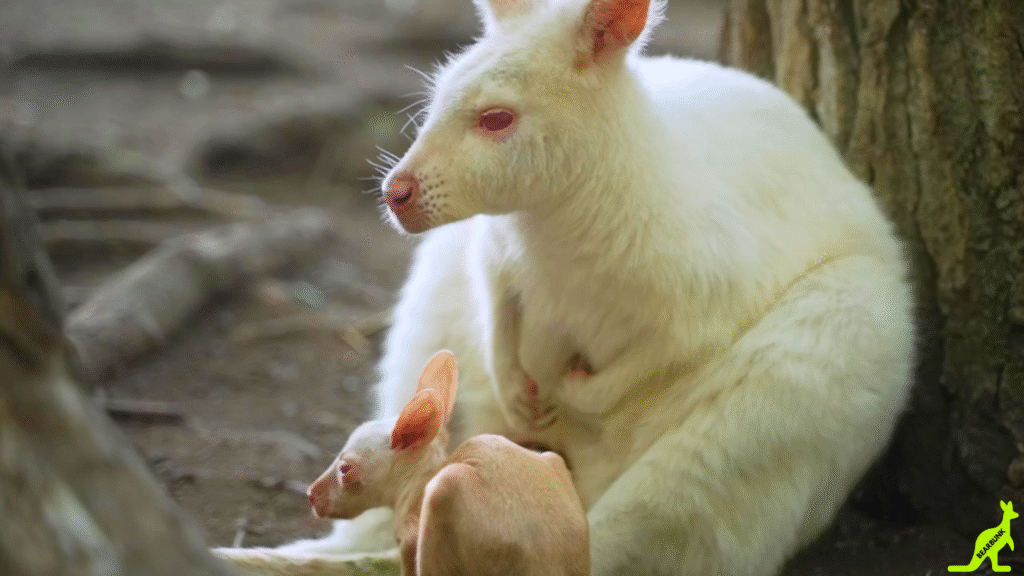
Wallaby reproduction centers around one of the most remarkable features of marsupials: the pouch. After a very short pregnancy — sometimes just a few weeks — a tiny, underdeveloped joey is born. The newborn, often no larger than a jellybean, crawls unassisted into the mother’s pouch, where it continues developing in warmth and safety.
Inside the pouch, the joey latches onto a teat and stays there for several months. During this time, it grows fur, opens its eyes, and gains strength. Once large enough, the joey begins peeking out, then venturing outside for brief moments before returning to the pouch for comfort and protection. Even after permanently leaving the pouch, many joeys stay close to their mothers for extended periods as they learn to forage and navigate their environment.
Some wallaby species have the remarkable ability to delay embryo development — a process called embryonic diapause — allowing mothers to time birth and pouch occupancy around environmental conditions. This adaptation helps ensure that young have the best chance of survival.



Fun Facts
Wallabies are full of unique traits and quirky behaviors. Here are a few extra fun facts beyond what’s in the video:
• Wallabies can regulate their body temperature by licking their arms, allowing the moisture to evaporate and cool their blood — similar to how kangaroos stay cool.
• Their tails are incredibly strong and can support much of their body weight, helping them balance, sit upright, or even brace while kicking.
• Rock wallabies have rubbery textured footpads that act like natural climbing shoes, giving them grip on steep cliffs.
• Wallabies often perform gentle “chewing” motions even when not eating — a calm behavior thought to help communication and relaxation.
• Some species have reflective layers behind their eyes, similar to cats, allowing them to see better in low light.
• Wallabies can leap several times their own body length, making them surprisingly agile in the wild.
About Wallabies
Common Name: Wallaby
Scientific Name: Various species (family Macropodidae)
Family: Macropodidae
Subfamily: Macropodinae
Size: Typically 1.5 to 3 feet tall
Weight: 10 to 45 pounds
Lifespan: 9 to 15 years in the wild
Location: Australia, Tasmania, and nearby islands
Habitat: Forests, grasslands, savannas, rocky cliffs, wetlands, scrublands, rainforest edges, coastal areas, rural regions
Diet: Grasses, leaves, shrubs, herbs, shoots, and occasional fruits or fungi
Conservation Status: Varies by species; some stable, others endangered due to habitat loss and introduced predators
Wallabies are agile, strong, and highly adaptable marsupials known for their gentle personalities, powerful legs, and impressive hopping abilities. Their diversity across habitats and species makes them a remarkable example of Australia’s natural richness.
Why We Love Them
Wallabies are small but mighty animals with big personalities. Whether watching a joey peek from its mother’s pouch or seeing a rock wallaby hop effortlessly across cliff edges, there’s always something fascinating about these graceful creatures. Their adaptability, expressive faces, and gentle nature make them some of the most beloved animals in the Australian wild.
Conclusion
From dense forests to rugged cliffs and coastal scrublands, wallabies have evolved to thrive in some of Australia’s most diverse landscapes. Their powerful legs, sensitive ears, and remarkable ability to raise young in a pouch show just how well adapted they are to their environment. Whether you encounter them in wildlife reserves or see them in videos and documentaries, wallabies remain one of the most endearing and impressive animals in the marsupial world. Their charm, agility, and surprising strength remind us how extraordinary nature can be — even in its smallest hoppers.
Watch the Video on YouTube:
Not a Baby Kangaroo! Meet the Wallaby — Australia’s Little Hopper With Big Personality
Learn more about:






Leave a Reply