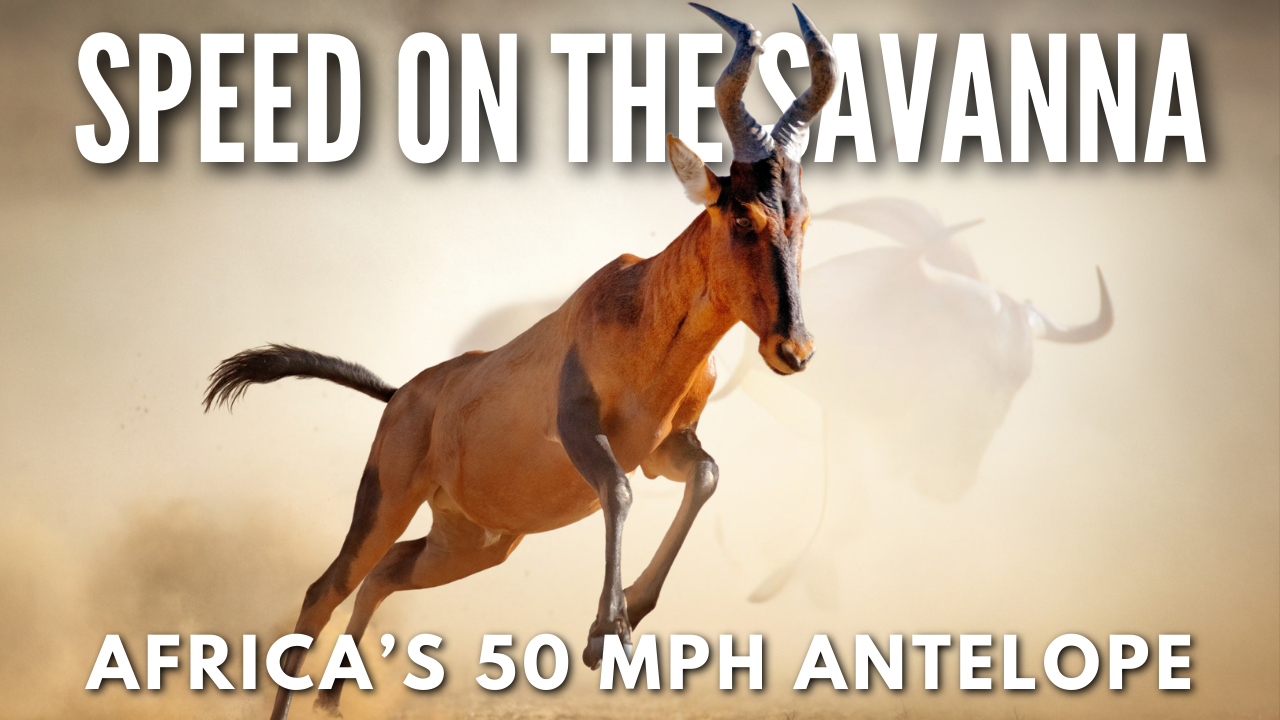
Meet the Hartebeest
The hartebeest is one of Africa’s most distinctive antelope — tall at the shoulders, long in the face, and built for life on open plains. While it may not get the same attention as lions or elephants, this grassland runner is one of the savanna’s true endurance specialists.
From its unusual body shape to its powerful, sweeping horns, the hartebeest is a perfect example of how form follows function in the wild.
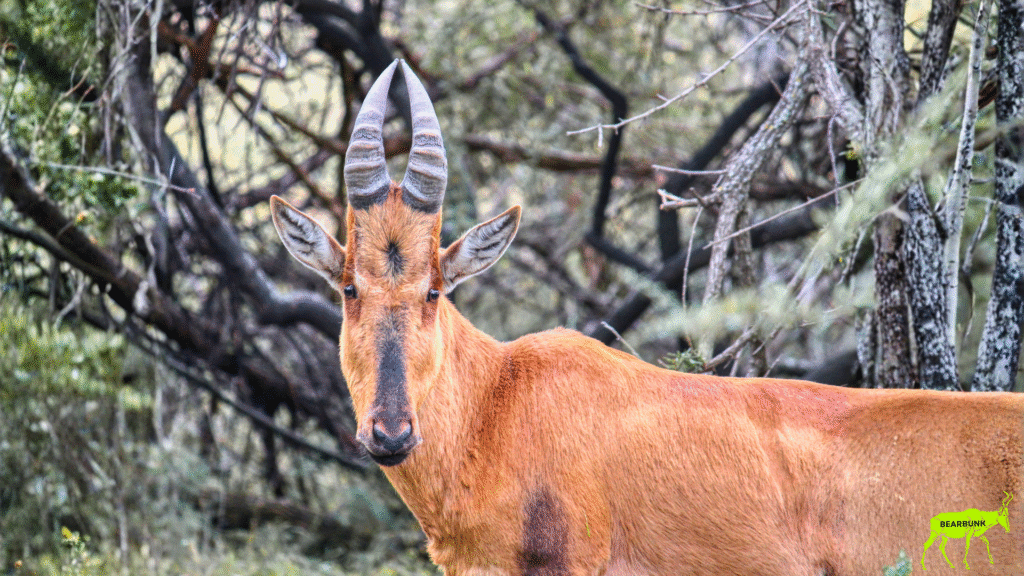
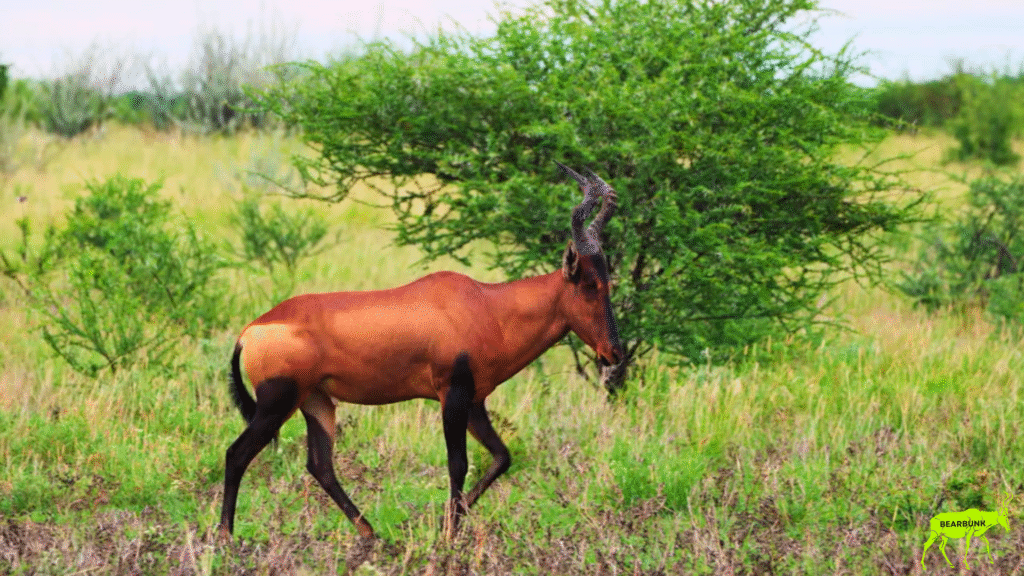
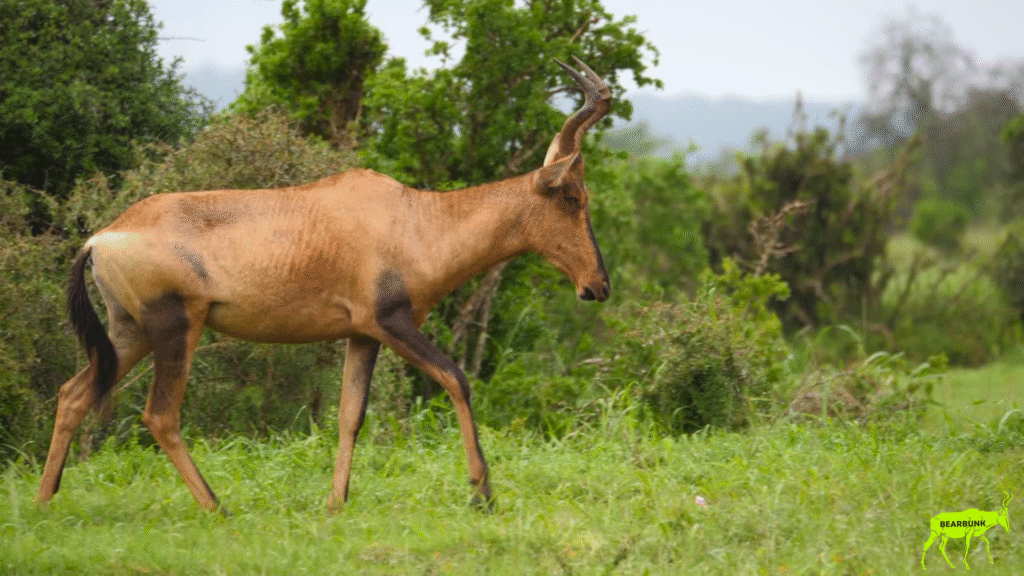
Species of Hartebeest
Alcelaphus buselaphus
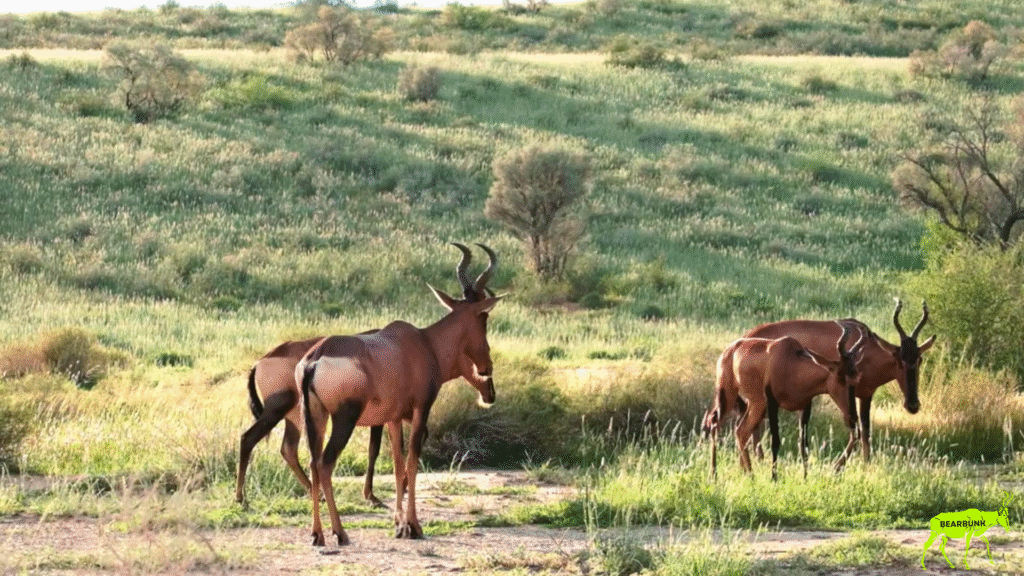
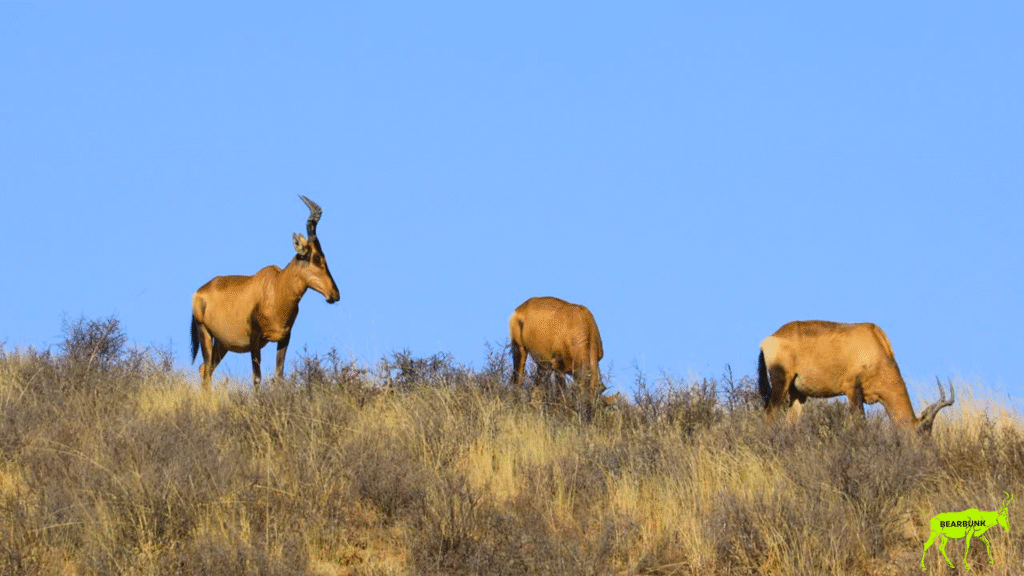
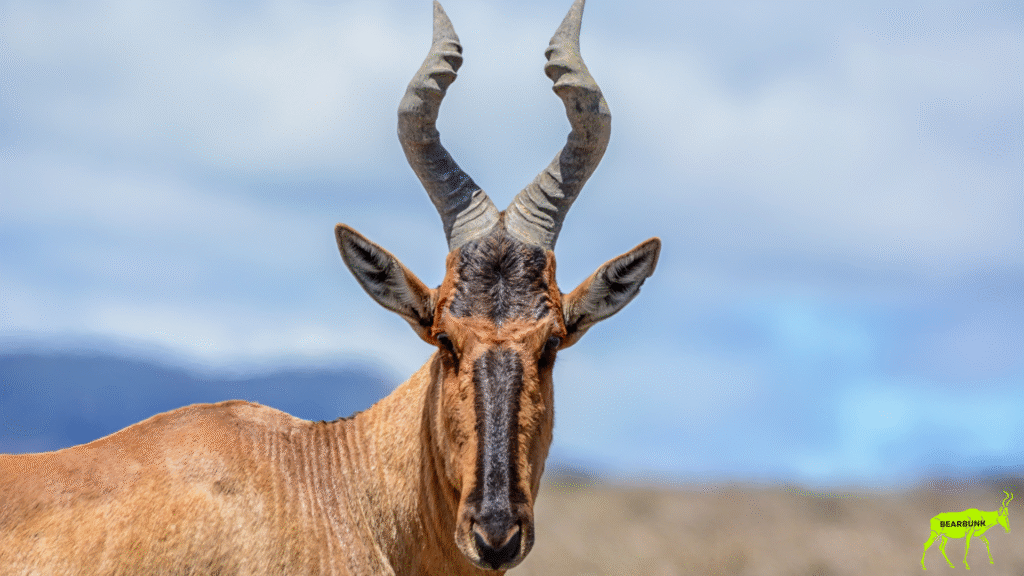
A large African antelope known for its sloped back, elongated head, and powerful grazing build. Hartebeest are highly adapted to open grasslands and are recognized for their endurance running ability and distinctive curved horns.
Several subspecies are recognized across Africa:
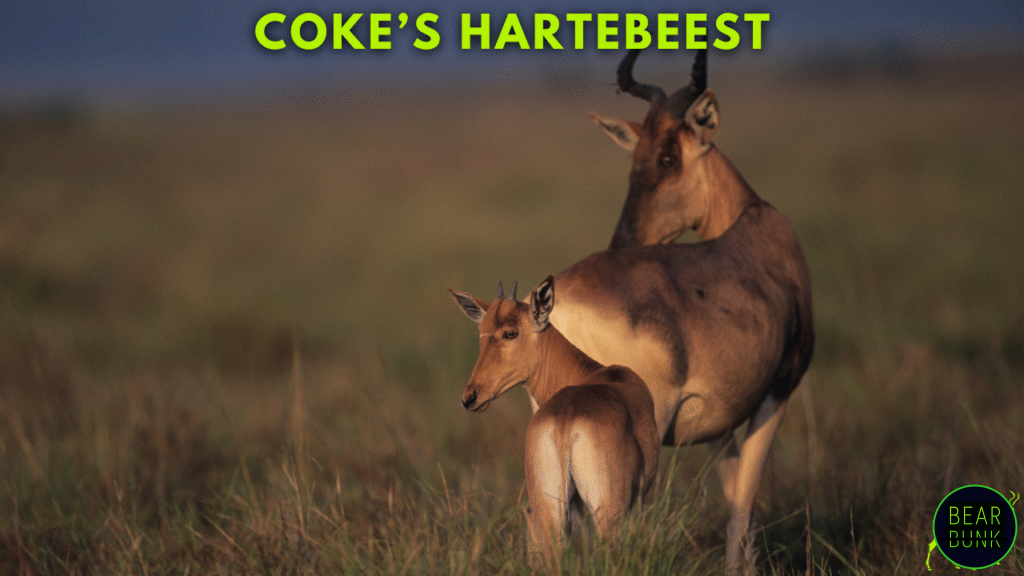
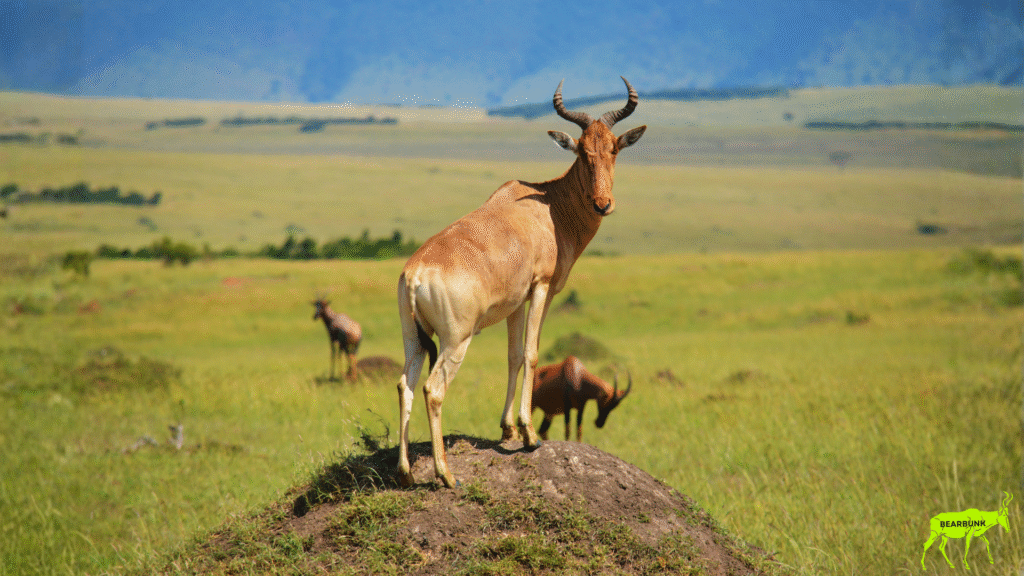
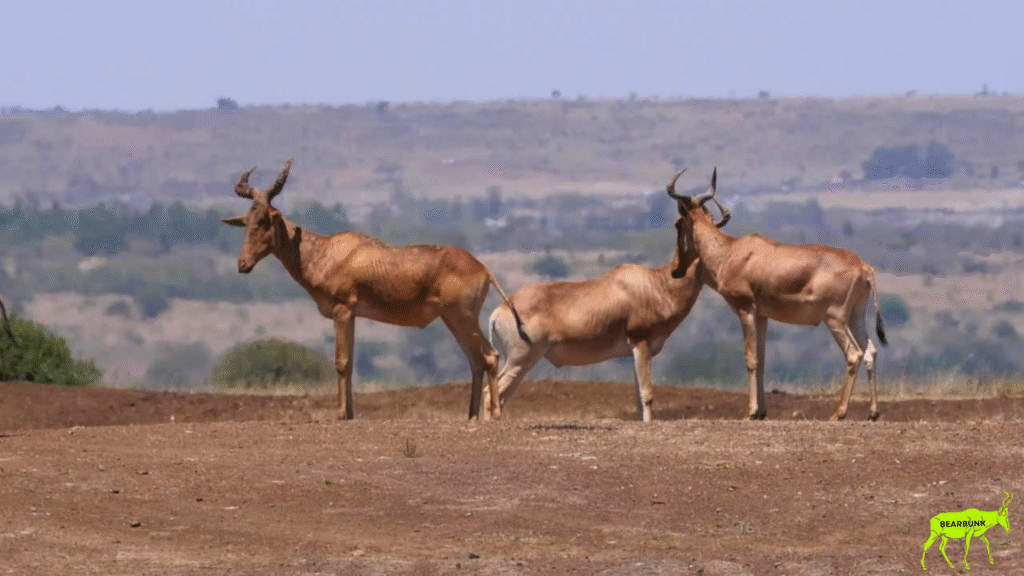
Coke’s Hartebeest
Alcelaphus buselaphus cokii
Found primarily in Kenya and northern Tanzania. This subspecies typically has a lighter tan coat with darker markings on the face and upper legs. It is one of the more commonly seen hartebeest in East African reserves.
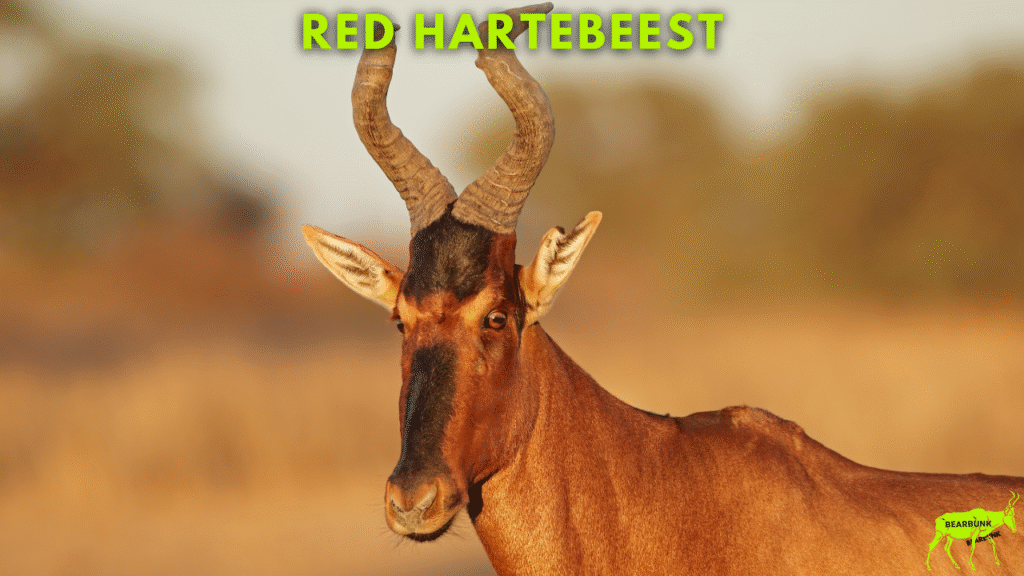
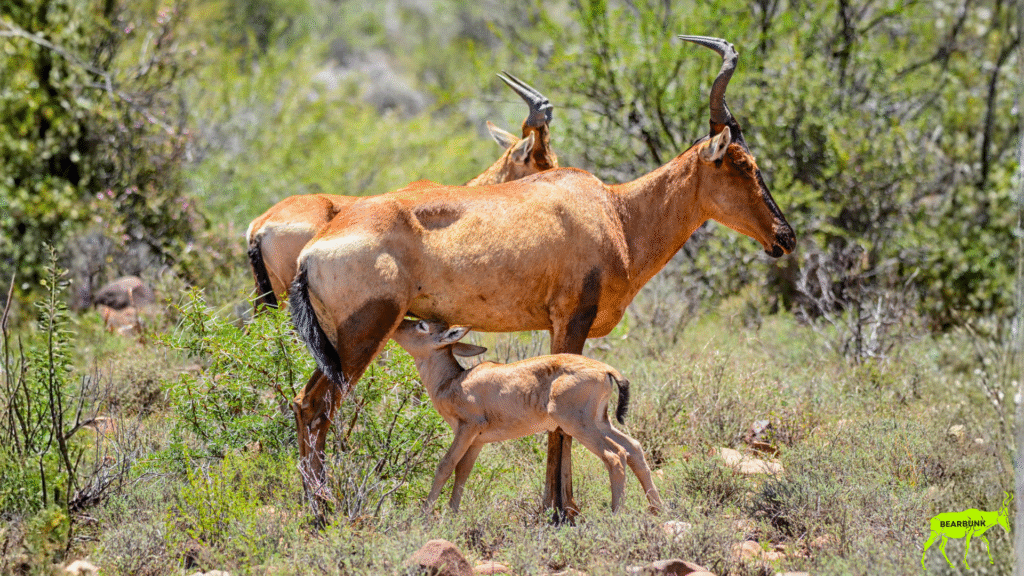
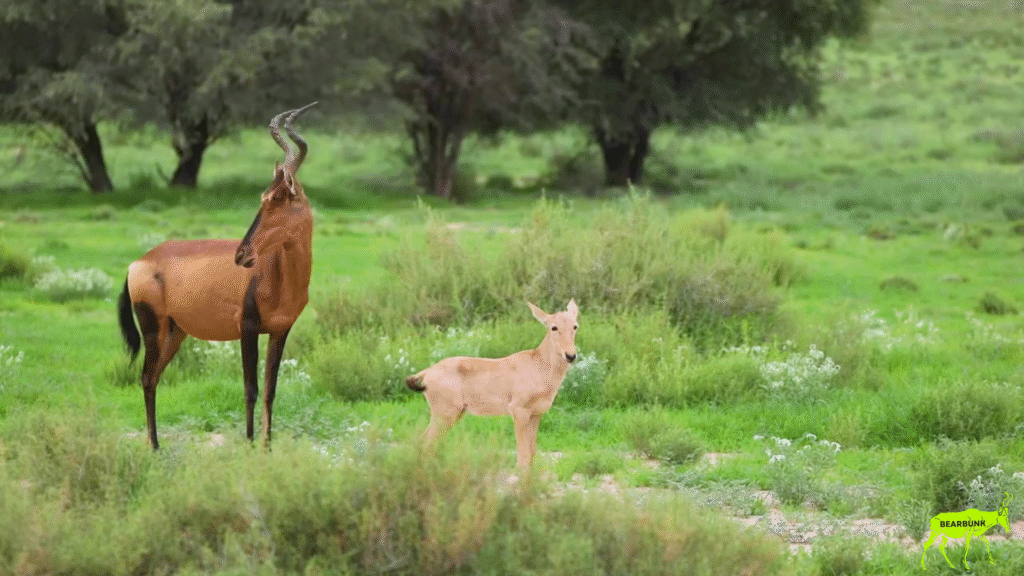
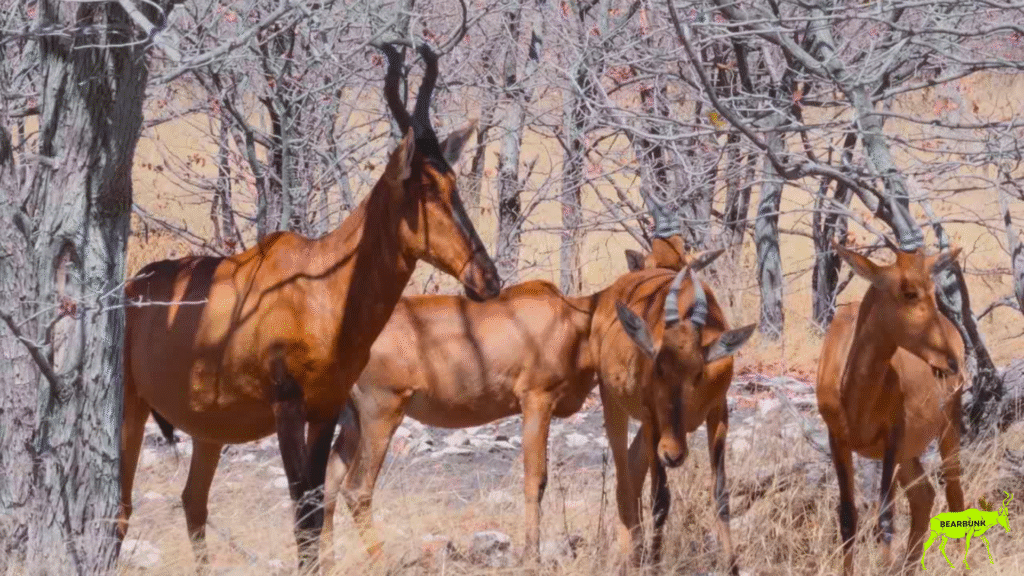
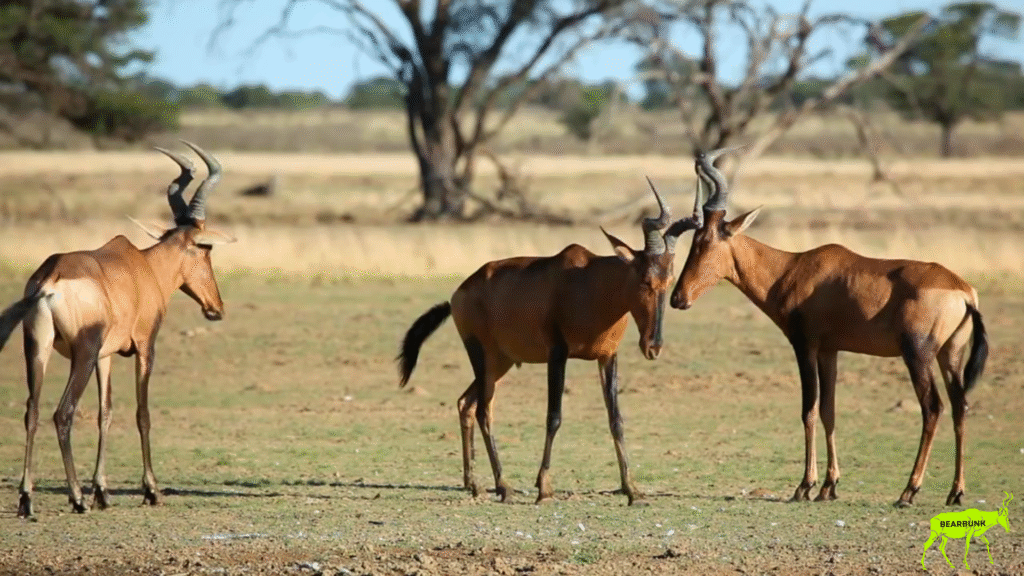
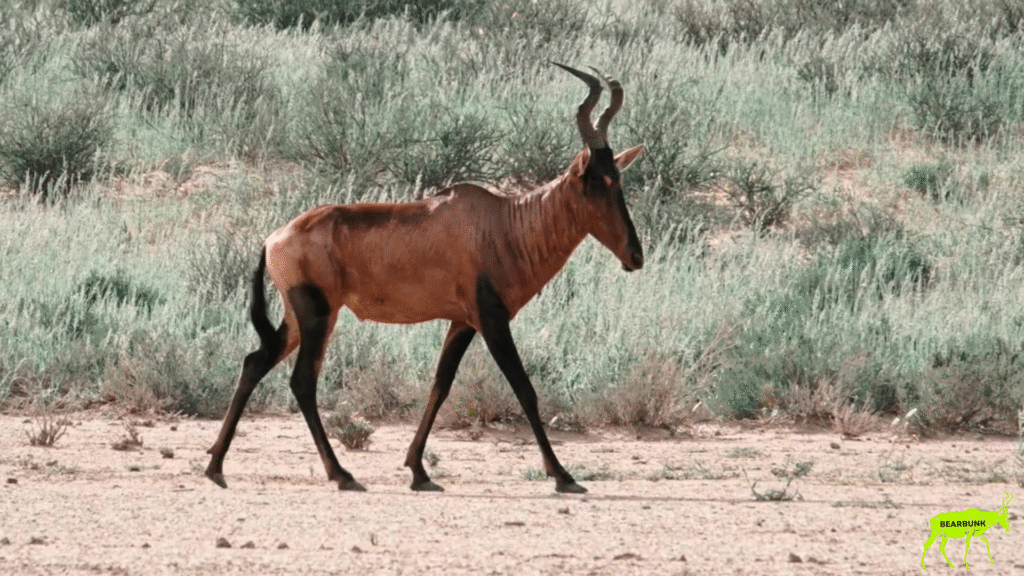
Red Hartebeest
Alcelaphus buselaphus caama
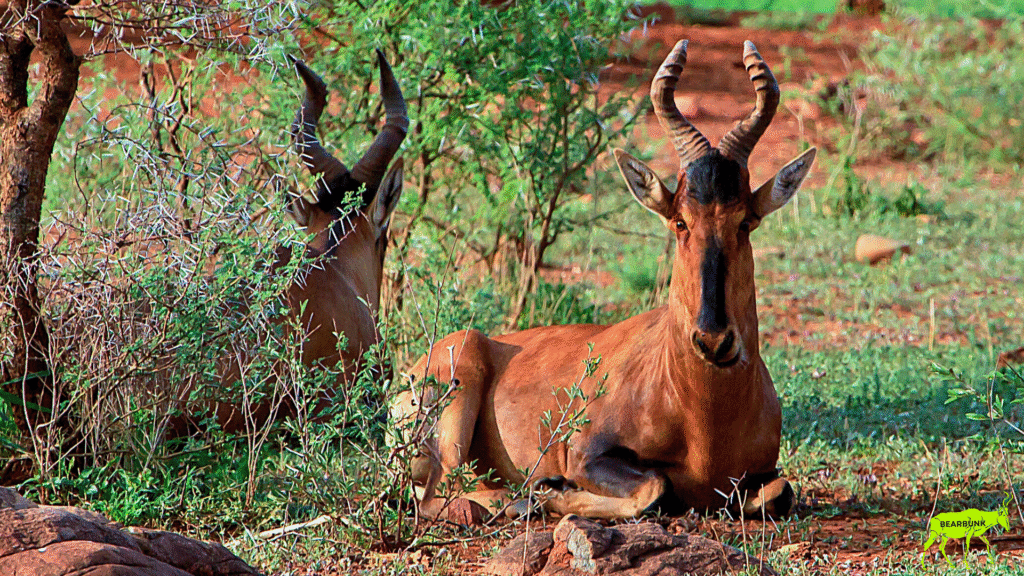
Native to southern Africa, particularly Namibia, Botswana, and South Africa. It is known for its rich reddish-brown coloring and slightly broader horn base. Red hartebeest are well adapted to drier savanna regions.
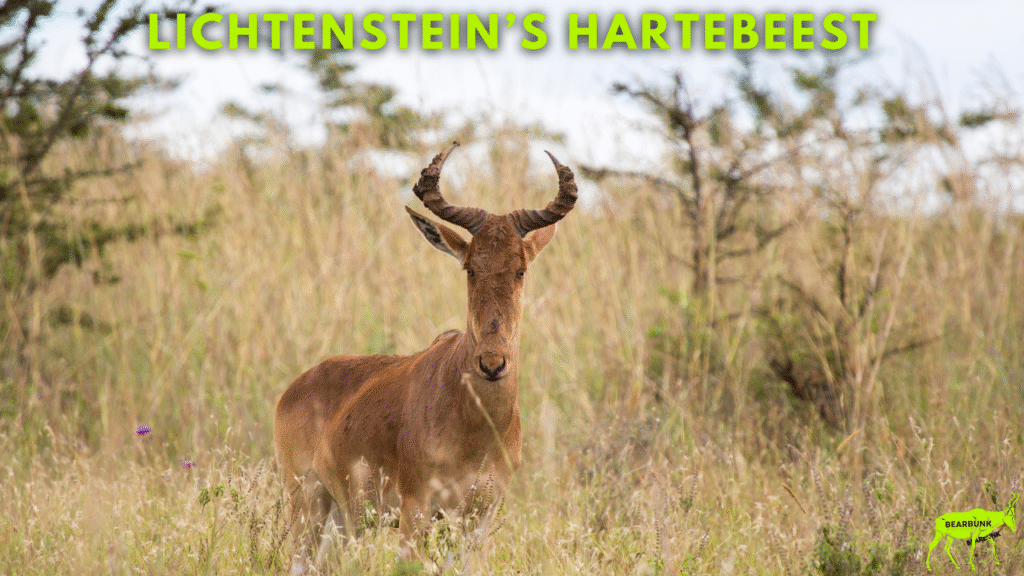
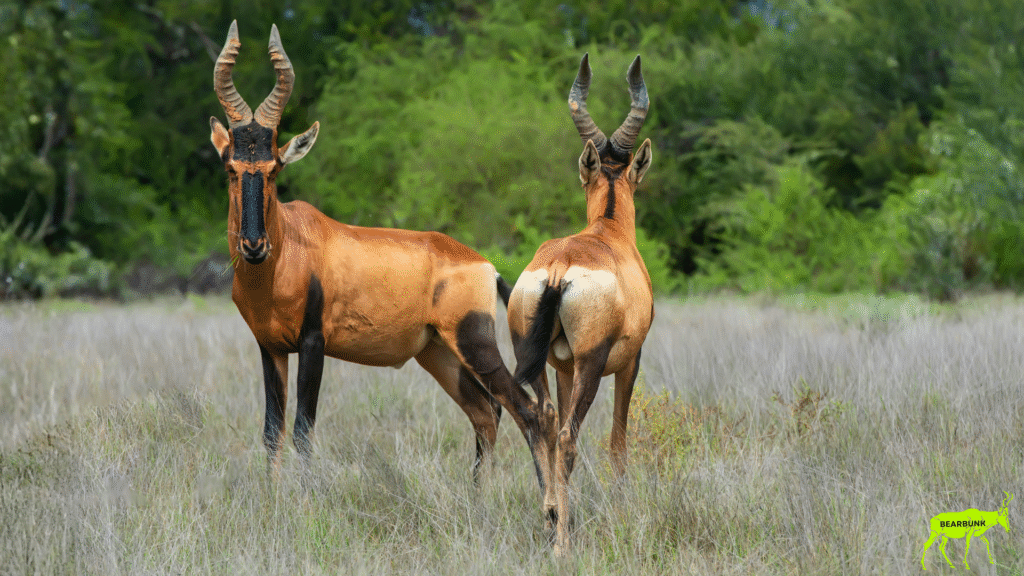
Lichtenstein’s Hartebeest
Alcelaphus buselaphus lichtensteinii
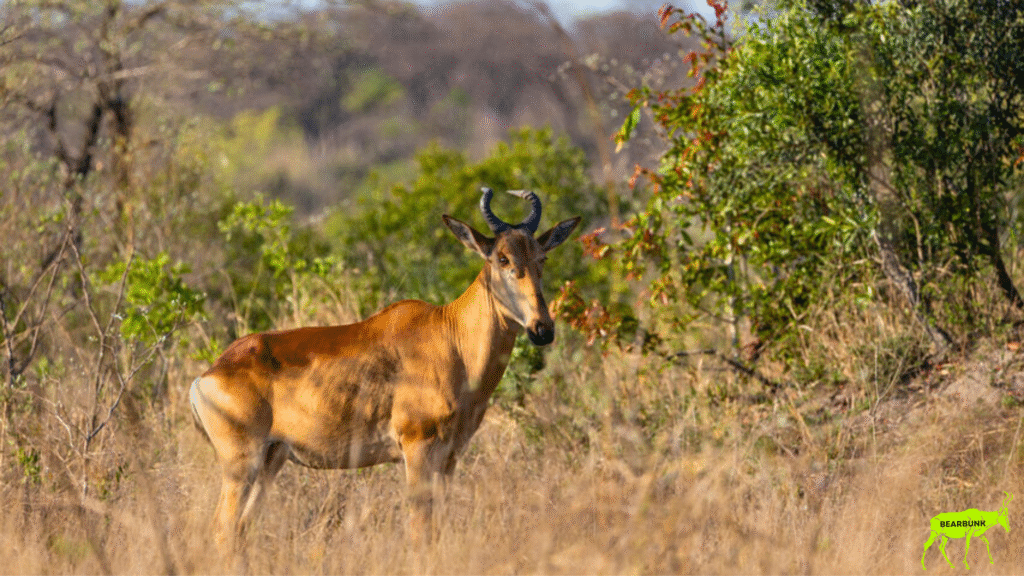
Found in parts of central and southeastern Africa, including Zambia and Mozambique. This subspecies tends to have a slightly taller, leaner build and subtle variations in horn curvature compared to southern populations.
Habitat
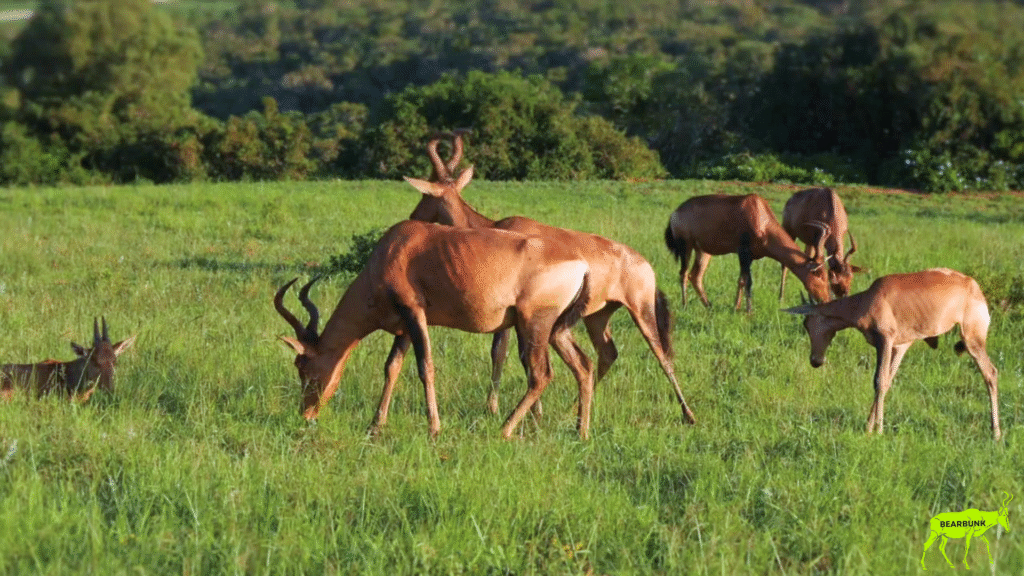
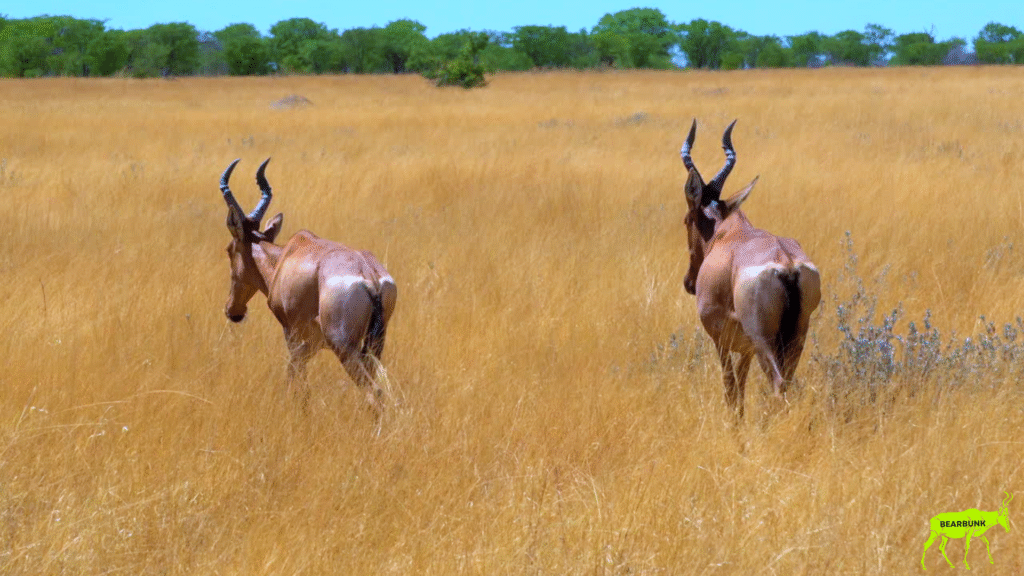
Hartebeest thrive in open grasslands and savannas where long sightlines allow them to monitor their surroundings. They avoid dense forests and heavily wooded terrain, preferring landscapes that support grazing and provide room to run.
Protected reserves across eastern and southern Africa support stable populations today.
Diet
Hartebeest are specialized grazers, feeding primarily on medium-height grasses. They prefer fresh growth but can adapt to tougher, drier vegetation when necessary.
Their digestive system allows them to extract nutrients efficiently even when grass quality changes seasonally.
Share On Social:
Mating & Raising Young
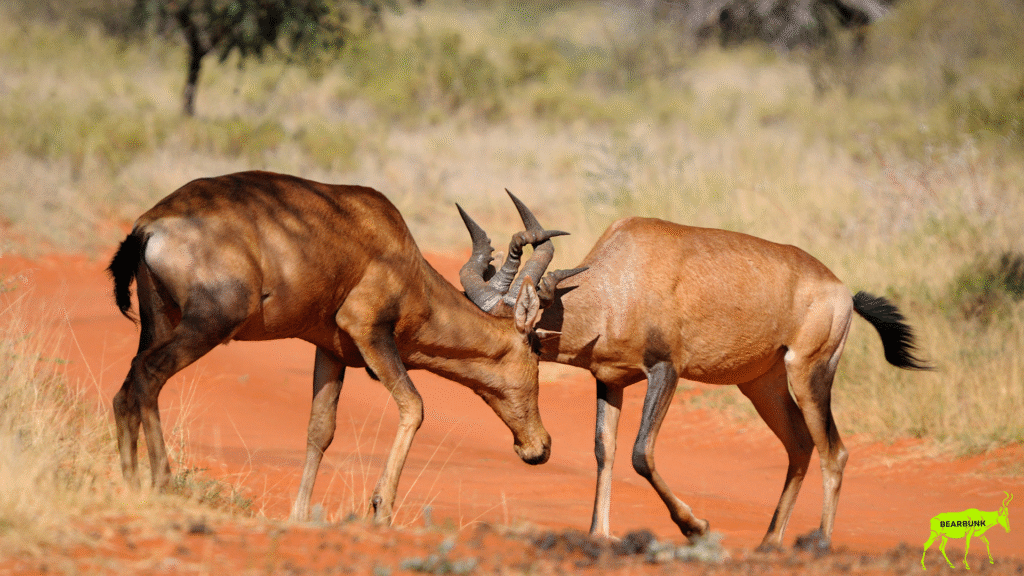
Breeding often aligns with the rainy season when food is more abundant. Dominant males establish territories and defend them from rivals during this time.
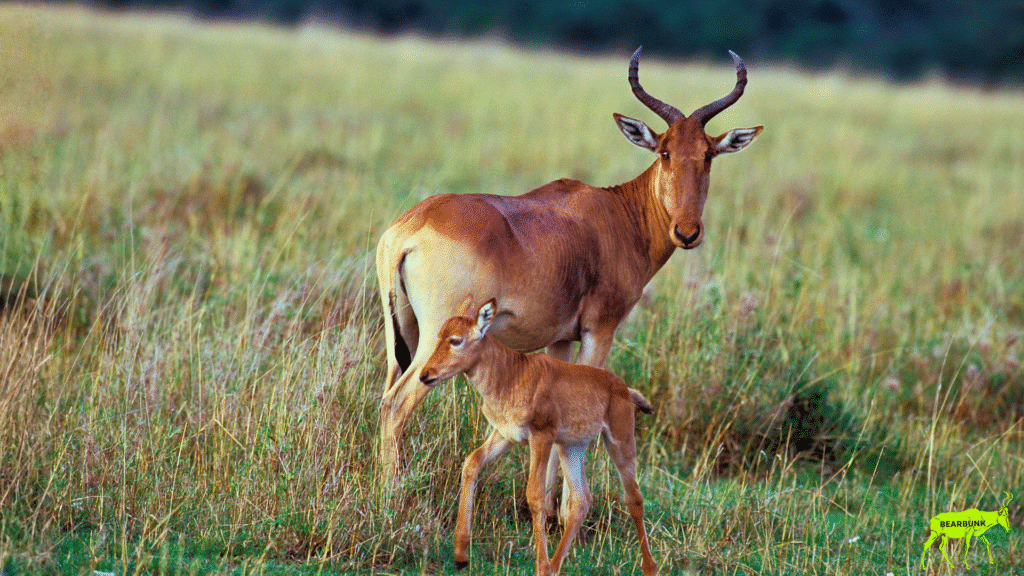
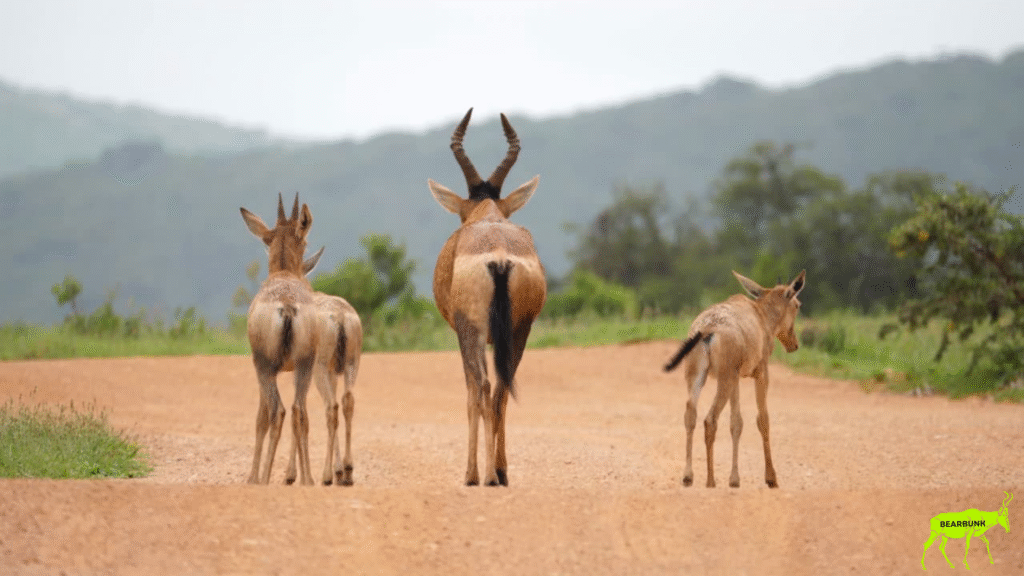
After a gestation period of about eight months, females typically give birth to a single calf. Newborns can stand within minutes and begin moving shortly after birth — a critical survival trait in open landscapes.
Mothers may briefly hide calves in tall grass before they fully integrate into herd movement.
Built for Speed & Endurance
The hartebeest is capable of reaching speeds up to 50 miles per hour. More importantly, it can sustain high speeds over longer distances than many other antelope.
This endurance gives it a survival advantage in open environments where escape routes depend on stamina rather than hiding cover. Their powerful stride and efficient body mechanics allow them to outrun many predators across open plains.
Unique Traits
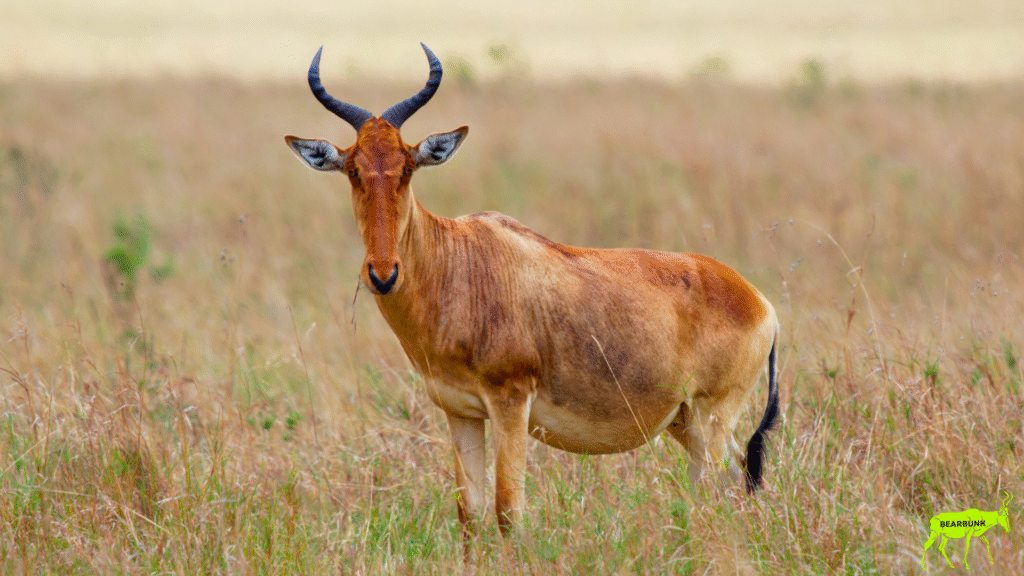
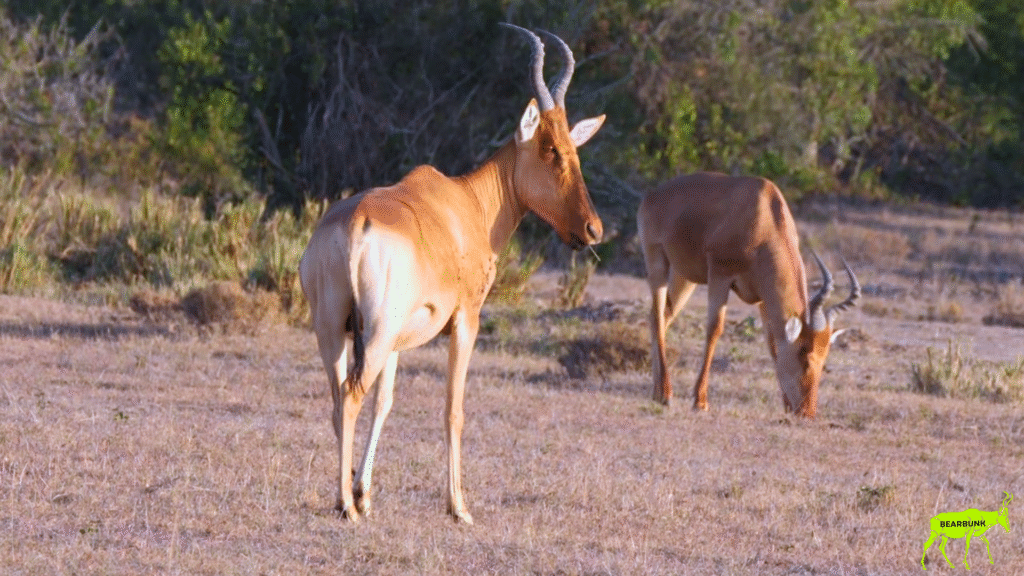
Few antelope have a profile quite like the hartebeest. Its shoulders are noticeably higher than its hindquarters, creating a forward-sloping back. This build is not accidental — it reflects strength in the front limbs and powerful forward momentum.
Its elongated face supports strong jaw muscles designed for grinding coarse grasses. The horns, present in both males and females, rise upward before sweeping inward, forming a distinctive heart-like or lyre shape when viewed from the front.
Fun Facts
- Both males and females grow horns.
- Hartebeest can live up to 15 years in the wild.
- They often stand on termite mounds to scan for predators.
- Herds can range from 20 to over 100 individuals.
- Their body design favors endurance over short bursts of speed.
About Hartebeest
Common Name: Hartebeest
Scientific Name: Alcelaphus buselaphus
Family: Bovidae
Subfamily: Alcelaphinae
Size: 4–5 feet tall at the shoulder
Weight: 270–500 pounds
Lifespan: 12–15 years (up to 19–20 in protected areas)
Location: Eastern and Southern Africa
Habitat: Grasslands and open savannas
Diet: Grazing herbivore (primarily grasses)
Conservation Status: Least Concern (varies by subspecies)
The hartebeest’s unusual shape, social herd behavior, and remarkable endurance make it one of Africa’s most resilient grassland specialists.
Why We Love Them
The hartebeest may not always be the most photographed animal on safari, but it represents strength, adaptation, and quiet resilience. Its design tells a story of life shaped by wide horizons and constant movement.
There is something admirable about an animal built not just for speed, but for staying power.
Conclusion
Across Africa’s open plains, the hartebeest continues to thrive — alert, athletic, and perfectly suited to its environment. The next time you see that long face and sweeping horns, you’ll know you’re looking at one of the savanna’s true endurance athletes.
And that is something worth celebrating.
Learn More:
Watch the full Video on YouTube:
The Mighty Hartebeest Africa’s 50 MPH Antelope
Read more about:

Leave a Reply