
Meet The Eland
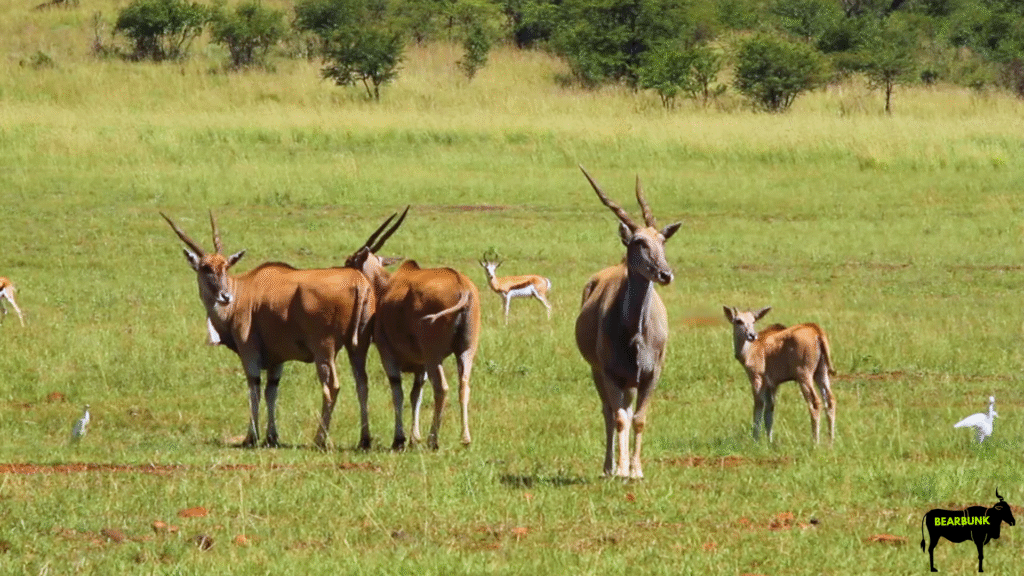
Graceful, powerful, and surprisingly fast — the eland is Africa’s largest antelope and one of the most captivating creatures on the continent. With their spiral horns, loose neck folds, and calm temperament, these gentle giants embody the quiet strength of the African plains. Though they may not roar or charge like other animals of the savanna, their presence commands respect — and their adaptability is a testament to nature’s design.





Species of Eland
There are two living species of eland, both impressive in size but with subtle differences in color, build, and habitat preferences.
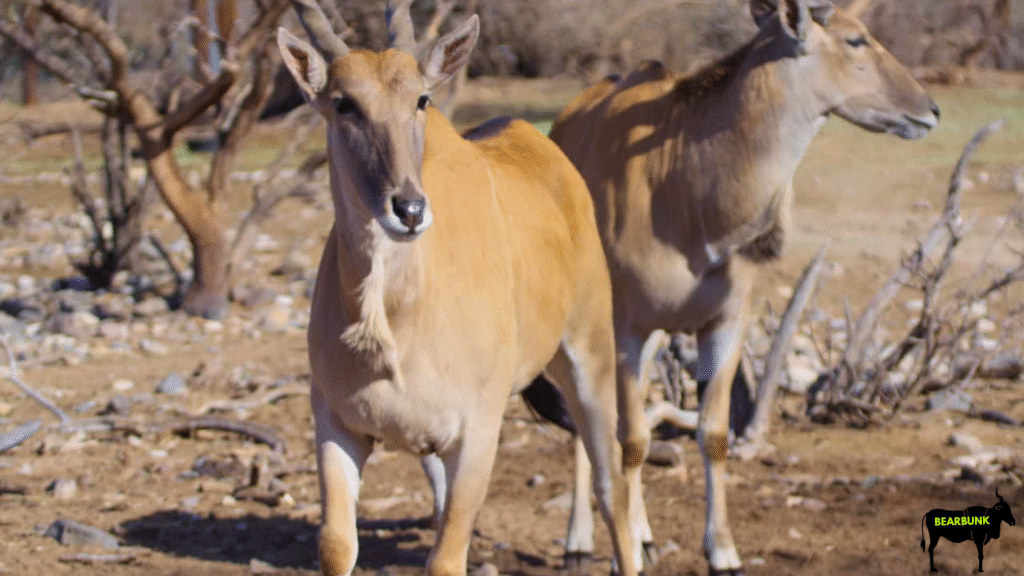
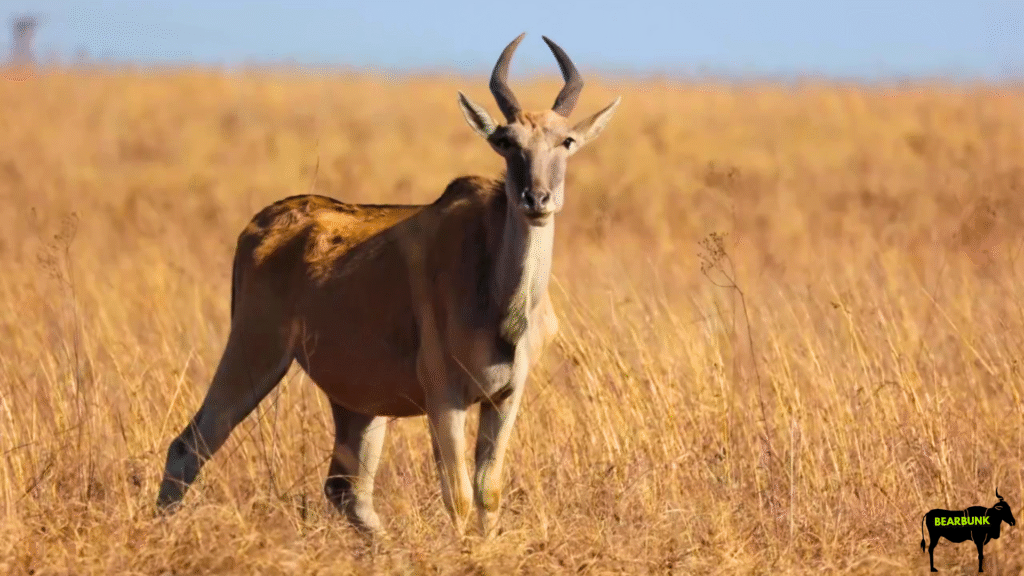
Common Eland (Taurotragus oryx) – The more widespread of the two, this species ranges across eastern and southern Africa, from Kenya and Tanzania down through Botswana and South Africa. Common elands have a light tan coat with fine white stripes and a large dewlap that helps them stay cool in hot climates. They tend to be slightly smaller than their giant relatives but are still among the heaviest antelopes on Earth.
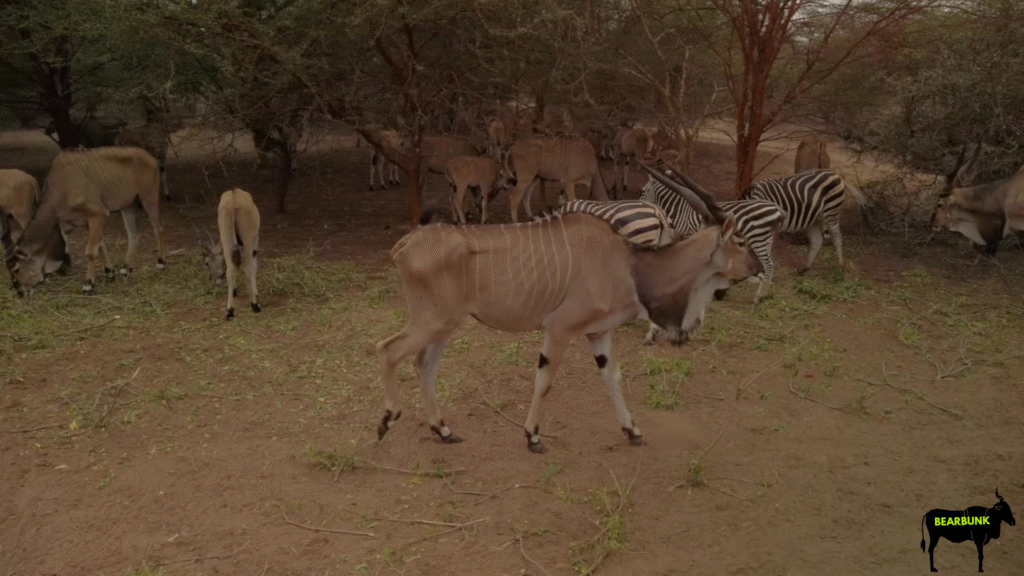
Giant Eland (Taurotragus derbianus) – True to its name, the giant eland is the largest species of antelope in the world. It inhabits the open woodlands and savannas of central and western Africa, especially in countries like Cameroon, Chad, and Senegal. Giant elands have darker, reddish-brown coats with more distinct white stripes and longer, tightly spiraled horns. Their build is more muscular, giving them a regal, powerful presence that reflects their name.
Both species share key traits — spiral horns, a graceful gait, and that distinctive neck dewlap — but they’ve adapted to slightly different environments. The common eland thrives in open grasslands and plains, while the giant eland prefers lightly forested areas with more cover and shade.
Habitat
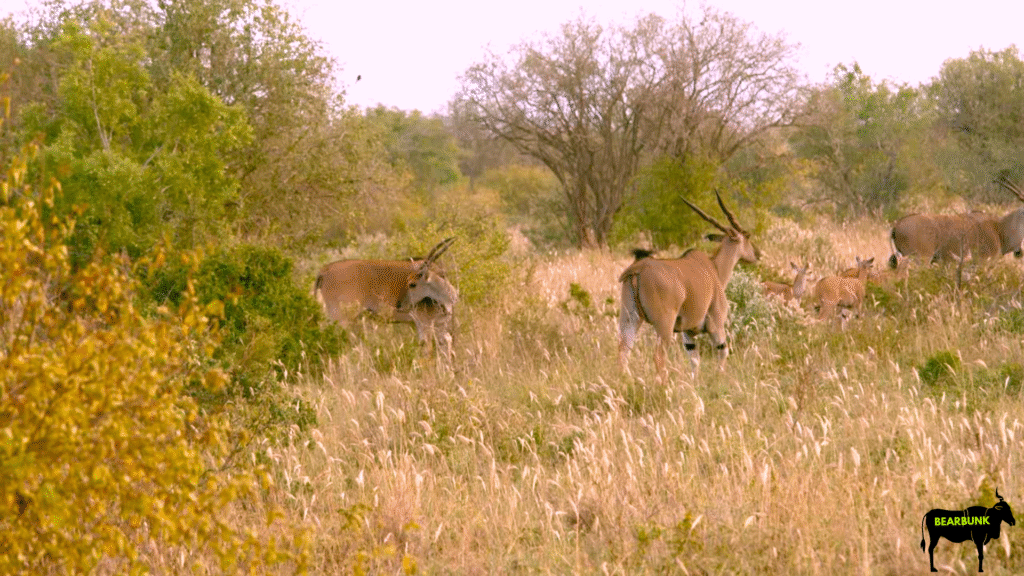
Elands roam open grasslands, savannas, and light woodlands. They favor areas with scattered trees and plenty of grass for grazing. Adaptable and resilient, they thrive in environments ranging from semi-arid deserts to lush valleys. Their ability to go for weeks without drinking — relying on moisture from plants — allows them to survive in harsh, dry regions.
Diet
Elands are herbivores that graze on grasses, leaves, fruits, and shoots. During dry seasons, they switch to browsing shrubs and tree leaves. Their unique digestive system allows them to extract maximum nutrition from fibrous plants. Despite their massive size, they are gentle feeders — quietly grazing through the plains and often sharing space with zebras, wildebeests, and giraffes.
Share On Social:
Mating & Raising Young
Elands reach maturity between two and three years old. Breeding can occur year-round, but peaks after the rainy season when food is plentiful. Males display with deep, resonant calls and striking posture to attract females.
After a nine-month pregnancy, females give birth to a single calf, which can stand within minutes and walk within hours. Mothers hide their newborns in tall grass for protection until they’re strong enough to join the herd.




Fun Facts
- Built for efficiency: Elands can slow their metabolism during heat waves to conserve energy and water.
- Leaping giants: Despite weighing up to 2,000 pounds, they can jump over 8 feet high.
- Cooling system: The dewlap under their neck helps regulate body temperature by radiating heat.
- Clicking steps: Every step they take makes a natural clicking sound, created by tendons in their legs.
- Color shift: Males darken with age, turning bluish-gray with a tuft of hair on their foreheads — a sign of maturity and dominance.
About Eland
Common Name: Eland
Scientific Name: Taurotragus oryx / Taurotragus derbianus
Family: Bovidae
Subfamily: Bovinae
Size: 5–6 feet tall at the shoulder
Weight: 1,000–2,000 pounds (males), 700–1,300 pounds (females)
Lifespan: Up to 20 years in the wild
Location: Across eastern, southern, and central Africa
Habitat: Grasslands, savannas, open woodlands
Diet: Grasses, leaves, fruits, and shoots
Conservation Status: Least Concern (some regional populations threatened)
The eland’s combination of strength, grace, and calm presence makes it one of Africa’s most beloved antelopes — a symbol of quiet majesty and resilience.
Why We Love Them
Elands are gentle and social, often forming peaceful mixed herds with other grazing species. Their quiet movements, rhythmic clicking, and powerful leaps make them unforgettable to witness in the wild. They remind us that true strength doesn’t always roar — sometimes it simply walks with grace.
Conclusion
From their spiral horns to their serene nature, elands are living testaments to the harmony of the African grasslands. They show us that gentleness and power can coexist — and that even the quietest giants have stories worth telling.
Watch the Video on YouTube:
Giants of the Grasslands – Africa’s Largest and Most Gentle Antelope – YouTube
Learn more about:
Mammals, Rainforest, Asian Wildlife, Slow Animals, Keystone Species and Smart Animals




Leave a Reply