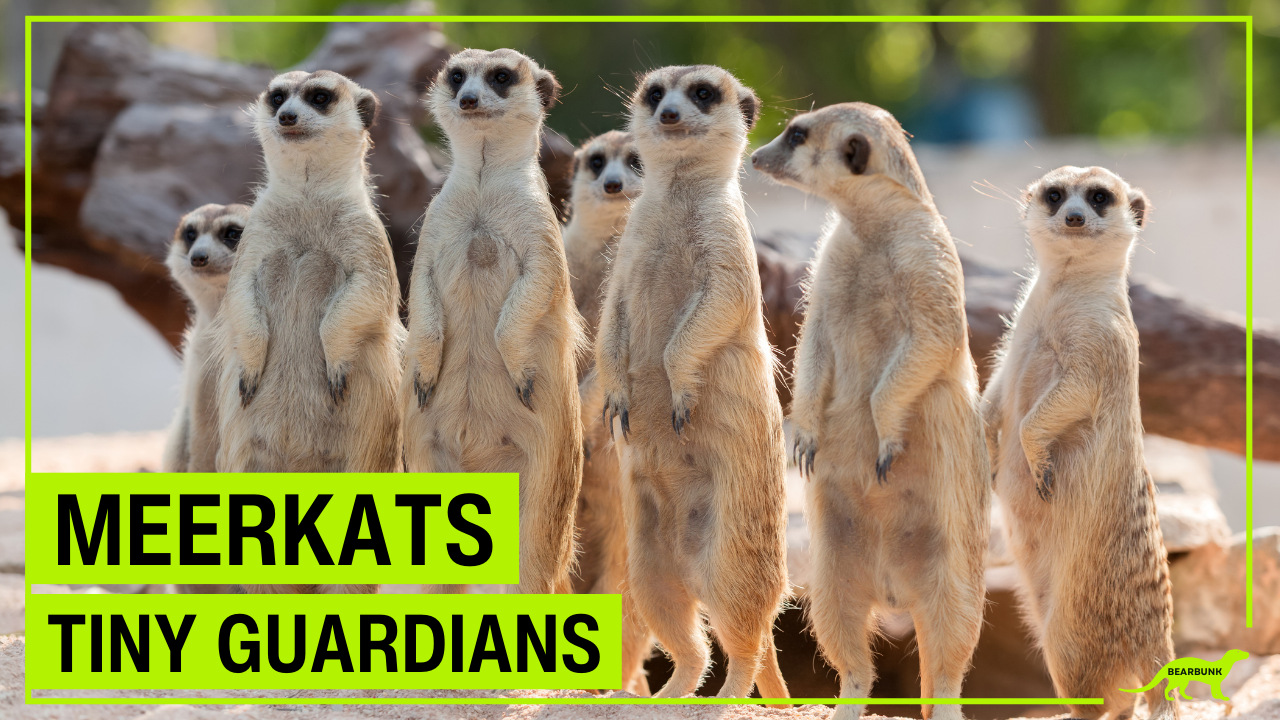
Meet the Meerkats
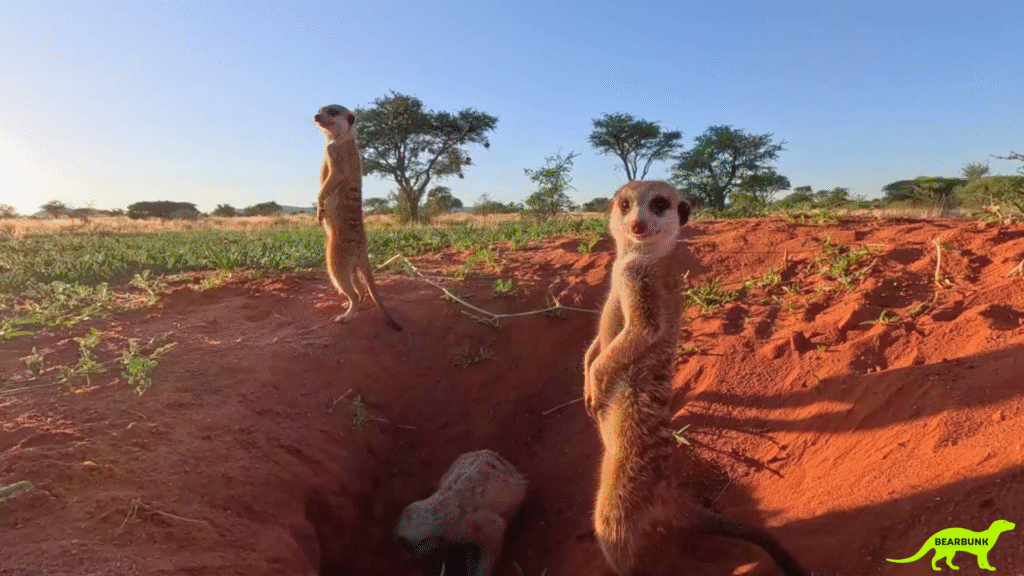
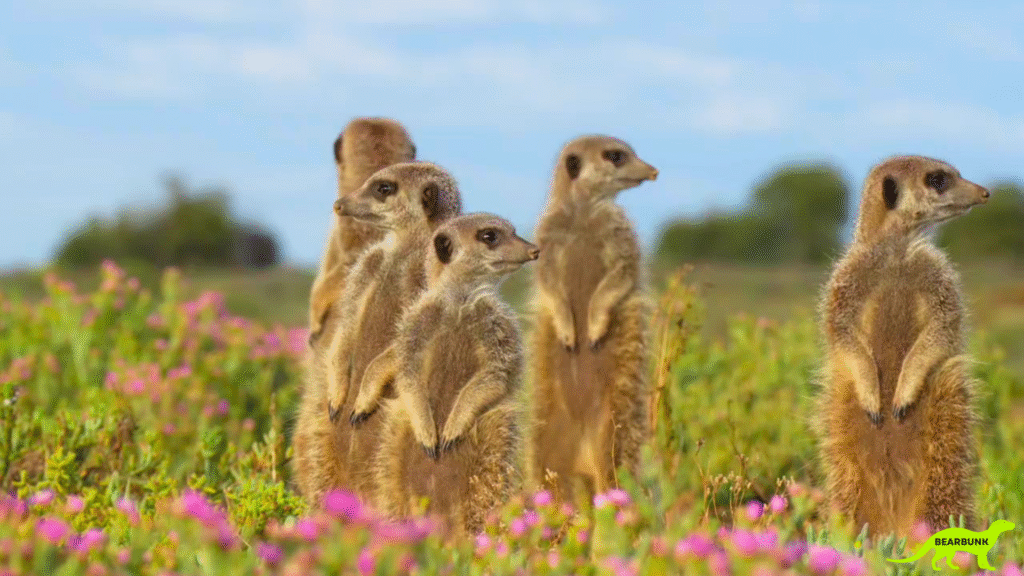
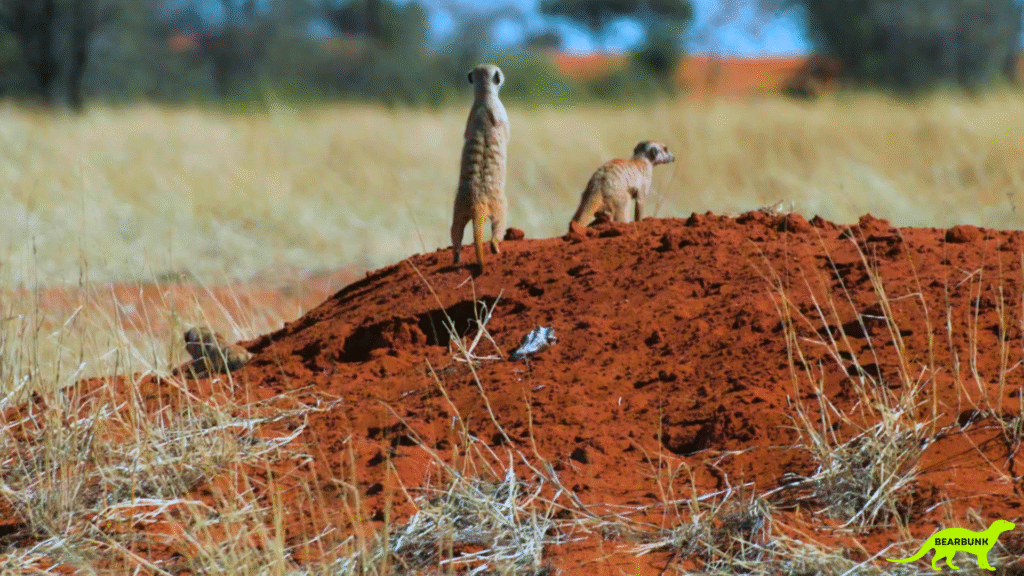
Meerkats may be small, but they are some of the most cooperative, intelligent, and resilient mammals in the wild. Famous for standing upright like tiny sentinels, these social animals rely on teamwork, communication, and clever adaptations to survive some of Africa’s harshest environments. From underground cities to shared
Species of Meerkats
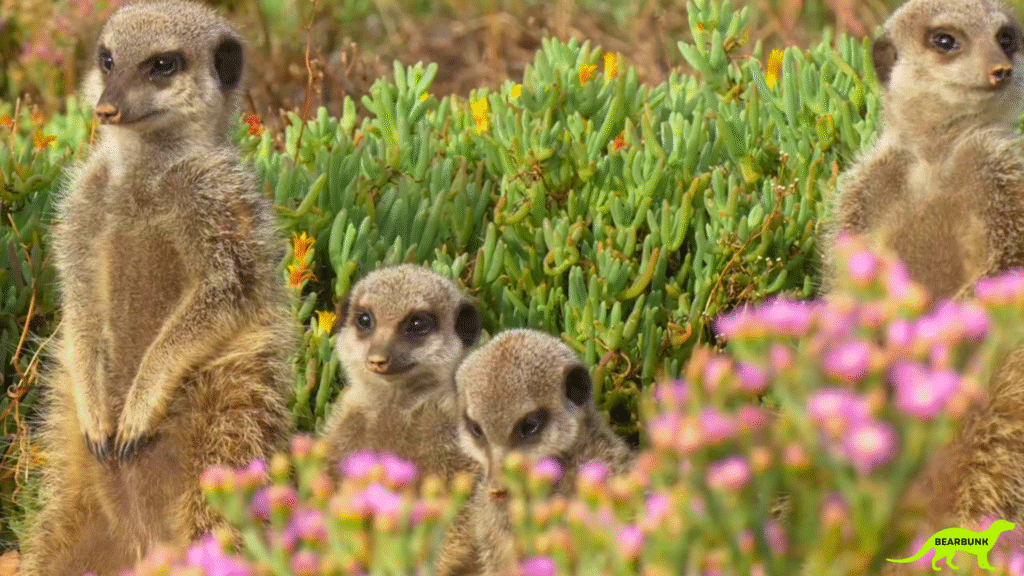
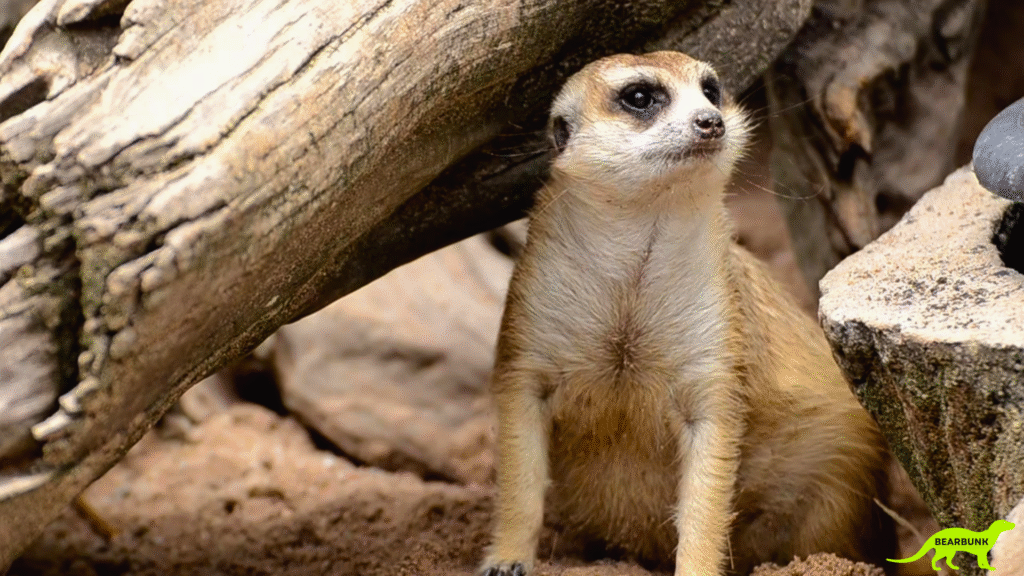
Meerkat (Suricata suricatta) – The only species of meerkat in the world, closely related to mongooses and other small carnivores. Despite their small size, meerkats are highly organized and socially complex.
Habitat
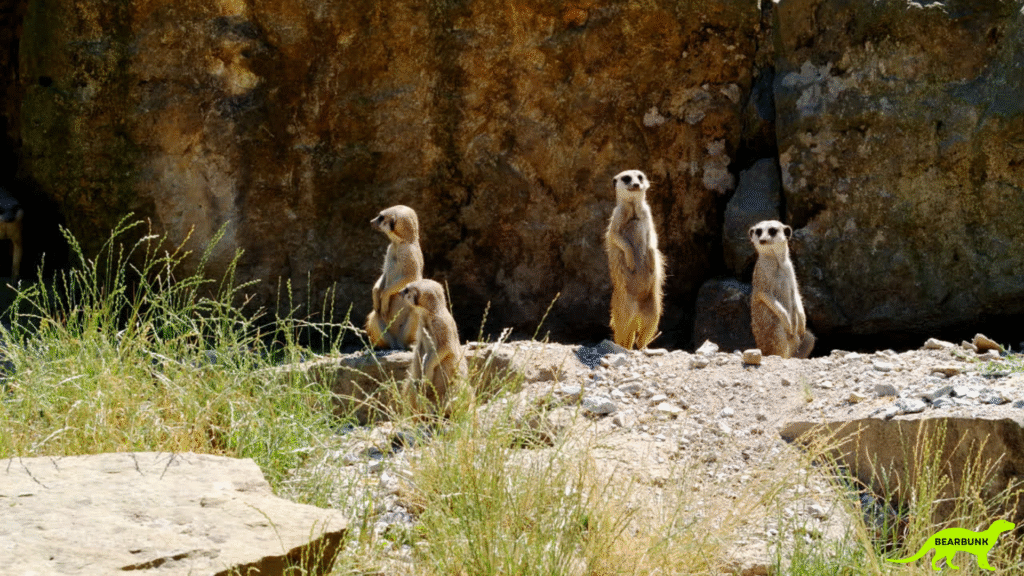
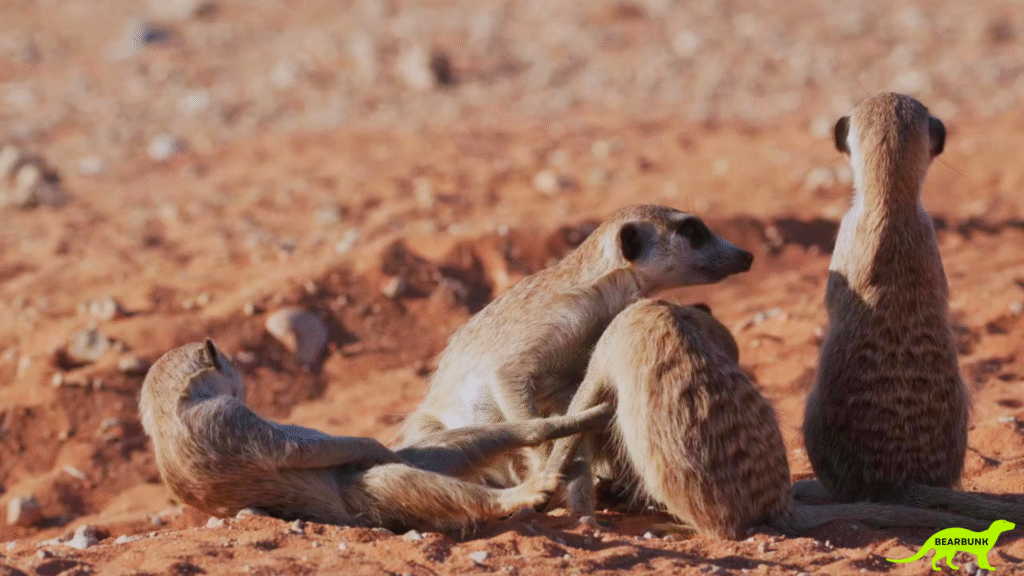
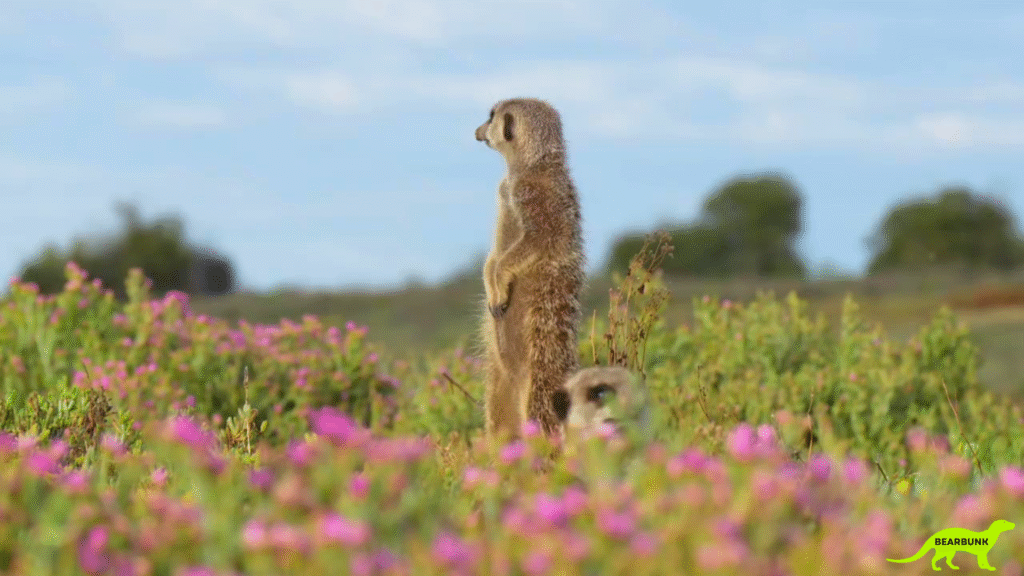
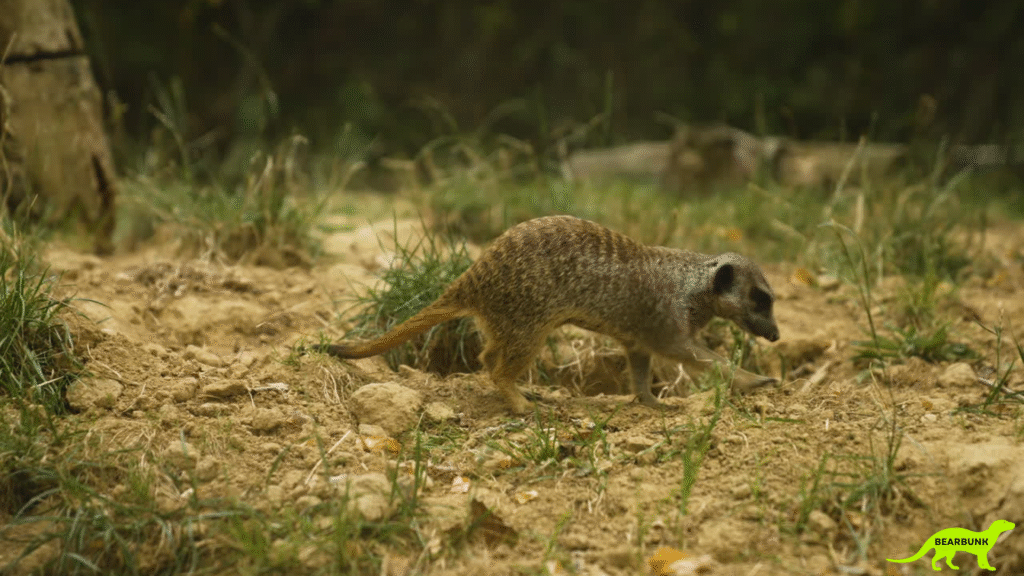
Meerkats are native to southern Africa, where they live in deserts, semi-deserts, savannas, and grasslands. They are commonly found in countries such as Botswana, Namibia, South Africa, and parts of Angola.
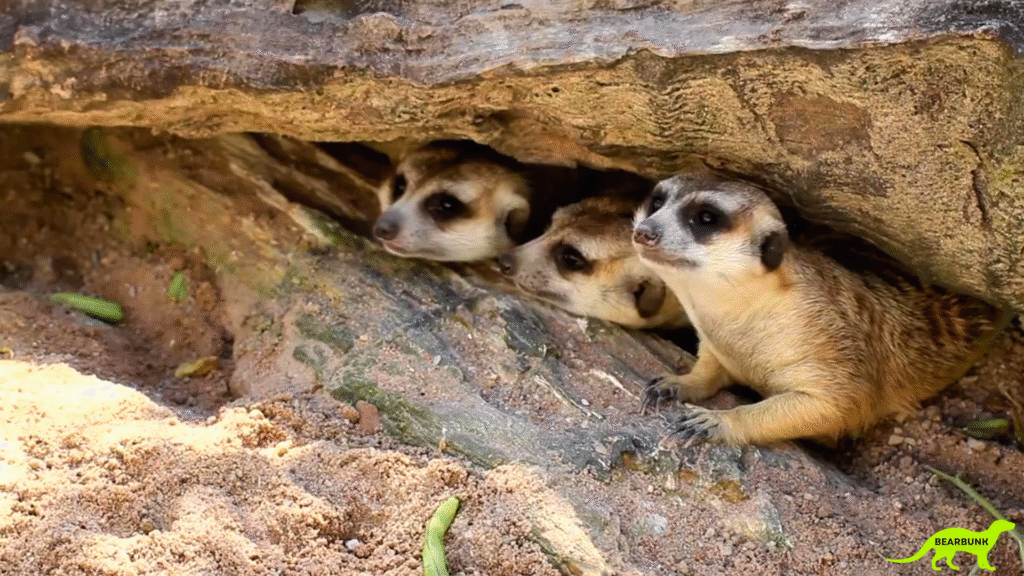
These open, sun-soaked landscapes may seem unforgiving, but they are ideal for meerkats. The soil is easy to dig, visibility is wide and unobstructed, and sunlight helps warm them after cool nights underground. Meerkats depend heavily on their burrow systems to escape predators and extreme temperatures.
Diet
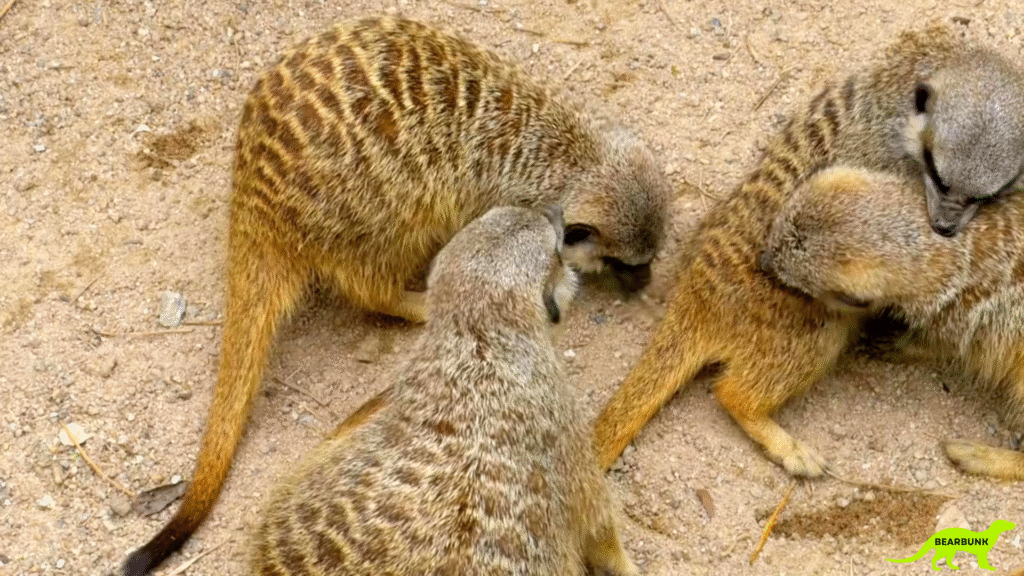
Meerkats are omnivores, with a diet that changes based on availability. They primarily eat insects such as beetles, termites, grubs, and larvae, which they dig out of the soil using their strong, curved claws. They also consume spiders, scorpions, small reptiles, eggs, fruits, and roots.
Remarkably, meerkats can eat venomous prey like scorpions by carefully disabling the stinger first. Most of their water comes from their food, allowing them to survive in very dry environments without needing frequent access to open water.
Share On Social:
Mating & Raising Young
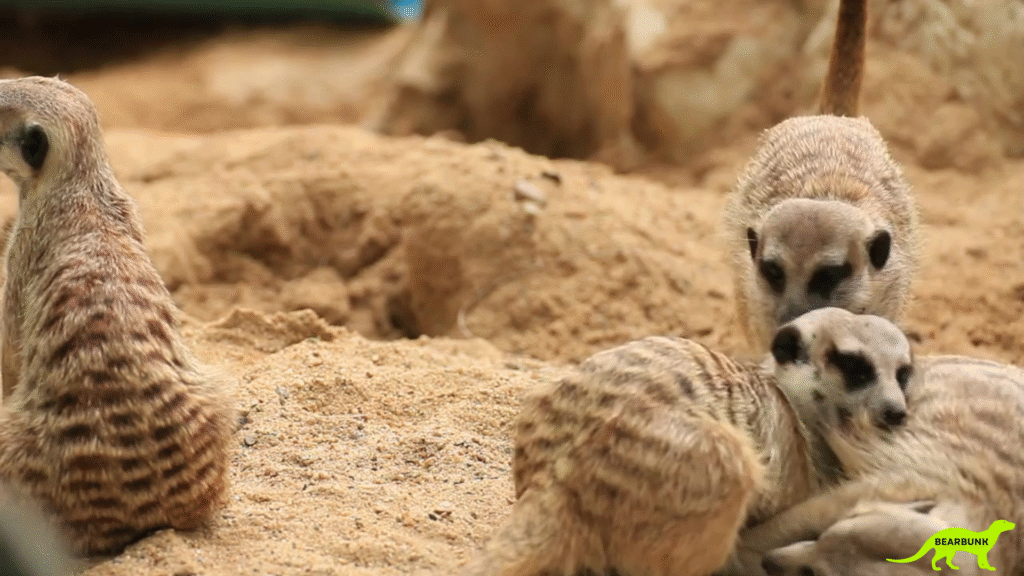
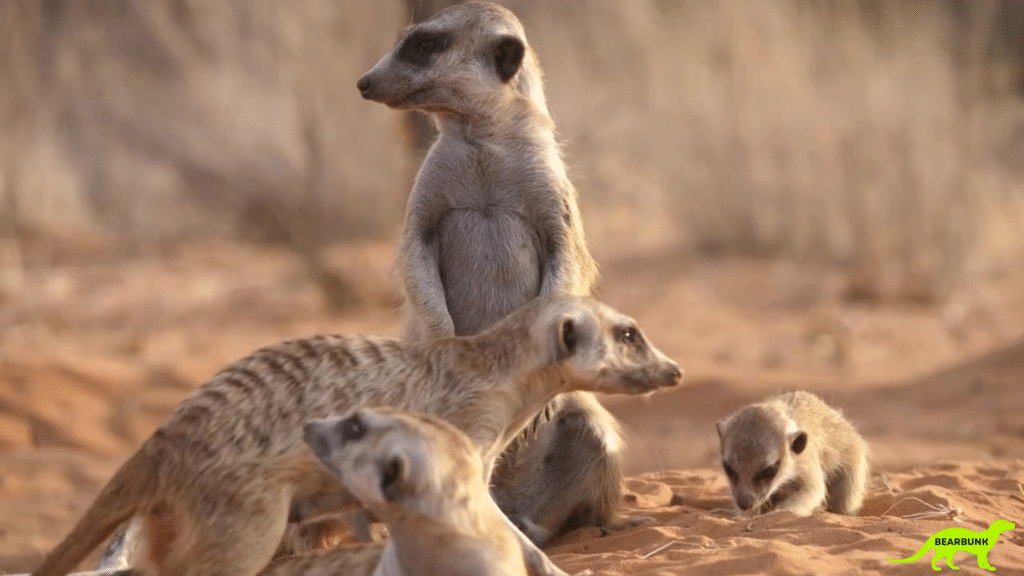
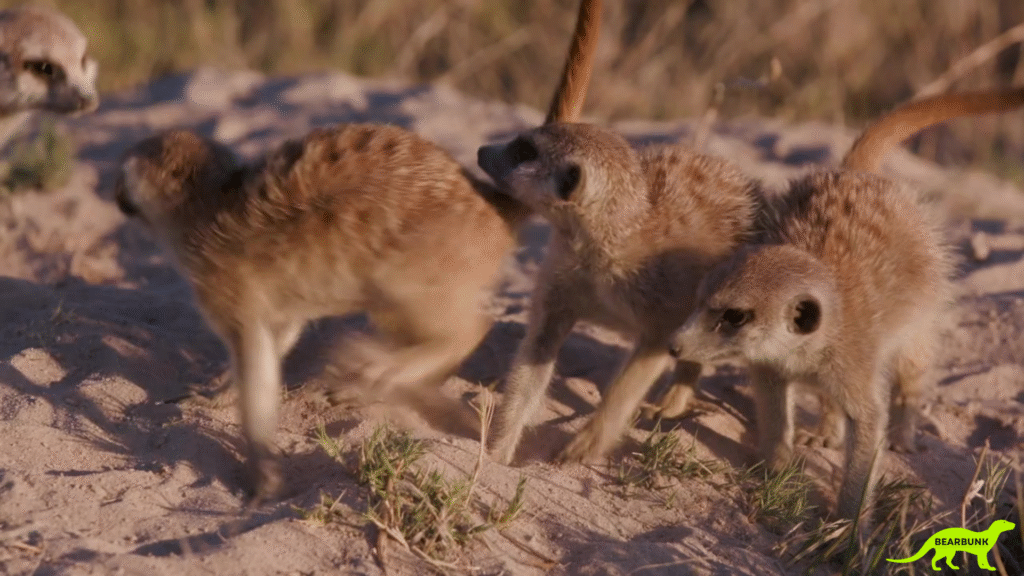
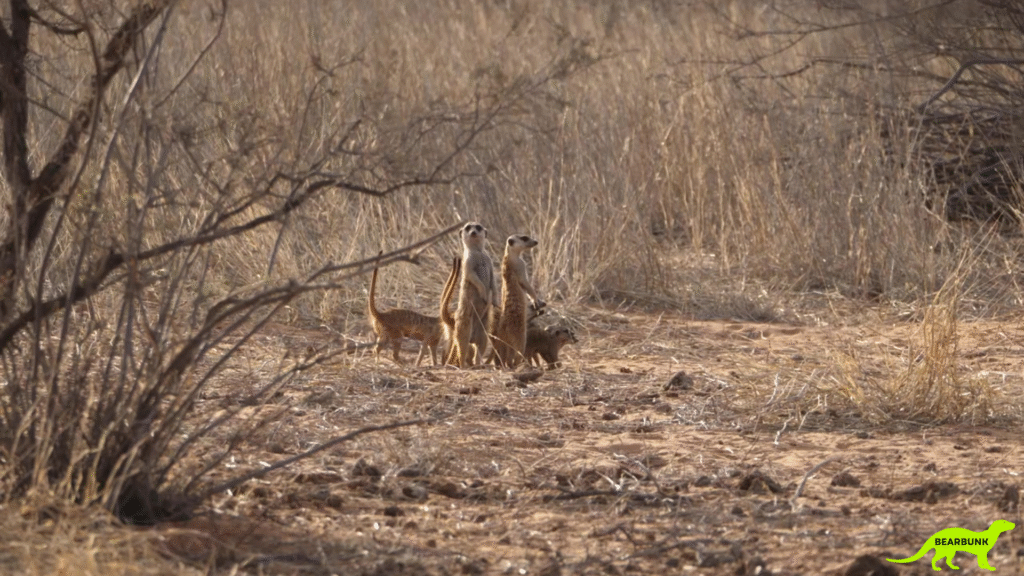
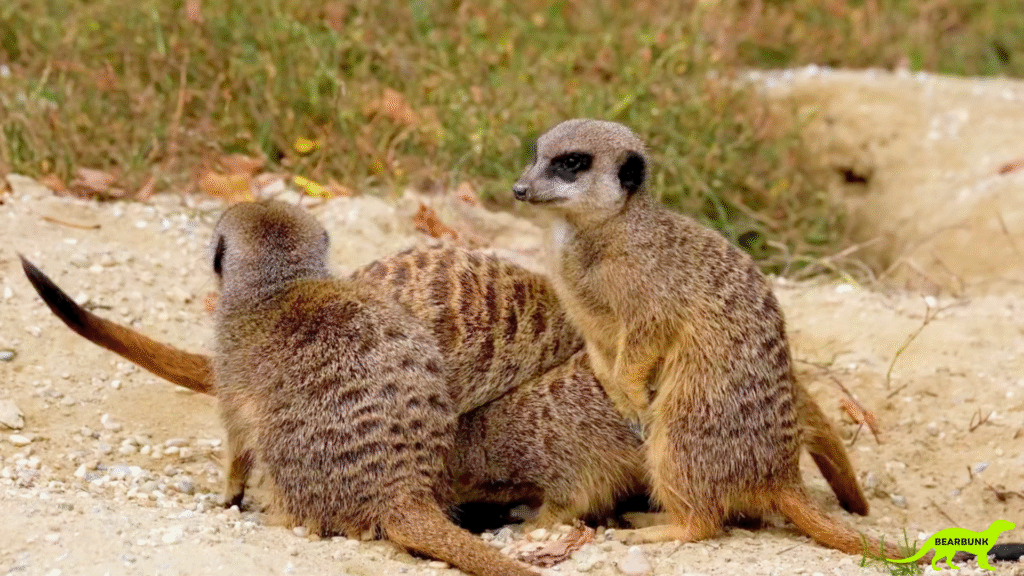
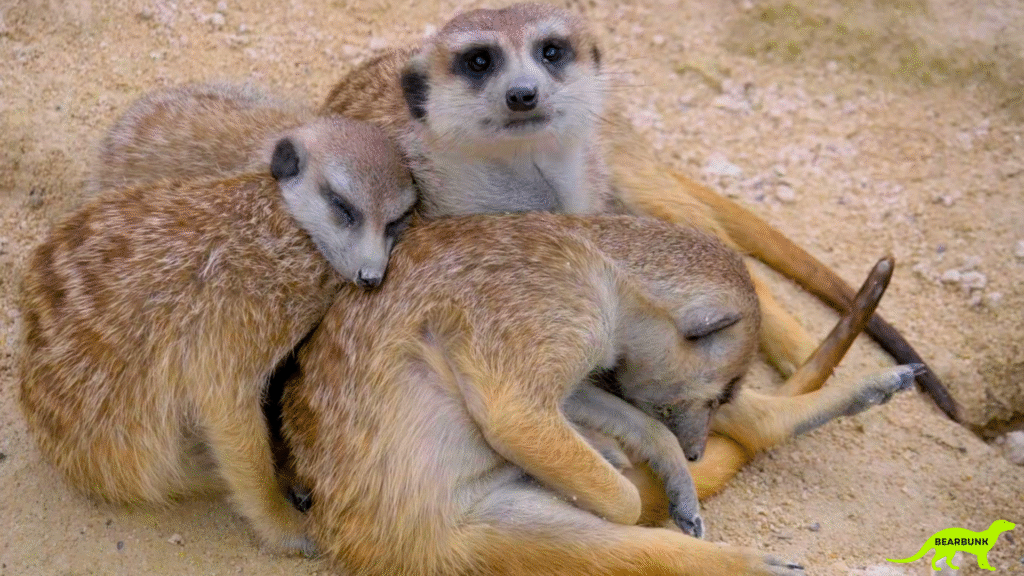
Meerkats live in family groups called mobs, clans, or gangs, typically made up of five to more than thirty individuals. Within each group, there is usually a dominant breeding pair, while other members help raise the young.
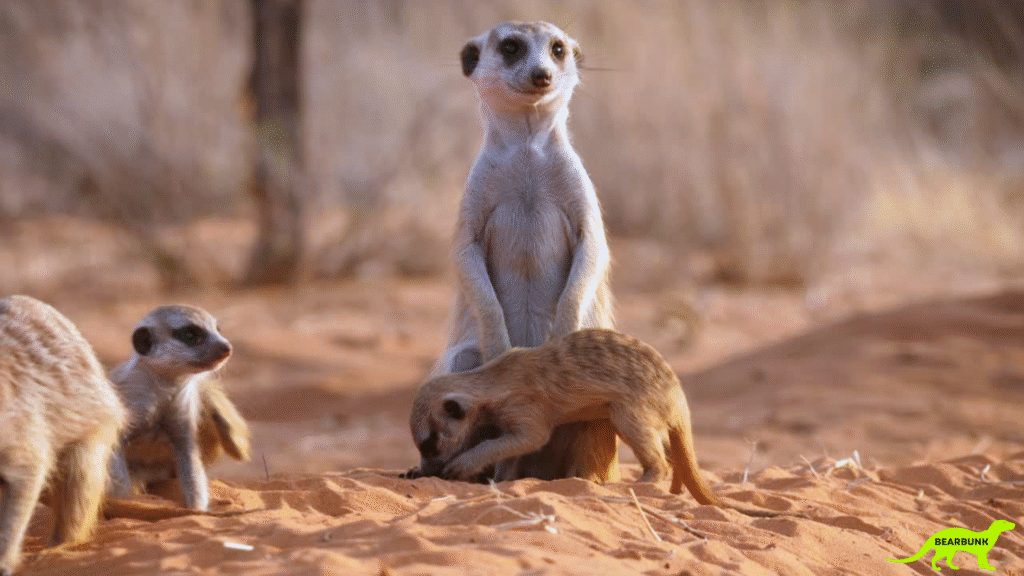
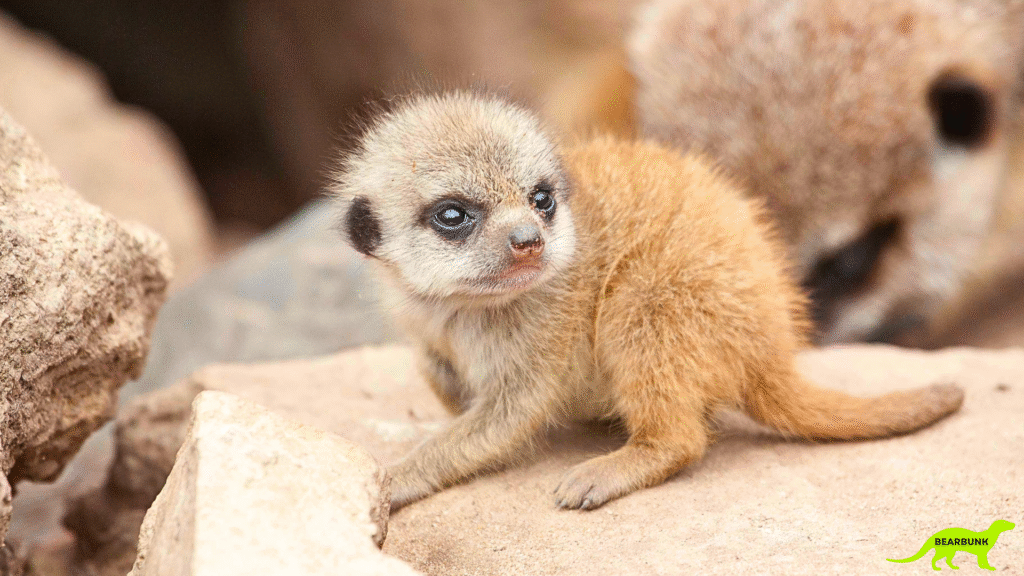
Pregnancy lasts about eleven weeks, and litters usually contain three to seven pups. The pups are born blind and helpless inside the burrow. Their eyes open at around two weeks, and after a few months, they begin learning how to forage.
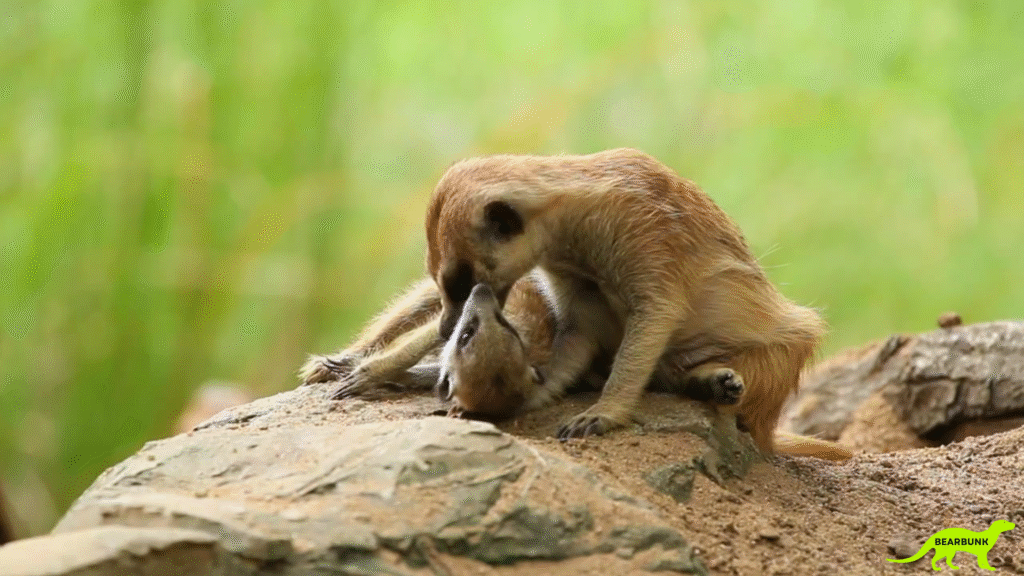
One of the most remarkable aspects of meerkat society is cooperative parenting. Babysitters stay behind while others forage, and adults actively teach pups how to handle food safely. This shared responsibility greatly increases survival rates for the young.
Fun Facts
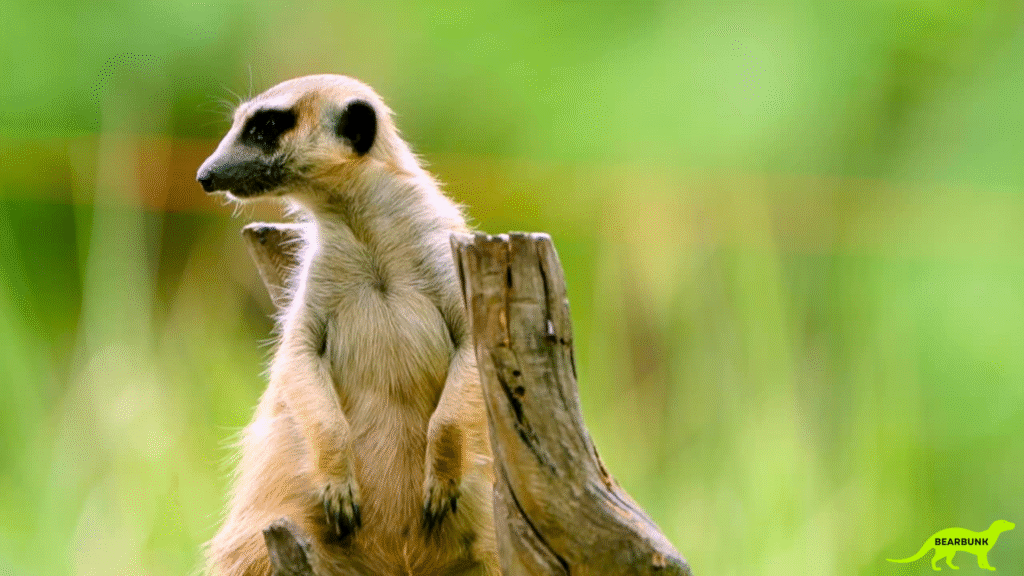
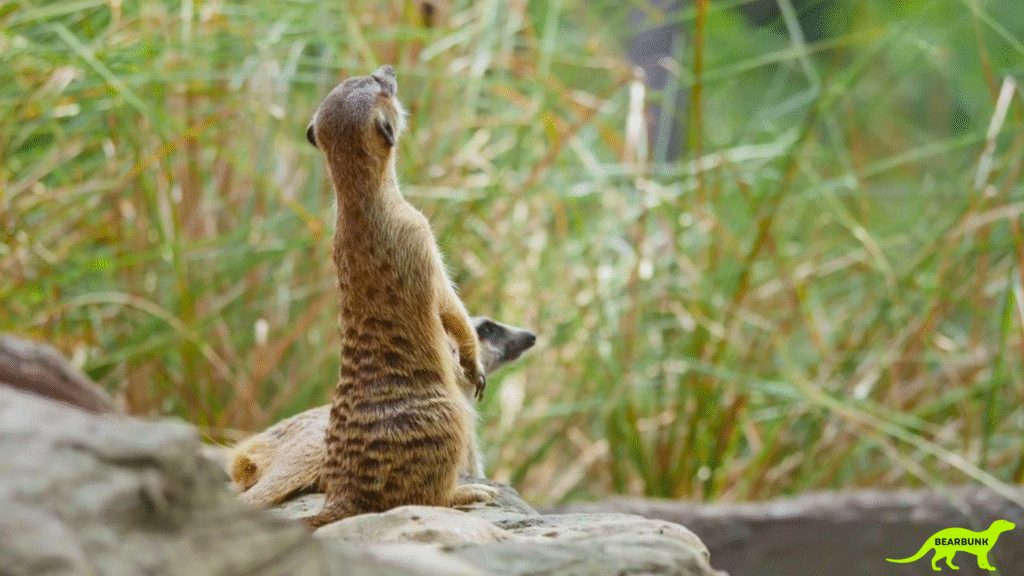
- Meerkats take turns standing guard while others eat
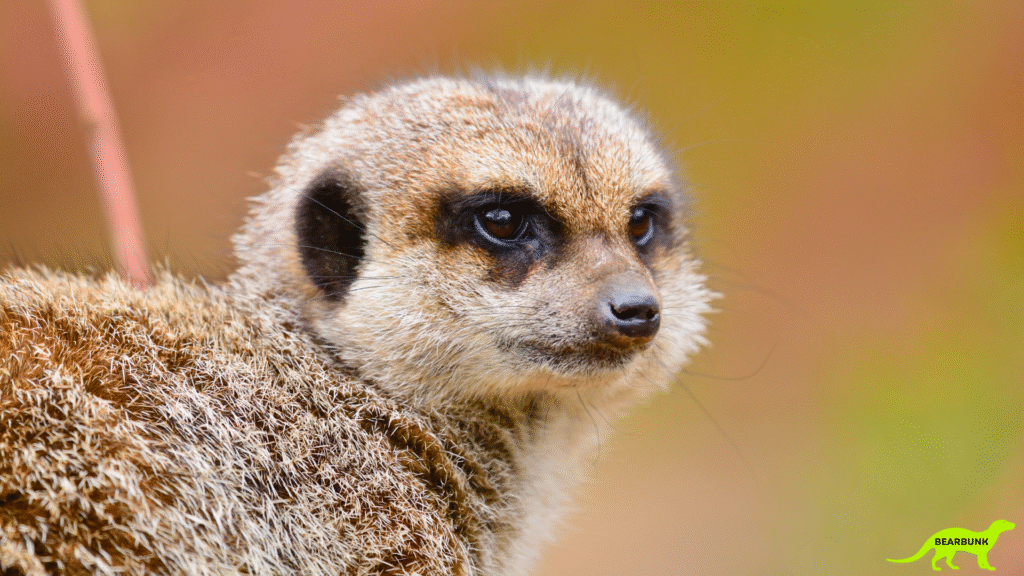
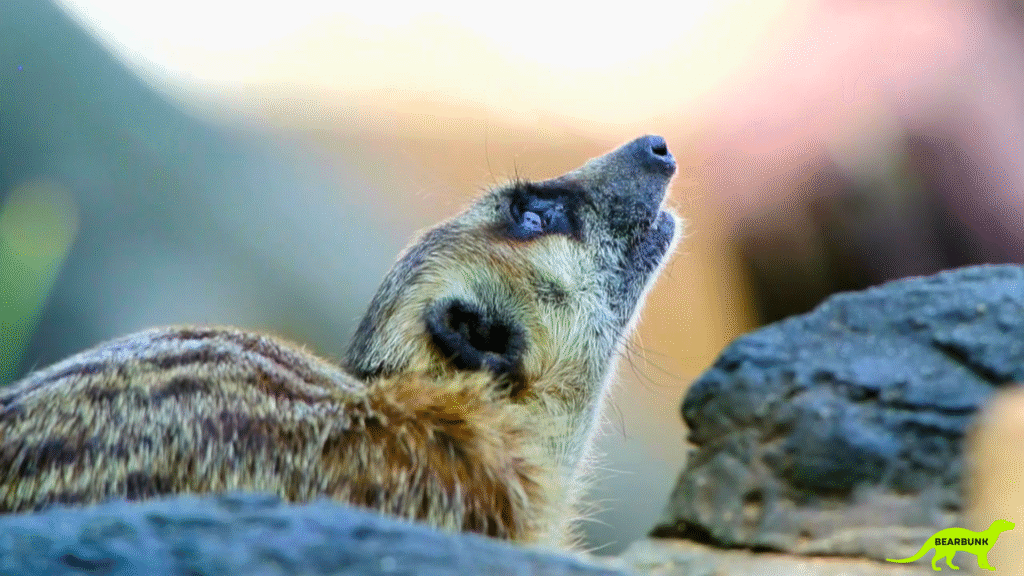
- Dark eye patches act like natural sunglasses
- They teach pups how to hunt safely
- Burrow systems can stretch over 100 feet
- They sunbathe upright to warm up in the morning
About Meerkats
Common Name: Meerkat
Scientific Name: Suricata suricatta
Family: Herpestidae (mongoose family)
Subfamily: Herpestinae
Size: 9–12 inches (body length)
Weight: 1.5–2 pounds
Lifespan: 6–8 years in the wild
Location: Southern Africa
Habitat: Desert, semi-desert, savanna, grassland
Diet: Omnivore
Conservation Status: Least Concern
Meerkats are small carnivores known for their advanced social structure, vigilance behavior, and complex burrow systems. Their cooperative lifestyle allows them to thrive in environments that would challenge many other animals.
Why We Love Them
Meerkats remind us that strength doesn’t always come from size. Their success is built on trust, communication, and looking out for one another. Whether standing guard, teaching pups, or sharing warmth underground, meerkats show us how teamwork can be the ultimate survival skill.
They are curious, expressive, and endlessly fascinating — proof that even the smallest animals can make a big impression.
Conclusion
From their underground homes to their famous upright stance, meerkats are perfectly adapted for life in harsh African landscapes. As survival specialists and animal engineers, they demonstrate how cooperation, intelligence, and adaptability can turn challenges into strengths. Small but mighty, meerkats truly embody the power of working together in the wild.
Learn More:
Watch the full Video on YouTube:
Meerkats and the Power of Teamwork in the African Desert
Read more about:



Leave a Reply